
Pruning
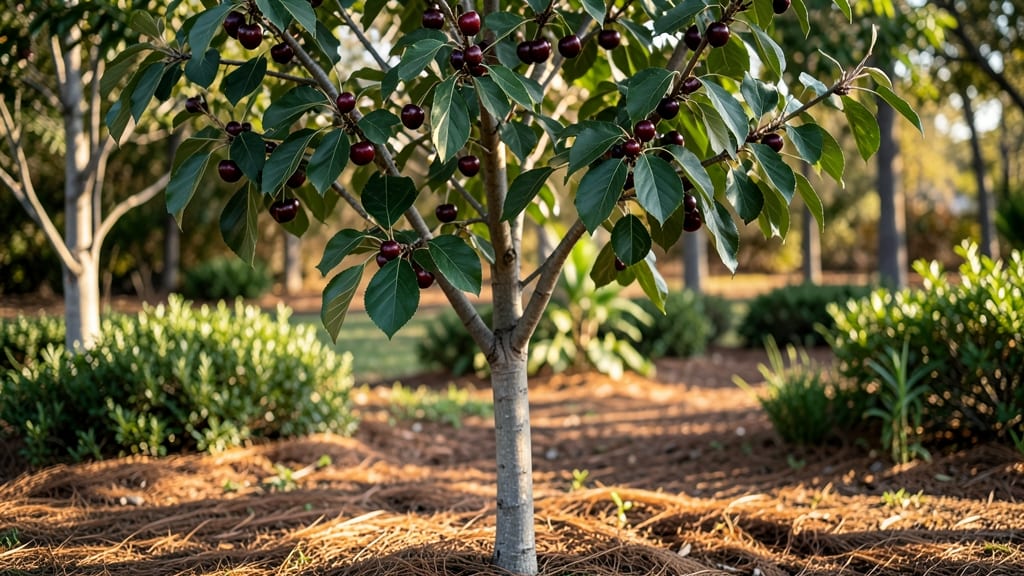
Planting a cherry tree in Georgia means choosing varieties like 'Stella' or 'Black Gold' that thrive in our heat and humidity—then keeping it growing fast and healthy year-round. 🌳 I’ve learned the hard way that Georgia’s summers demand extra attention, from pruning to pest control, but with the right approach, your tree can produce fruit for decades.
The key starts with fall planting when soil stays cool, and well-draining soil mixed with compost. Prune in late winter to shape the tree and remove dead wood, then repeat lightly in summer to manage growth during Georgia’s peak heat.
Brown rot and aphids are common here, so watch for sticky leaves or fungal spots—early action prevents big problems. By summer’s end, you’ll see vibrant new growth and fewer pests if you’ve stayed on top of pruning.
The trees reward patience with sweet, juicy fruit in late spring, and their shade becomes a highlight of your yard. Just avoid over-pruning—Georgia’s heat stresses trees quickly, so less is often more.
Local nurseries like Georgia’s Own Nursery or The Plant Farm stock great varieties, and their staff can help adapt care to your microclimate. Whether you’re planting a dwarf or standard tree, this approach keeps yours thriving through our long, humid summers.
📚 In This Guide
- What you need
- Instructions
- Tips and common mistakes
- Wrapping up and next steps
What you need
- ● Pruning shears – Bypass pruners (sharp, 7–9" blade) for clean cuts on small branches (1/4"–3/4" diameter). 1 pair required.
- ● Loppers – Long-handled (20–24") for medium branches (3/4"–2" diameter). 1 pair required.
- ● Pruning saw – Curved-tooth saw for thick branches (2"+ diameter). 1 saw required.
- ● Ladder – Extension ladder (16–24 ft), sturdy and non-slip. 1 ladder (rent if needed).
- ● Gloves – Heavy-duty, cut-resistant gloves (leather or reinforced). 1 pair.
- ● Disinfectant – 70% isopropyl alcohol or bleach solution (1 part bleach : 9 parts water) to sterilize tools. Small spray bottle or cloth.
- ○ Pruning sealant – Optional but helpful for large cuts (1/4" diameter+) to prevent disease. Small tube or jar.
- ● Tarp or drop cloth – To collect debris and protect surfaces below. 1–2 large sheets.
- ● Work boots – Steel-toe or sturdy shoes for safety. 1 pair.
- ● Safety glasses – To protect eyes from debris. 1 pair.
- ● Weather check – Prune on a dry, cloudy day (avoid frost or extreme heat in Georgia’s climate).
- ● Tree health assessment – Inspect for diseases (e.g., bacterial spot, powdery mildew) or pests before pruning. Report issues to UGA Extension if severe.
- ● Permits (if applicable) – Check with your local county or HOA if your cherry tree is near property lines or in a regulated area.
- ● Safety briefing – Review ladder safety, tool handling, and first aid basics before starting.
- ● 🌡️ Timing matters: Late winter/early spring (Feb–March) is ideal for dormant pruning of sweet/ tart cherries. Summer pruning (June–July) can stimulate new growth but may invite pests.
- ● ✨ Local adaptations: Georgia’s humid climate speeds up wound healing—sealant isn’t always needed, but keep tools sterilized to avoid fungal spread.
- ● 📊 Size up: Mature cherry trees (15–20 ft tall) may need a helper or harness system for safety.
Step-by-Step guide to pruning cherry trees in Georgia
Pruning isn’t just about shaping—it’s about unlocking your cherry tree’s full potential for rapid, vigorous growth.
✂️ Step 1: Time Your Cuts for Maximum Growth
Georgia’s warm winters and long growing season mean you can prune year-round, but timing matters. Start with late winter (February) when the tree is still dormant but buds are swelling—this jumpstarts new growth. Avoid heavy pruning in summer, as it stresses the tree and invites pests, but you can do light maintenance like removing dead wood or crossing branches anytime.
Here’s the key: prune when the tree is actively growing but not flowering. You’ll see fresh green leaves pushing out from buds—that’s your cue. For sweet cherries, wait until after harvest to avoid weakening the tree before next year’s fruit set. Sour cherries are more forgiving, so you can prune slightly later.
🌿 Step 2: Remove Dead, Diseased, or Crowded Wood First
Start with the ugly stuff. Cut out any branches that are dead (no green bark), diseased (fungus spots, oozing sap), or crossing—these compete for energy and invite trouble. Use clean, sharp pruners (sterilize with rubbing alcohol between cuts) to make clean cuts at a 45-degree angle just outside the branch collar (the swollen area where the branch meets the trunk).
Watch for water sprouts—those fast-growing vertical shoots that steal energy. Snip them off at the base. You’ll notice the tree’s structure opening up, letting sunlight hit the center. This isn’t just about looks; it’s about airflow, which prevents fungal diseases like brown rot, a major threat to Georgia cherry trees.
✂️ Step 3: Thin the Canopy for Sunlight and Airflow
Cherry trees need full sun, but too much shade in the center leads to weak wood and poor fruit production. Aim to open the canopy to 60-70% sunlight penetration. Start at the top and work your way down—remove upward-growing branches that block light and branches growing toward the center. Cut back to a side bud or outward-facing bud to encourage outward growth.
Here’s the trick: never remove more than 25% of the tree’s foliage in one season. You’ll see the branches you leave behind grow thicker and stronger within a year. If you’re unsure, step back and look at the tree from all sides—you’re aiming for an open vase shape, not a dense ball.
🪴 Step 4: Shape for Structure and Fruit Production
Cherry trees thrive with a central leader (one main trunk) and scaffold branches (main limbs) spaced 12-18 inches apart. If your tree is young, prune to establish this framework now. For mature trees, shorten last year’s growth by 1/3 on scaffold branches to encourage fruit-bearing spurs (short, stubby branches where cherries form).
Pay attention to branch angles—ideal ones are 45-60 degrees from the trunk. If a branch is growing straight up or down, it’s weak and prone to breaking. Gently bend it into a better angle (you can tie it with soft cloth for support) or prune it back to a lateral bud. You’ll notice the tree’s natural shape emerge as you work.
⏰ Step 5: Post-Pruning Care for Fast Recovery
After pruning, water deeply to help the tree recover. Spread 2-3 inches of mulch (wood chips or pine straw) around the base, keeping it 6 inches away from the trunk to prevent rot. This mimics Georgia’s natural forest floor and retains moisture while keeping roots cool. Fertilize lightly with balanced 10-10-10 in early spring to support new growth.
Watch for sucker growth (shoots at the base) and remove them promptly—they drain energy from the main tree. Within 4-6 weeks, you’ll see fresh green leaves pushing out from the pruned areas. That’s your reward: a tree primed for fast, healthy growth and a bountiful harvest next season.
Tips & tricks for pruning Georgia cherry trees
Real talk: Pruning cherry trees in Georgia’s climate is different from anywhere else—humidity, pests, and that long growing season demand a strategic approach. Here’s what I’ve learned after years of trial and error with my own orchard.
Timing is Everything: Georgia’s warm winters mean your tree can start growing earlier than northern climates. That’s why I prune in late February—when buds are swelling but before active growth. For sweet cherries, I always wait until after harvest to avoid stressing the tree before next year’s fruit set. Pro tip: If you’re in a warmer microclimate (like south Georgia), you might need to shift your timing by 2-3 weeks earlier to avoid summer stress.
Branch Angle Secrets: The 45-60 degree angle for scaffold branches isn’t just aesthetic—it’s about structural integrity. I’ve seen too many weak branches snap under Georgia’s heavy fruit loads. When you’re pruning in Step 4, look for branches growing straight up or down—they’re the weakest. Either bend them gently (tying with soft cloth helps) or cut back to a lateral bud that faces outward. This creates that strong vase shape that supports heavy cherry crops.
Disease Prevention: Brown rot is the #1 enemy of Georgia cherry trees, and crowded canopies give it the perfect breeding ground. When you’re thinning in Step 3, aim for 60-70% sunlight penetration—this isn’t just about fruit production, it’s about creating an environment where air circulates. I sterilize my pruners with rubbing alcohol between every cut (yes, even for healthy branches), and I always make clean cuts just outside the branch collar. Those small details make a huge difference in disease resistance.
Post-Pruning Recovery: After all that work, the tree needs proper care to bounce back. I always water deeply right after pruning to replace lost moisture, then add 2-3 inches of mulch (I use pine straw) keeping it 6 inches away from the trunk. The key is to mimic Georgia’s natural forest floor—this retains moisture while keeping roots cool. And here’s something nobody tells you: Watch for sucker growth at the base. These little shoots might look harmless, but they’re energy vampires that can weaken your tree’s recovery.
Pro Tips for Cherry Tree Georgia
- Real talk: Pruning cherry trees in Georgia’s climate is different from anywhere else—humidity, pests, and that long growing season demand a strategic approach.
- Timing is Everything: Georgia’s warm winters mean your tree can start growing earlier than northern climates.
- Branch Angle Secrets: The 45-60 degree angle for scaffold branches isn’t just aesthetic—it’s about structural integrity.
Frequently asked questions
When is the best time to prune a cherry tree in Georgia?
For sweet cherries, prune in late winter or early spring (February–March) while the tree is still dormant but before buds swell. Sour cherries can handle light pruning in summer (June–July) to control growth. Avoid heavy pruning in late summer or fall, as it stresses the tree and invites disease.
Can I prune my cherry tree at any time of year?
While light pruning (removing dead or crossing branches) can happen year-round, avoid heavy cuts during fall or winter—this invites fungal infections like silver leaf fungus. Summer pruning is risky too, as it can stress the tree and reduce fruit production. Stick to dormant-season pruning for best results!
Why is my cherry tree bleeding sap after pruning?
Sap bleeding (especially in early spring) is normal for cherry trees—it’s a sign of active growth! However, if cuts are too large or jagged, bleeding worsens. Use sealant (like pruning paint) on cuts over ½-inch thick to prevent disease entry. Avoid sealing small cuts; let them heal naturally.
Should I remove all the suckers growing from the base of my cherry tree?
Yes! Suckers (shoots from the rootstock) compete with the main tree for nutrients. Remove them at the base with clean pruners or a spade. If left unchecked, they weaken the tree and reduce fruit yield. Do this in late winter for best results.
How do I encourage faster growth in my Georgia cherry tree?
Focus on 3 key practices:
- Prune annually (dormant season) to open the canopy for sunlight.
- Fertilize in early spring with a balanced 10-10-10 formula (avoid high-nitrogen in summer).
- Water deeply 1–2 times per week during dry spells (Georgia’s heat stresses young trees).
Wrapping up and next steps
Growing a thriving cherry tree in Georgia is all about timing, technique, and a little love! With the right pruning schedule—from late winter to early spring—you’ll encourage vibrant blooms, abundant fruit, and a sturdy structure.
Remember, consistency is key, so mark those seasonal reminders and enjoy the rewards of your hard work.
Ready to see your cherry tree flourish? Start small: grab your tools, follow the steps, and watch your tree grow stronger with each pruning session. Happy pruning—your future harvest awaits! 🌳🍒