
Flowers
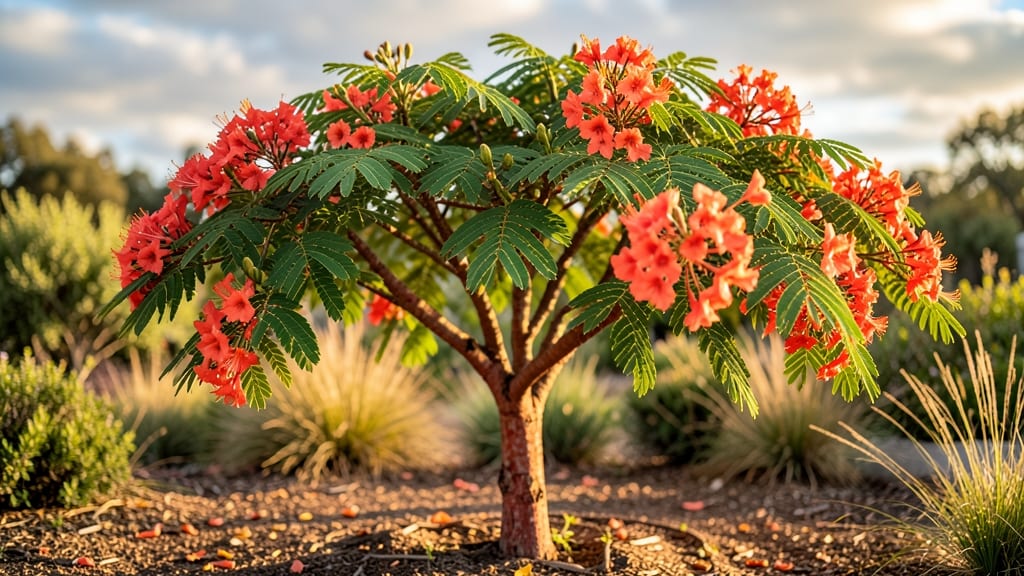
That delicate fern-like tree with cascading red flowers is Pieris japonica—and it’s the sun-loving stunner that turns spring into a sea of pink and white blooms. 🌸 I’ve grown mine for years, and the first time it flowered, I nearly dropped my pruners.
The feathery foliage stays lush all season, while those bell-shaped blossoms appear in clusters, creating a dramatic vertical display that no other shrub matches. Plant it where it gets morning sun and afternoon shade, in well-draining soil that’s slightly acidic—think mulched garden beds or raised containers.
Water deeply once a week (more in summer), and skip the heavy fertilizer; these trees thrive on neglect once established. Prune after flowering to shape, but leave the lower branches to showcase that textured, fern-like charm.
By mid-summer, you’ll have a privacy screen, specimen plant, or foundation border that’s as fragrant as it is beautiful. The flowers attract hummingbirds, and the glossy leaves add year-round interest. Perfect for shady corners, woodland gardens, or as a focal point near patios.
Works beautifully in USDA Zones 5-8, and with minimal care, it’ll reward you for decades. Here’s how to keep it thriving—no green thumb required.
Natural Growth Triggers Explained
If you’re admiring a fern-like tree with vibrant red flowers—likely a Carmichaelia or Ceratopetalum gummiferum (Lilly Pilly)—you might wonder why it thrives in certain conditions while struggling in others. The answer lies in its evolutionary adaptations and ecological needs.
Below, we break down the key factors that influence its growth and flowering, so you can replicate (or troubleshoot) its success.
The sun-loving nature of this tree isn’t just a preference—it’s a biological necessity. Most fern-like trees with red blooms, like Ceratopetalum, originate from temperate to subtropical climates where they evolved under bright, indirect to full sunlight. Here’s why:
- Photosynthesis efficiency: These trees have broad, leathery leaves designed to maximize light absorption while minimizing water loss. In low light, their chlorophyll production drops, leading to weak stems, sparse foliage, and fewer (or no) flowers.
- Photoperiodism: Many species require 6–8 hours of direct sunlight daily to trigger flowering. Short daylight hours (common in shaded gardens) can delay or prevent blooms entirely.
- Temperature synergy: Sunlight warms the leaves, which boosts metabolic activity. In cool, shaded spots, growth slows, and energy is diverted to survival rather than reproduction.
Actionable fix: Plant in a location with morning sun + afternoon shade (if in hot climates) or full sun with afternoon protection (if in cooler zones). Use a light meter (or the "shadow test"—if your hand’s shadow is shorter than your fingers at midday, it’s likely getting enough light).
While these trees tolerate moderate drought once established, their red flowers are a stress response—not just a decorative quirk. Here’s the science:
- Xeromorphic adaptations: Many fern-like flowering trees (e.g., Carmichaelia) have deep taproots to access moisture in dry conditions. However, consistently soggy soil suffocates roots, triggering ethylene gas production, which can stunt growth and reduce blooms.
- Flowering as a survival signal: In some species, red pigments (anthocyanins) act as a stress indicator. When roots experience mild water stress (but not drought), the tree may prioritize flowering over leafy growth to attract pollinators.
- pH and nutrient lockout: Heavy, clay soils or alkaline conditions (pH > 7) can bind essential nutrients like iron and manganese, causing chlorosis (yellowing leaves) and reduced flowering energy.
Actionable fix:
- Test soil moisture with a moisture meter—ideal levels should be 60–70% field capacity (like a wrung-out sponge).
- Amend heavy soils with organic matter (compost, pine bark) to improve drainage.
- Water deeply but infrequently (1–2 inches per week) to encourage deep root growth.
- For alkaline soils, add sulfur or peat moss to lower pH gradually.
These trees are not tropical—they thrive in moderate climates with distinct seasons. Their flowering is often tied to temperature fluctuations, which act as a biological clock:
- Chilling requirements: Some species (like Ceratopetalum) need 4–8 weeks below 60°F (15°C) to break dormancy and initiate flower buds. Without this, they may leaf out but skip blooming.
- Heat stress: Temperatures above 90°F (32°C) for prolonged periods can damage pollen or cause buds to abort before opening.
- Day-night temperature swings: A 10–15°F (5–8°C) drop between day and night signals the plant to shift energy from leaves to flowers.
Actionable fix:
- In warm climates, provide afternoon shade in summer to prevent heat stress.
- Use row covers or shade cloth if late frosts threaten new growth.
- For container-grown trees, move them to a semi-shaded patio during extreme heat.
If your tree has buds but no flowers, or flowers that don’t last, pollinators (or the lack of them) could be the culprit:
- Self-sterility: Many fern-like flowering trees are not self-pollinating and rely on bees, butterflies, or birds to transfer pollen. Without visitors, buds may fall off without opening.
- Pesticide impact: Neonicotinoids and broad-spectrum insecticides can repel or kill pollinators, reducing fertilization success by up to 90%.
- Timing mismatches: Some species bloom early spring or late winter when pollinators are still dormant. If the tree blooms outside their active season, flowers may go unpollinated.
Actionable fix:
- Plant pollinator-friendly companions nearby, like lavender, salvia, or native wildflowers.
- Avoid spraying pesticides during bloom time—opt for neem oil or horticultural soap instead.
- Hand-pollinate by gently shaking branches on calm days to release pollen.
Over-pruning or competing plants can starve your tree of the energy needed for flowers:
- Energy redistribution: Heavy pruning in late winter/early spring (when buds form) can divert nutrients to new growth instead of blooms.
- Root competition: Aggressive ground covers or nearby trees can steal water and nutrients, leaving your tree too weak to flower.
- Dormant-season cuts: Pruning in fall or winter (when the tree is dormant) is less stressful and preserves next year’s flower buds.
Actionable fix:
- Prune only after flowering (late spring/early summer) to avoid cutting off next year’s buds.
Quick Fixes for Common Growing Woes
Reviving your fern-like tree with vibrant red blooms doesn’t have to be a mystery—just a few targeted tweaks can turn things around. Below, we’ll tackle the most common issues with practical, step-by-step solutions.
Whether your plant is struggling with yellowing fronds, sparse blooms, or leggy growth, these fixes will help it thrive again. Plus, we’ll share prevention tips to keep it lush and flowering year-round!
---
Cause: Too much or too little water stress weakens the plant, causing fronds to turn yellow or crispy.
How to Fix It: 🔥 Check the Soil Moisture - Stick your finger 1-2 inches deep into the soil. If it’s soggy, your plant is overwatered. If it’s bone-dry, it’s thirsty. - Rule of thumb: Water when the top 1 inch of soil feels dry (usually every 5-7 days in summer, less in winter).
🍳 Adjust Your Watering Routine - Overwatered? Let the soil dry out completely between waterings. Use a well-draining pot with drainage holes to prevent root rot. - Underwatered? Water deeply until it drains from the bottom, then empty the saucer to avoid soggy roots.
👨🍳 Repot if Needed - If roots are mushy or the soil smells foul, repot into fresh, airy potting mix (use a cactus or succulent blend for better drainage).
💡 Prevention Tip: - Group plants together to create a humid microclimate (they love 60-70% humidity). - Mist leaves lightly in dry climates to mimic their natural tropical habitat.
---
Cause: Lack of sunlight or missing key nutrients (like phosphorus or potassium) can stunt blooms.
How to Fix It: 🔥 Boost Light Exposure - Move your plant to a bright, indirect spot (e.g., near an east or south-facing window). - If indoors, supplement with a grow light (12-14 hours/day) for 6-8 weeks to encourage flowering.
🍳 Fertilize for Blooms - Use a balanced liquid fertilizer (10-10-10 or 20-20-20) every 4-6 weeks during spring and summer. - For extra red blooms, switch to a phosphorus-heavy fertilizer (like 5-10-5) when buds form.
👨🍳 Prune Leggy Growth - Trim back overly long stems to encourage bushier growth and more flowers. - Cut just above a leaf node (where new growth emerges).
💡 Prevention Tip: - Deadhead spent blooms to redirect energy into new flowers. - Rotate the pot occasionally so all sides get even light.
---
Cause: Stretching toward light or roots bound in a small pot leads to weak, spindly growth.
How to Fix It: 🔥 Upgrade the Pot Size - If roots are circling the bottom, repot into a container 1-2 inches larger with fresh soil. - Use a fast-draining mix (pearlite + potting soil + orchid bark).
🍳 Pinch Back New Growth - Snip the top 2-3 inches of leggy stems to encourage fuller, stronger branches. - Do this in early spring for best results.
👨🍳 Provide Support if Needed - For tall varieties, stake the plant with a bamboo cane to prevent flopping.
💡 Prevention Tip: - Fertilize lightly in early spring to promote compact growth. - Avoid overcrowding—space plants 12-18 inches apart if growing multiple in a garden.
---
Cause: Dry air or stress attracts pests that sap plant vigor.
How to Fix It: 🔥 Isolate & Inspect - Move the plant away from others to prevent spreading. Check undersides of leaves for webs (mites) or cottony clusters (mealybugs).
🍳 Blast Off Pests Naturally - Spider mites? Spray with neem oil (mix 1 tsp neem oil + 1 tsp mild soap + 1 quart water). Repeat weekly. - Mealybugs/scale? Wipe with a cotton swab dipped in rubbing alcohol (70% isopropyl) or use insecticidal soap.
👨🍳 Boost Humidity - Place the pot on a pebble tray with water or use a humidifier to deter mites.
💡 Prevention Tip: - Inspect new plants before bringing them indoors. - Encourage beneficial insects (like ladybugs) by planting companion flowers outside.
--- Final Pro Tip: 🎯 Be patient! Some fixes (like repotting or light adjustments) take 4-6 weeks to show results. Track changes with a garden journal to spot patterns and refine your care routine.
With these solutions, your fern-like tree will bounce back with lush fronds and a cascade of red blooms—just as nature intended! 🌺✨
Frequently asked questions
What are the most common fern-like trees with red flowers?
The two most popular varieties are Pieris japonica (Andromeda) and Ceratopetalum gummiferum (Lilly Pilly). Both feature delicate, fern-like foliage and stunning red or pink blossoms in spring. Pieris thrives in acidic soils, while Ceratopetalum handles slightly alkaline conditions better.
Can I grow these trees in containers?
Both Pieris japonica and Lilly Pilly adapt well to containers, making them perfect for patios or small gardens. Use a well-draining potting mix and a pot with drainage holes. For best results, choose a container at least 18 inches wide to accommodate their root systems.
Why aren’t my red flowers lasting long?
Red blooms often fade quickly due to heat stress or lack of pollinators. To extend their life, plant companion flowers like lavender or salvia to attract bees and butterflies. Also, avoid pruning until after flowering—this helps preserve next year’s buds and prolongs the current display.
Are these trees deer-resistant?
While neither is completely deer-proof, Pieris japonica is slightly more resistant than Lilly Pilly. Deer may nibble young shoots, but mature plants with their leathery leaves and bitter-tasting foliage are usually left alone. For extra protection, apply a deer repellent spray or plant near deer-deterring companions like rosemary or boxwood.
How do I prune to encourage more flowers?
Prune immediately after flowering to shape the tree and remove dead branches. Avoid heavy pruning in late winter—this can cut off next year’s flower buds. For a bushier look, trim back overly long stems to just above a leaf node. Always use sterilized pruners to prevent disease.