
Watering
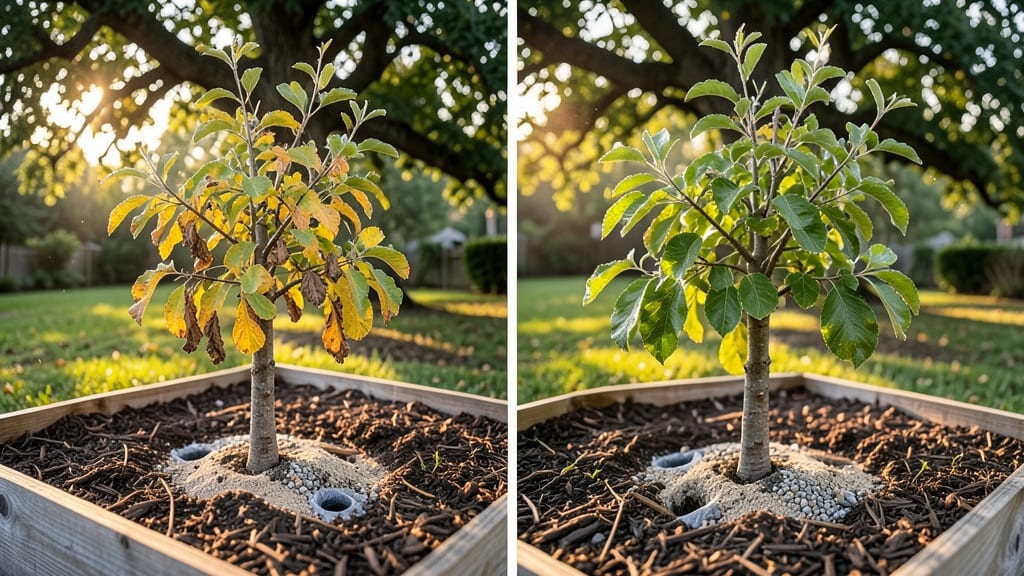
Your overwatered tree recovery starts now—because that soggy soil isn’t just slowing growth, it’s suffocating your tree. 🌳 I’ve seen root rot turn vibrant oaks into sad, yellowing husks, but air-pruning pots and smart watering can bring them back to life.
The key is stopping the suffocation at the roots while giving them room to breathe again.
Most people assume overwatered trees just need less H₂O, but the real fix starts with soil. Compacted or waterlogged dirt smothers roots, so we’re improving drainage first—whether that means amending the soil or switching to containers with drainage holes.
For deep-rooted species like oaks, we’ll focus on aerating; for shallow-rooted ones like maples, we’ll adjust watering times.
Within weeks, you’ll see fresh green leaves pushing through, and the tree’s growth will pick up where it left off. The secret isn’t just cutting back on water—it’s giving roots the space to recover. We’ll even cover how to spot early signs so you can act before it’s too late.
This works for backyard trees, container-grown specimens, or even those tricky urban plantings. Let’s save your tree before the roots give up for good.
The Hidden Triggers Behind Root Rot
When your tree starts showing signs of distress—yellowing leaves, wilting branches, or a foul odor near the base—it’s often a cry for help from roots drowning in excess moisture. But why does this happen?
Root rot isn’t just about "too much water"—it’s a cascade of factors that create the perfect storm for fungal and bacterial growth. Understanding these causes is the first step to saving your tree. Let’s dig into the science behind the problem.
Soil that doesn’t drain well is the #1 culprit behind overwatered trees. Compacted, clay-heavy, or organic-rich soils act like a sponge, holding onto water long after the roots have had their fill.
When water pools around roots, oxygen gets squeezed out, suffocating them and inviting Phytophthora and Pythium—two notorious root-rot fungi.
- Why it matters: Roots need 10-20% oxygen to function. Water displaces this oxygen, forcing roots to switch to anaerobic (oxygen-free) respiration, which produces toxic byproducts like ethanol.
- Actionable clue: If water sits in saucers under pots for more than 24 hours or puddles form around the base of your tree, your soil is likely too dense.
- Pro tip: Test your soil’s drainage by digging a hole, filling it with water, and timing how long it takes to drain. If it’s slower than 4-6 hours, amend with perlite, sand, or compost to improve aeration. 🌡️
Many gardeners assume trees "drink more" than shrubs or annuals, leading to frequent deep watering—sometimes daily. But trees have deep taproots that store water efficiently. Overwatering disrupts this balance, especially in container-grown trees, where roots have limited space to escape excess moisture.
- Why it matters:
- Containerized trees dry out 3x faster than in-ground trees but are often watered on a rigid schedule, not based on soil moisture.
- Automatic irrigation systems (like drip lines) can deliver 2-3x more water than needed if not monitored.
- Actionable clue: Check soil moisture 2-3 inches deep before watering. If it’s damp, wait. Use a moisture meter or the "squeeze test"—grab a handful of soil; if it crumbles easily, it’s dry enough.
- Pro tip: Water deeply but infrequently. Aim for 1-1.5 inches of water per week (including rain) for most trees. For containers, water when the top 1-2 inches of soil feel dry. ⏰
Trees in pots or small root zones (like those in urban landscapes with limited soil depth) are especially vulnerable. When roots hit the sides of a container or an impermeable barrier (like plastic pots or hardpan soil), they circle or girdle instead of growing downward.
This traps water and creates a perfect anaerobic environment for pathogens.
- Why it matters:
- Root-pruning pots (like Air-Pruning systems) encourage outward growth, but if the pot is too small, roots still suffocate.
- Plastic pots retain 30% more moisture than fabric or terracotta, accelerating rot.
- Actionable clue: If your tree’s roots are circling the pot or growing out of drainage holes, it’s time to uproot and repot into a larger container with better drainage.
- Pro tip: Use pots with multiple drainage holes and elevate them off the ground to prevent waterlogging. For in-ground trees, amend the soil with gypsum or coarse sand to break up compacted layers. 🌱
Heavy rainfall, high humidity, or sudden temperature drops can turn a "normal" watering routine into a disaster. Trees already stressed by heatwaves or drought are particularly susceptible to root rot when suddenly flooded with water.
- Why it matters:
- Fungal spores thrive in temperatures between 68-86°F (20-30°C) and high humidity—common in spring and fall.
- Cold, waterlogged soil slows root activity, making trees more vulnerable to pathogens.
While overwatering creates the conditions for root rot, fungi and bacteria are the actual villains. Phytophthora (the "plant destroyer") and Armillaria (the "honey fungus") thrive in waterlogged soil, releasing enzymes that break down root cell walls.
- Why it matters:
- Fungal hyphae compete with roots for oxygen and nutrients, starving the tree.
- Infected roots emit a foul, sour smell—a red flag that pathogens are active.
- Actionable clue: If you see black, mushy roots or white fungal growth, your tree is already infected.
- Pro tip: Sterilize tools with 70% isopropyl alcohol before pruning to avoid spreading spores. For severe cases, fungicides like phosphite-based treatments can help, but prevention is key. ✨
Revive Your Tree Step by Step
Overwatered trees can feel like a lost cause, but with the right approach, you can nurse them back to health—even if they’re already showing signs of root rot. The key is acting fast, diagnosing the root of the problem (literally and figuratively), and applying targeted fixes.
Below, we break down cause-specific solutions to get your tree thriving again, plus prevention tips to keep it strong for years to come.
---
Cause: Excess moisture suffocates roots, starving the tree of oxygen and nutrients.
How to Solve: 1. 🔥 Pause Watering Immediately - Stop adding water until the soil dries out. Use a moisture meter or stick your finger 2–3 inches deep—if it’s damp, wait longer.
2. 🍳 Improve Drainage - For potted trees: Repot into air-pruning pots (like those with drainage holes and root pruning chambers) or add a layer of gravel or perlite at the bottom. - For in-ground trees: Amend the soil with compost, sand, or coconut coir to break up compacted areas.
Consider a French drain if water pools around the base.
3. 👨🍳 Prune Damaged Foliage - Trim yellow, brown, or mushy leaves with sterilized shears. Avoid cutting healthy green leaves—they’re still photosynthesizing and helping the tree recover.
4. 🌡️ Boost Oxygen Flow - Gently loosen the top 6–12 inches of soil with a fork or trowel to aerate roots. For potted trees, lift and shake out excess soil before repotting.
💡 Pro Tip: If your tree is in a container, move it to a shadier spot temporarily—direct sun can stress roots further while they recover.
---
Cause: Prolonged soggy conditions invite Phytophthora or other fungi, rotting roots and cutting off water/nutrient flow.
How to Solve: 1. ⏰ Act Fast—This Is Urgent - Root rot spreads quickly. If roots are black, mushy, or smell like rotten eggs, you may need to severely prune or repot aggressively.
2. 🔪 Trim the Damage - Sterilize pruners with rubbing alcohol between cuts. - Remove all rotted roots (they won’t recover). Healthy roots are firm, white, or tan. - For in-ground trees, excavate the worst-affected roots and treat the soil (see next step).
3. 🌿 Apply Fungicide & Soil Amendments - Spray roots with a copper-based fungicide (like Copper Sulfate) or hydrogen peroxide (3%) to kill fungi. - Repot or backfill with a 50/50 mix of sterile potting soil and perlite/pumice to prevent compaction. - Add mycorrhizal fungi (like MycoApply) to help roots rebound.
4. 🌧️ Adjust Watering Forever - Water deeply but infrequently—only when the top 2 inches of soil are dry. - Use a moisture meter to avoid guesswork.
✨ Prevention: Install a drip irrigation system with a timer to avoid overwatering, or switch to self-watering pots with air pruning.
---
Cause: Chronic overwatering weakens the tree’s structure, making it prone to breakage or disease.
How to Solve: 1. 💪 Support the Tree Physically - If the trunk is soft or splitting, stake it temporarily with soft ties to prevent snapping in wind. - For potted trees, reduce pot size if roots are circling (strangling the trunk).
2. 🍎 Feed It Right - Avoid fertilizer until new growth appears (it can burn stressed roots). - Once stable, use a balanced, slow-release fertilizer (like 10-10-10) or seaweed extract for gentle nutrients.
3. 🌡️ Monitor Temperature & Humidity - Mulch with wood chips (2–3 inches) to regulate soil temp and retain just enough moisture. - Avoid overhead watering—use drip irrigation or a soaker hose at the base.
🎯 Long-Term Fix: If the tree is severely stunted, consider grafting (for fruit trees) or root pruning to encourage new growth.
---
If your tree is leaning, oozing sap, or completely leafless, try these last-resort steps: - 🌊 Root Flush: Water once deeply (even if soil is damp) to force out excess salts that may have built up. - 🌿 Root Hormone Treatment: Apply rooting hormone gel to pruned roots to stimulate regrowth. - 🌳 Professional Help: For large trees, consult an arborist—they can aerate deep roots or install drainage systems.
--- 🔄 Prevention Checklist for Future: ✅ Test soil before planting—amend if it’s clay-heavy or slow-draining. ✅ Choose the right pot—air-pruning pots or those with multiple drainage holes. ✅ Water at the base, not the leaves, to avoid fungal growth. ✅ Mulch properly—keep mulch 3–4 inches deep and 6 inches away from the trunk. ✅ Adjust seasonally—trees need less water in winter and more in extreme heat.
--- Remember: Patience is key. Some trees take weeks to months to show signs of recovery. Stay consistent with care, and your tree will bounce back—stronger than ever! 🌳💚
Frequently asked questions
How quickly can I expect to see improvement after stopping overwatering?
With proper care, you may notice new growth within 2-4 weeks, but full recovery can take 3-6 months depending on the tree species and severity of damage. The first sign of improvement is often fresh green leaves appearing on the lower branches—this means roots are starting to recover and absorb nutrients again.
Can I still save a tree with black, mushy roots and a foul smell?
Yes, but you’ll need to act aggressively. Remove all rotted roots immediately, treat with a copper-based fungicide, and repot into fresh, well-draining soil. If the trunk is still firm, the tree can recover—just expect slower growth as it rebuilds its root system. For severe cases, consult an arborist about root hormone treatments.
What’s the best way to test if my tree is overwatered vs. underwatered?
Use the finger test: Stick your finger 2-3 inches deep into the soil. If it’s damp or sticky, you’re overwatering. For underwatering, the soil will feel dry and crumbly. Also check the leaves—overwatered trees have yellowing leaves that stay soft, while underwatered ones have brown, crispy edges.
Should I fertilize my tree while recovering from overwatering?
Wait until you see new growth before fertilizing—stressed roots can’t handle nutrients yet. Once recovery begins, use a balanced, slow-release fertilizer (like 10-10-10) or organic options like compost tea. Avoid high-nitrogen fertilizers, which can burn recovering roots.
Are some tree species more prone to overwatering damage?
Yes! Shallow-rooted trees like maples, willows, and fruit trees are especially vulnerable, as are container-grown trees with limited root space. Deep-rooted species like oaks and pines handle occasional overwatering better but still need proper drainage. Always check your specific tree’s water needs—some thrive in moist soil, while others prefer drier conditions.