
Planting
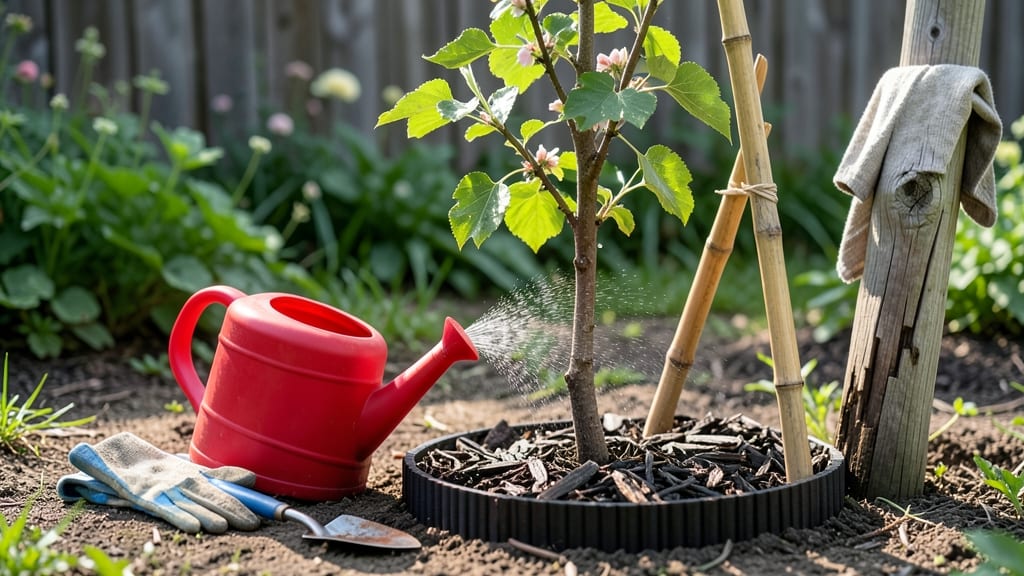
Tree transplant shock recovery time varies widely, typically taking anywhere from a few weeks to several months to fully stabilize. Smaller trees often bounce back in 4-6 weeks, while larger or mature trees may need up to a year for complete recovery.
Understanding this recovery timeline helps you set realistic expectations and provide the right care. 🌳 The process begins when roots adjust to their new environment, and stress levels drop. Younger trees with smaller root systems recover faster because their roots can establish new connections more quickly.
Meanwhile, mature trees with extensive root networks face a longer adjustment period due to the sheer volume of tissue that needs to heal and adapt. Seasonal timing also plays a critical role—planting during cooler months reduces water loss and stress, while summer heat or drought can dramatically extend recovery time.
💡 In This Article
- Factors Affecting Tree Transplant Shock Recovery Duration
- Signs of Transplant Shock and How to Accelerate Healing
Factors affecting tree transplant shock recovery duration
The root ball size is the single most critical factor in recovery time. When you transplant a tree, the root system suffers physical damage from pruning and exposure.
A smaller root ball (like those in 1-5 gallon containers) means less tissue to recover, so younger trees often bounce back in 4-6 weeks.
In contrast, mature trees with 30+ cubic feet root zones can take 6-12 months because their extensive vascular network requires more time to regenerate and establish new connections.
Species resilience plays a surprising role—some trees evolved with natural stress tolerance. For example, oak and maple species have deep taproots that regenerate slowly but steadily, while willow or poplar trees have fibrous root systems that recover faster due to their ability to sprout new roots from stems.
Seasonal timing also matters: planting in fall or early spring (when soil temperatures are 50-65°F) reduces water stress, while summer heat (85°F+) can double recovery time by accelerating moisture loss through leaves.
Soil moisture retention is another hidden factor. Sandy soils drain too quickly, forcing roots to work harder to absorb water, while clay soils can suffocate roots if not amended. The ideal soil holds moisture like a well-wrung sponge—firm but not soggy.
Mulching with 3-4 inches of organic matter (wood chips, straw) helps maintain consistent moisture levels, which is critical during the first 30-60 days post-transplant when roots are most vulnerable to drying out.
Environmental stress multiplies recovery challenges. High winds (15+ mph) physically strain young trees, while drought conditions force them to divert energy from root growth to survival. Even urban heat islands (where pavement raises temperatures by 10-15°F) can delay healing by 30-50%.
Shade cloth or temporary windbreaks can mitigate these effects, creating a more stable microclimate for recovery.
Consider this comparison: a 5-year-old dogwood tree (root ball: 15 gallons) might recover in 6-8 weeks with proper care, while a 30-year-old red oak (root ball: 50+ gallons) could take 9-12 months due to its massive root system.
The key difference? The dogwood's roots can regenerate more quickly because its total root biomass is smaller and less complex.
What most people overlook is how pruning impacts recovery. Heavy pruning before transplanting reduces the tree's ability to photosynthesize, slowing growth. A general rule: prune only 10-25% of the canopy at transplant time to maintain leaf surface area for energy production.
This small adjustment can cut recovery time by 20-30% in stressed conditions.