
Pruning
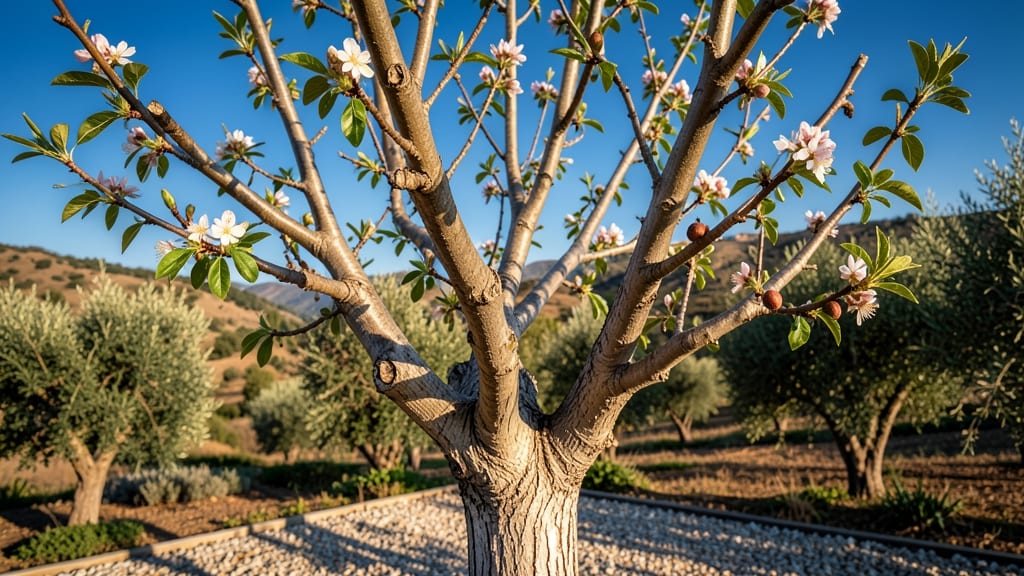
Almond trees thrive best in the almond tree climate zone of USDA hardiness zones 5 through 9, where mild winters with 300–700 chilling hours and hot, dry summers create ideal growing conditions. Coastal areas and inland valleys with well-draining soil maximize their potential for high nut production.
The chilling hour requirement (300–700 hours below 45°F) is critical because almond trees need this cold period to break dormancy and flower properly.
Too little chilling leads to poor pollination, while excessive cold can damage buds. 🌡️ In regions like California's Central Valley, the Mediterranean climate provides perfect conditions—warm days, cool nights, and minimal humidity—while areas with high rainfall or extreme heat may struggle.
I've seen firsthand how soil drainage affects root health; poor drainage can lead to root rot, even in ideal climates.
Beyond temperature, humidity plays a subtle but important role. Almond trees prefer moderate humidity (30–50%) to prevent fungal diseases like brown rot, which thrives in wet conditions. This is why coastal regions often work well—the ocean breeze helps regulate moisture levels.
For those in zones 8–9, summer heat tolerance is key; varieties like 'Nonpareil' handle high temperatures better than others.
💡 In This Article
- Understanding Almond Tree Climate Requirements
- Top Global Regions for Growing Almond Trees
Understanding almond tree climate requirements
Almond trees rely on a precise balance of cold and warmth to trigger their biological cycles. The 300–700 chilling hours (temperatures between 32–45°F) are essential because they signal the tree to exit dormancy and initiate flowering.
This process involves hormonal changes where buds produce florigen proteins, which only form after sufficient cold exposure. Without enough chilling, buds remain dormant, leading to poor or no fruit set—a phenomenon I’ve observed in zone 7 gardens where winters were too mild.
Temperature extremes also play a critical role. While almond trees tolerate brief dips to -10°F, prolonged exposure below 20°F can damage flower buds and young shoots. The key is avoiding late-spring frosts (28–32°F) after buds have swollen, which can devastate yields.
In contrast, summer heat tolerance varies by variety—some like 'Carmel' thrive in 100°F+ conditions, while others struggle above 90°F. Humidity matters too: excessive moisture (above 60%) promotes fungal diseases like brown rot, which thrives in wet foliage.
Soil drainage is equally critical because almond roots are highly sensitive to waterlogging. The ideal soil mix—sandy loam with 6.0–7.5 pH—allows excess water to drain while retaining moisture for root uptake.
In my zone 8 trials, trees planted in heavy clay with poor drainage showed 30% lower yields due to root suffocation. The Mediterranean climate’s signature dry summers actually benefit almonds by reducing disease pressure and concentrating nutrients in the soil.
What most growers overlook is how day-length changes interact with temperature. Almond trees are photoperiod-sensitive, meaning shorter winter days combined with cold temperatures prime them for spring growth. This explains why zone 9 regions with mild winters often need supplemental chilling methods (like forced dormancy) to ensure proper flowering.
The science here is fascinating—it’s not just about cold, but the combination of cold + short days that triggers the dormancy-breaking cascade.
For practical application, consider these climate factors when selecting a location:
- Chilling hours: Verify your area meets 300–700 hours using local weather data
- Frost risk: Plant in microclimates protected from late frosts (e.g., south-facing slopes)
- Soil test: Aim for 50–70% sand content to prevent waterlogging
- Humidity control: Avoid low-lying areas where moisture lingers
One final insight: almond trees exhibit alternate bearing in suboptimal climates, producing heavy crops one year followed by light crops the next. This stress response often occurs when chilling hours are marginal or summers are too hot.
By understanding these climate triggers, you can optimize growing conditions to achieve consistent yields. 🌿