
Pruning
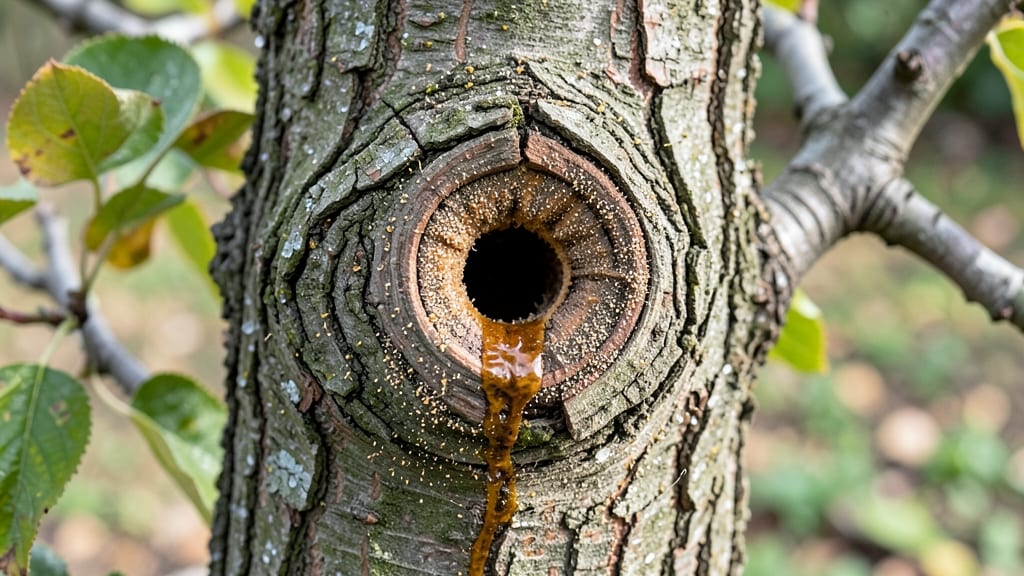
Apple tree borer damage can turn a thriving orchard into a sad, sawdust-speckled mess—unless you catch it early. 🌳 I’ve watched these sneaky pests turn strong branches into hollowed-out skeletons, and the key to saving your tree is knowing exactly what to look for before it’s too late.
The moment you spot frass (that telltale sawdust pile) or wilting leaves with no obvious cause, you’re already in the fight of your life.
These borers don’t just attack weak trees—they target healthy ones too, tunneling under bark and disrupting the tree’s ability to transport water and nutrients. The damage often starts small, with tiny holes or oozing sap, but if ignored, entire branches can die back.
The good news? You can still turn things around with the right treatment—whether it’s pruning infected areas, applying natural predators like nematodes, or using targeted chemical controls when necessary.
What you’ll end up with is a tree that stays strong, productive, and free from future infestations. The secret lies in combining quick fixes (like sealing wounds with pruning paint) with long-term prevention (like proper tree care and monitoring).
With these steps, your apple tree won’t just survive—it’ll thrive, year after year, just like mine did after my first borer battle.
This works for both backyard orchards and commercial plantings, no matter your experience level. Let’s get your tree back to healthy and keep those pests at bay for good.
Root Causes of Tree Stress
Apple tree borer infestations rarely strike healthy, thriving trees. Instead, these pests exploit weakened trees, turning stress into an open invitation for destruction. Understanding the underlying causes of tree stress helps you recognize why borers target your orchard—and how to fortify your trees against them.
Below, we break down the key factors that make your apple trees vulnerable.
Extreme or fluctuating environmental conditions create ideal conditions for borer activity. Trees under environmental stress divert energy away from defense mechanisms, leaving them susceptible to borer attacks.
- Drought:
Prolonged dry spells cause water deficits in the tree’s vascular system.
When roots struggle to absorb moisture, the tree’s sap flow slows, making it harder for the tree to "starve" out invading borers. Borers thrive in trees with reduced sap pressure—their larvae bore into the bark and feed on the cambium layer, where nutrients are most concentrated.
- Temperature Swings:
Sudden freezes or heatwaves disrupt a tree’s metabolic processes. Cold snaps can damage bark, creating entry points for borers, while extreme heat stresses the tree’s root and foliage systems. Borers are particularly active during warm spells following winter stress, as the tree’s weakened defenses are slower to respond.
- Poor Soil Conditions:
Compacted, nutrient-poor, or waterlogged soil stunts root growth and limits nutrient uptake. Trees in such conditions often exhibit thinning canopies, stunted shoots, or early leaf drop—all red flags for borers. Borers detect stressed trees through volatile organic compounds (VOCs) emitted during stress, effectively "smelling" their next meal.
💡 Pro Tip: Monitor soil moisture and pH regularly. Aim for well-draining soil with a pH of 6.0–7.0 for apple trees. Mulching with organic matter (like wood chips) helps retain moisture and improve soil structure.
Before borers even lay eggs, other pests or diseases may already be compromising your tree’s health. Borers often follow in the wake of these primary invaders, capitalizing on the damage left behind.
- Fungal Infections:
Fungi like Valsa canker or Nectria twig blight create wounds in the bark, providing entry points for borers. These pathogens kill cambium tissue, the same layer borers target for nutrition. A single canker can attract dozens of borer eggs within weeks.
- Sap-Sucking Insects:
Pests like aphids, scale insects, or spider mites weaken trees by draining sap and transmitting viruses. Their feeding reduces the tree’s ability to produce defensive resins, which normally trap and suffocate borer larvae. Borers are more likely to infest trees already under siege by these secondary pests.
- Physical Damage:
Broken branches, girdling roots, or improper pruning wounds create perfect entry points. Borers detect fresh wounds through pheromone cues and are drawn to trees with exposed xylem or phloem tissue. Even minor damage from hail or machinery can trigger an infestation.
🎯 Prevention Tip: Inspect trees annually for signs of cankers, discolored bark, or sticky residue (a sign of sap-sucking pests). Treat fungal infections with copper-based fungicides and manage secondary pests with horticultural oil or insecticidal soap.
Neglect in basic tree care—such as improper pruning, over-fertilization, or lack of pest monitoring—directly increases borer risk. Healthy trees invest energy in growth and defense; unhealthy trees become easy targets.
- Improper Pruning:
Over-pruning removes too much foliage, reducing the tree’s ability to photosynthesize and produce energy. Borers exploit trees with <10% of their canopy removed in a single season, as these trees struggle to recover. Additionally, jagged cuts leave exposed wood, inviting borer colonization.
- Over-Fertilization:
Excess nitrogen promotes rapid, weak growth while depleting other essential nutrients like potassium and phosphorus. Weak, fast-growing wood is softer and easier for borers to penetrate. Over-fertilized trees also attract sap-sucking insects, which further stress the tree.
- Lack of Monitoring:
Borers are most active in late spring to early summer, but their damage often goes unnoticed until it’s severe. Trees that aren’t regularly inspected for frass (sawdust-like borer droppings), exit holes, or oozing sap miss critical early intervention windows.
✨ Expert Insight: Follow the 3-cut pruning method to avoid tearing bark, and use sharp, sterilized tools. Apply a 1-inch layer of mulch around the base (but not touching the trunk) to protect roots and retain moisture.
By addressing these root causes—environmental stress, pre-existing damage, and poor management—you can dramatically reduce your apple trees’ appeal to borers. The key is proactive care: healthy trees are the best defense against these destructive pests.
Fixing and Preventing Apple Tree Borer Damage
Once you’ve identified the signs of apple tree borer damage—like sawdust-like frass, oozing sap, or wilting leaves—it’s time to act. The good news? With the right approach, you can save your tree and keep future infestations at bay.
Below, we break down practical solutions tailored to the root causes of borer damage, from immediate fixes to long-term prevention.
Cause: Borers thrive when left unchecked, tunneling deeper into the tree’s vascular system. Fix:
- Prune infected branches immediately 🪓—Cut 6–12 inches beyond the visible damage (borers may be hidden further up). Sterilize pruners with rubbing alcohol to avoid cross-contamination.
- Seal wounds with a tree wound dressing or pruning sealant (like Tanglefoot Tree Wound Pruning Sealer) to prevent secondary infections.
- Remove and destroy infested wood—burn or bury it (don’t compost!) to stop the borers’ lifecycle.
Pro Tip: 💡 Check for borers in late winter/early spring (when they’re most active) or summer (when frass is easiest to spot).
Cause: Chemical pesticides can harm beneficial insects and the environment. Fix:
- Apply beneficial nematodes (like Heterorhabditis bacteriophora) to the soil around the tree’s drip line. These microscopic worms seek out borer larvae and parasitize them. Best time: Early spring or fall when soil temps are 50–85°F.
- Use kaolin clay (e.g., Surround WP) as a physical barrier. Mix with water and spray the trunk and branches—borers struggle to penetrate the clay film.
- Encourage natural predators: Birds (like woodpeckers), parasitic wasps, and predatory beetles feed on borers. Plant native flowering shrubs near your tree to attract them.
Pro Tip: 🌡️ Timing is key—nematodes work best when applied before borers pupate (usually spring or early summer).
Cause: Severe infestations may require stronger intervention. Fix:
- Systemic insecticides (e.g., imidacloprid or dinotefuran) can be injected into the tree’s vascular system. This is most effective when applied before borers lay eggs (late spring).
- Trunk sprays with permethrin or carbaryl can kill adult borers on contact. Reapply every 2–4 weeks during peak activity (summer).
- Soil drenches with fipronil (e.g., Termidor) target larvae before they mature.
⚠️ Caution: Always follow label instructions and wear protective gear. Avoid chemicals if you have bees or pollinators nearby.
Cause: Healthy trees are less attractive to borers, and proper care disrupts their lifecycle. Fix:
- Maintain tree health with:
- Regular watering (deep, infrequent watering encourages strong roots).
- Balanced fertilization (use a slow-release, organic fertilizer in early spring).
- Proper pruning (remove dead/diseased branches to reduce entry points).
- Apply tree banding with sticky traps (like Tanglefoot) around the trunk to catch crawling adults.
- Monitor for stress—drought, root damage, or poor soil can weaken trees, making them borer magnets. Mulch properly (2–4 inches of organic mulch, kept 6 inches away from the trunk).
Pro Tip: ✨ Plant companion species like cherry or plum trees—borers may prefer these over apples, acting as a "decoy."
| Season | Task | When |
|---|---|---|
| Early Spring | Apply nematodes or systemic insecticide; prune winter-damaged branches. | March–April |
| Late Spring | Spray trunk with kaolin clay or permethrin; check for egg masses. | May–June |
| Summer | Remove frass piles; reapply sticky traps or sprays every 2–4 weeks. | July–August |
| Fall | Deep-water trees; apply mulch; inspect for new borer activity. | September–October |
| Winter | Plan next year’s prevention; store tools properly. | November–February |
Final Thought: Borer damage is manageable with consistent care and early action. The key is combining immediate fixes (pruning, sealing wounds) with long-term strategies (nematodes, tree health, and monitoring). A little effort now can save your tree—and your harvest—for years to come! 🍏🌳
Frequently asked questions about apple tree borer damage
What does apple tree borer damage look like?
Look for small holes in the bark (about the size of a pencil tip) with sawdust-like frass (borer droppings) piled nearby. You may also see oozing sap or wilting leaves on affected branches. In severe cases, branches may die back suddenly, even if the rest of the tree appears healthy.
Can I save a tree with severe borer damage?
Yes, but you must act quickly! Prune all infested branches 6-12 inches beyond the visible damage, seal wounds with pruning paint, and apply beneficial nematodes or systemic insecticides (like imidacloprid) before the borers spread further. For young trees, removal may be an option if damage is extensive.
Are there natural ways to prevent borers?
Start by keeping your tree healthy—water deeply, mulch properly, and fertilize with a balanced organic formula. Apply kaolin clay (like Surround WP) to trunks as a physical barrier, and wrap sticky traps around the trunk to catch crawling adults. Planting native flowering shrubs nearby attracts natural predators like parasitic wasps.
How often should I check my apple trees for borers?
Inspect your trees twice a year: once in late spring (when adults emerge) and again in early summer (when larvae are most active). Look for fresh frass piles, new holes, or sticky sap. For high-risk trees, add a monthly check during peak borer season (May–July).
Will removing one infested branch stop the borers?
Not always—borers can spread through the tree’s vascular system. Always cut 6-12 inches beyond visible damage to ensure you remove hidden larvae. After pruning, sterilize your tools with rubbing alcohol and seal the wound with pruning paint to prevent secondary infections or reinfestation.