
Pruning
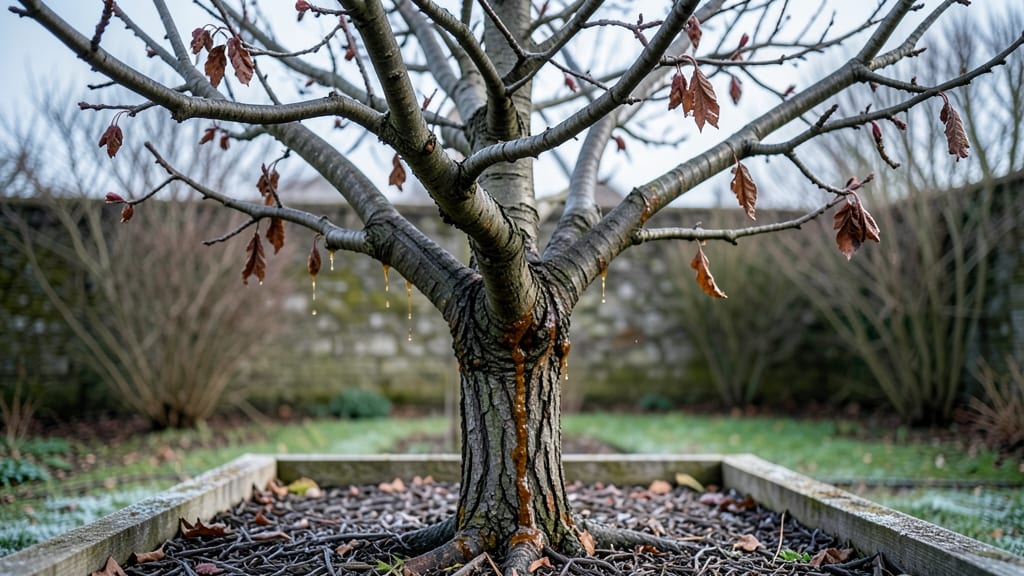
Your cherry tree oozing sap isn’t just messy—it’s a warning sign that could mean bacterial canker, pest damage, or even environmental stress. 🌳 I’ve seen this "bleeding" turn into a full-blown infection if ignored, but the right pruning and care can save your tree before it’s too late.
The sticky sap often appears after storms, pruning cuts, or pest attacks, creating perfect entry points for diseases. Look for sunken cankers, cracked bark, or oozing wounds—these are red flags that demand action. Without treatment, the tree can weaken, drop fruit prematurely, or even die.
By pruning infected branches 6-12 inches below the ooze and sterilizing tools between cuts, you can stop the spread. For stubborn infections, a copper fungicide applied in late winter or early spring acts as a shield.
The key is acting fast—once the sap turns dark and foul-smelling, professional help may be needed. This fix works for sweet, tart, and ornamental cherries alike. Let’s get your tree back to healthy growth before the next harvest season.
Root Causes Of Sap Bleeding
When your cherry tree starts oozing sap—especially in late winter or early spring—it’s often a sign of stress or injury. Understanding the why behind this sticky situation is the first step to fixing it.
Below, we break down the most common culprits, from environmental factors to physical damage, with clear explanations and actionable insights.
Cherry trees are sensitive to sudden temperature swings, especially when dormant. When warm days follow freezing nights, the tree’s xylem vessels (the plumbing system that transports water and nutrients) can rupture, causing sap to leak. This is most common in:
- Late winter thaw: After a hard freeze, rising temperatures trigger sap flow, but the tree’s vessels aren’t yet fully active.
- Early spring warmth: A sudden heatwave can "fool" the tree into waking up too soon, leading to stress and sap bleeding.
Pro Tip: 🌡️ Monitor your local USDA hardiness zone and protect young or weak trees with burlap wraps or tree guards during unpredictable weather.
Any wound—whether from improper pruning, animal gnawing, or even hail—can trigger sap oozing. Cherry trees, in particular, are prone to bleeding when:
- Pruned at the wrong time: Cutting in late fall, winter, or early spring (when the tree is dormant) forces it to "bleed" as it tries to heal.
- Cut too deeply or jaggedly: Rough cuts expose more tissue, increasing sap flow. Always use sharp, clean tools and make cuts at a 45-degree angle just outside the branch collar.
- Damaged bark or limbs: Scratches from wildlife, lawn equipment, or even strong winds can create entry points for pathogens, leading to sap as a defensive response.
Actionable Fix: 🔪 If sap is due to pruning, wait until late spring or early summer (after the tree has leafed out) to trim. Seal larger wounds with pruning sealant (though many experts argue against this—see our pruning guide for details).
Sap bleeding can also signal an underlying pest or fungal issue. Common culprits include:
| Problem | Signs | Sap Connection |
|---|---|---|
| Boring insects (e.g., peach tree borers, shothole borers) | Small holes in bark, sawdust-like frass, wilting leaves | Insects create tunnels, disrupting the tree’s vascular system and forcing sap to escape. |
| Fungal infections (e.g., silver leaf disease, canker) | Dark, oozing cankers, discolored bark, leaf spots | Pathogens clog vessels, causing gumming (sap + microbial byproducts) to leak. |
| Root rot or girdling roots | Stunted growth, mushrooms at the base, bark splitting | Restricted water flow forces the tree to "bleed" excess pressure. |
What to Do: 🔍 Inspect the tree for signs of pests or disease. If you spot borers, treat with beneficial nematodes or insecticidal soap. For fungal issues, remove infected branches 12 inches below the canker and sterilize tools between cuts.
While cherry trees need consistent moisture, excess water—especially in heavy clay soil—can suffocate roots and lead to sap bleeding. Here’s how it happens:
- Waterlogged roots: Poor drainage forces the tree to "push out" excess moisture through bark wounds or natural pores.
- Root pressure buildup: In spring, roots absorb water faster than the tree can use it, creating internal pressure that escapes as sap.
Fix It: 💡 Amend soil with compost or sand to improve drainage, and avoid overwatering. Mulch around the base (but not touching the trunk) to regulate soil temperature and moisture.
If your cherry tree was recently planted or moved, it may be undergoing transplant shock. The stress of uprooting disrupts the phloem (the tree’s "food pipeline"), causing sap to leak as the tree struggles to recover. This is common in:
- Young trees (<5 years old)
- Trees planted in wrong seasons (fall or late spring)
- Trees with circumferential root loss (roots wrapped or damaged during digging)
Recovery Tip: 🌱 Water deeply but infrequently, and avoid fertilizing for 6–12 months to reduce stress. Apply mycorrhizal fungi to help roots establish faster.
Fixing Sap Leaks Naturally
A cherry tree oozing sap can feel alarming, but with the right approach, you can restore its health and prevent future messes. Below are targeted solutions based on the most common causes—from fungal infections to physical damage—along with preventive tips to keep your tree thriving.
If the sticky residue is accompanied by cankers, discolored bark, or fungal growth, the issue likely stems from a pathogen. Here’s how to tackle it:
🔥 Step 1: Sterilize Your Tools
Before touching the tree, clean your pruning shears with 70% rubbing alcohol or a bleach solution (1 part bleach to 9 parts water). This prevents spreading disease. > ⚠️ Pro Tip: Never reuse contaminated tools on other trees—cross-contamination worsens outbreaks.
🍳 Step 2: Prune Infected Areas Aggressively
- Cut at least 6 inches below the oozing sap and 2 inches above the healthy bark (the green, unblemished part).
- Remove all infected branches, even small ones—don’t leave stubs.
- Dispose of pruned material in a sealed trash bag (not your compost).
👨🍳 Step 3: Apply a Fungicide or Antiseptic
After pruning, treat the wounds with:
- Bordeaux mixture (for bacterial cankers like Pseudomonas syringae)
- Copper-based fungicide (effective against fungal infections)
- Hydrogen peroxide (3%) (natural antiseptic for minor cases)
🥘 Step 4: Seal the Wounds (If Necessary)
For larger cuts, use pruning sealant (like Tanglefoot Tree Wound Pruning Seal) to protect against pests and further infection. Skip this for small cuts—air-drying is better for healing.
🌡️ Step 5: Monitor and Repeat
Check the tree weekly for new sap or fungal growth. If the issue persists after 4–6 weeks, consult a local arborist—some infections (like Leucostoma canker) require systemic treatments.
If the oozing started after wind, hail, or improper pruning, the tree’s protective layers are compromised. Here’s how to help it recover:
🔪 Step 1: Assess the Damage
- Minor scrapes? Let them heal naturally—covering them can trap moisture.
- Deep gashes or split bark? Prune carefully to remove jagged edges.
⏰ Step 2: Prune at the Right Time
- Best time to prune: Late winter or early spring (when the tree is dormant).
- Avoid pruning in wet conditions—moisture slows healing and invites rot.
🎯 Step 3: Support Weak Branches
If wind or ice caused the damage:
- Use tree ties or soft straps to stabilize weak limbs.
- Remove dead or hanging branches that could tear further.
✨ Step 4: Boost Tree Health A resilient tree heals faster.
Improve its defenses with: - Balanced fertilizer (high in nitrogen for foliage, potassium for strength) - Mulch (2–4 inches deep) around the base (keep it 6 inches away from the trunk) - Deep watering (1–2 inches per week) to prevent stress
Once your cherry tree is back in shape, prevent future leaks with these habits:
| Cause | Prevention Strategy | When to Do It |
|---|---|---|
| Fungal/bacterial spread | Sterilize tools after each use | Before/after pruning |
| Avoid overhead watering (use drip irrigation) | Spring/Fall | |
| Plant resistant varieties (e.g., ‘Stella’ cherry) | At planting time | |
| Physical trauma | Prune correctly (follow the 3-cut method) | Dormant season |
| Protect young trees with tree guards | Early spring | |
| Pest infestations | Apply neem oil or insecticidal soap | Early signs of pests |
| Environmental stress | Mulch properly and water deeply | Spring/Summer |
- Don’t paint or seal minor wounds—it traps moisture and delays healing.
- Avoid heavy pruning in summer—new growth is more vulnerable to disease.
- Don’t ignore small leaks—early action prevents major infections.
With these steps, your cherry tree should stop oozing sap within weeks and recover its strength. Keep an eye on it, and soon, you’ll have a healthy, productive tree—no sticky surprises! 🌳💚
Frequently asked questions
Is oozing sap always a sign of disease in cherry trees?
Not necessarily! While sap bleeding often signals infection (like bacterial canker), it can also occur naturally during late winter thaws or after physical damage from storms or pruning. Look for other clues: dark, foul-smelling sap or cankers suggest disease, while clear sap after a freeze is usually harmless. Always inspect the bark for wounds or discoloration.
Can I prune my cherry tree when it's oozing sap?
Yes, but only if the sap is from disease or damage. Wait until late spring or early summer (after leaf-out) for healthy pruning. If treating an infection, prune immediately—cut 6-12 inches below the ooze and sterilize tools between cuts. Avoid pruning in wet conditions, as moisture slows healing and worsens sap flow.
What's the fastest way to stop sap from dripping onto my patio?
For immediate relief, wrap the affected branch with plastic wrap or a tree wound dressing to contain the flow. Then address the root cause: prune infected areas, apply fungicide, or adjust watering. If the tree is healthy but bleeding due to weather, the sap will stop on its own once temperatures stabilize. For persistent drips, consider tree guards to protect branches.
Will my cherry tree recover if I see sap oozing now?
It depends! If caught early (clear sap, no cankers), most trees recover fully with proper care. For infections, act within 2-4 weeks—prune aggressively, sterilize tools, and apply fungicide. Young trees or severe cases may need professional help. Monitor for new sap or wilting leaves, which signal worsening problems. Patience is key—healthy growth often returns within 1-2 growing seasons.
Can I use household items to treat sap oozing?
For minor cases, yes! Mix 1 part hydrogen peroxide (3%) with 1 part water to disinfect wounds after pruning. Avoid vinegar or bleach—both can harm the tree. For pests, neem oil (1 tsp per quart of water) works as a natural insecticide. However, fungal/bacterial infections require commercial fungicides like copper spray. Always test treatments on a small area first.