
Watering
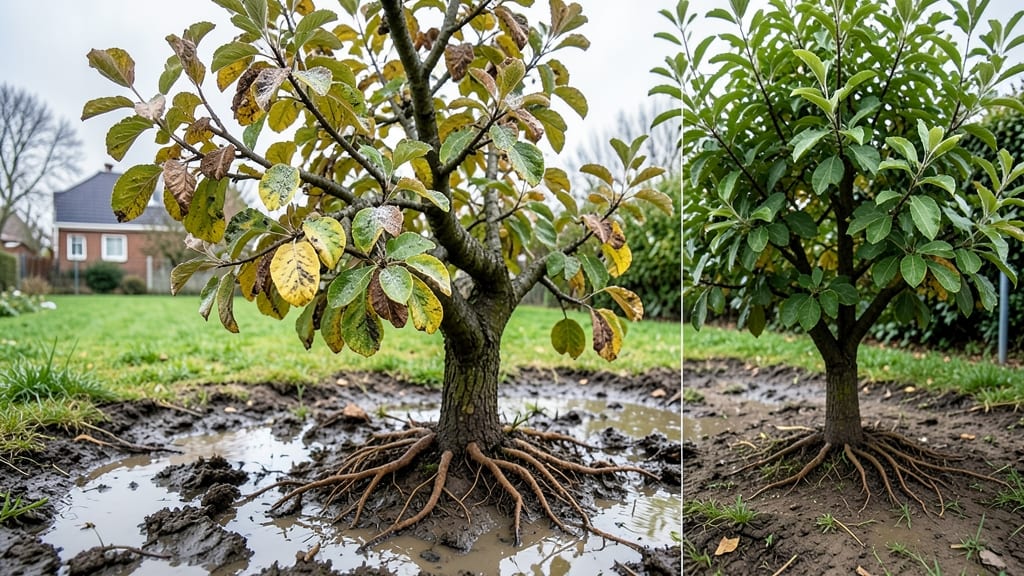
Your apple tree’s yellowing leaves and mushy roots scream one problem: overwatering. 🌳 I’ve watched this happen to three apple trees in my own yard—first the leaves droop, then the bark softens, and before you know it, the roots rot.
The good news? Fixing it isn’t as scary as it sounds, and with the right adjustments, your tree can bounce back stronger than ever.
Overwatering happens when roots suffocate in soggy soil, cutting off oxygen and inviting fungus. Young trees need consistent moisture, but mature ones can’t handle standing water—even in heavy clay or poorly drained spots.
The first sign? Leaves turning yellow or brown while the soil stays damp for days. Mushy roots? That’s root rot setting in, and it spreads fast if ignored.
Here’s the game-changer: adjust your watering schedule to match the season and soil type. Aim for 1–1.5 inches of water per week (including rain), and always check soil moisture before watering—stick your finger in 2–3 inches deep.
If it’s damp, wait. For mature trees, deep watering once a week beats shallow, frequent watering. Mulch helps too—keep it 3–4 inches thick to regulate moisture and prevent evaporation.
For trees already struggling, prune back any dead branches and improve drainage by amending the soil with compost or sand. If root rot is severe, you might need to dig out the worst-affected roots (sterilize your tools first!).
The key is consistency—once you fix the watering routine, your apple tree will show signs of recovery in 4–6 weeks, with new growth that’s vibrant and healthy. Stick with it, and you’ll avoid this mess next season.
Root Causes of Overwatered Trees
When your apple tree starts showing signs of distress—like yellowing leaves, wilting branches, or a mushy root system—it’s often a cry for help from its roots. Overwatering isn’t just about giving your tree too much water; it’s a complex issue tied to soil, drainage, and even climate.
Understanding why this happens is the first step to fixing it. Let’s dig into the science behind it.
Apple trees thrive in well-draining soil, but when soil becomes compacted or clay-heavy, water pools around the roots instead of seeping away. This creates an anaerobic (oxygen-deprived) environment, where roots suffocate and can’t absorb nutrients or water efficiently.
- Clay soil: Holds water like a sponge, leaving roots waterlogged for days.
- Compacted soil: Often caused by foot traffic, heavy machinery, or poor organic matter. It prevents water from draining and air from reaching roots.
- No organic matter: Soil without compost or mulch can’t hold moisture properly, leading to either drought stress or, when overwatered, root rot.
💡 Pro Tip: Test your soil’s drainage by digging a 12-inch hole, filling it with water, and timing how long it takes to drain. If it takes more than 6 hours, your soil may be too dense.
Apple trees don’t need daily watering—especially mature ones. Frequent, shallow watering tricks roots into staying near the surface, where they’re more vulnerable to rot. Overwatering can also leach away essential nutrients, leaving your tree malnourished despite the moisture.
- Automatic sprinklers: Often run on timers without accounting for rain or soil moisture.
- Hand-watering habits: Some gardeners water at the same time daily, even if the tree doesn’t need it.
- Ignoring weather: Heavy rain followed by extra watering can drown roots faster than you think.
🌡️ Science Note: Apple trees need 1–1.5 inches of water per week (including rainfall). Use a rain gauge or trowel test to check soil moisture before watering.
Mulch isn’t just for looks—it regulates soil temperature, retains moisture, and improves drainage. Without it, soil can crust over, trapping water against the roots. Too much mulch (more than 3–4 inches) can suffocate the tree and promote fungal growth.
- No mulch at all: Leads to soil erosion and poor water absorption.
- Improper mulch depth: Piling mulch against the trunk (a "mulch volcano") traps moisture and invites pests.
- Wrong mulch type: Dense materials like plastic or thick bark chips can block water flow.
✨ Best Practice: Use wood chips, straw, or shredded leaves in a 3-inch layer, keeping it 3–4 inches away from the trunk.
Apple trees in pots or raised beds are especially prone to overwatering because containers drain poorly and dry out unevenly. Without proper drainage holes or a well-formulated potting mix, roots sit in stagnant water, leading to rot.
- No drainage holes: Water has nowhere to escape, pooling at the bottom.
- Cheap potting mix: Some mixes retain too much water, while others dry out too fast.
- Overpotting: A pot too large for the tree’s size holds excess moisture longer than needed.
🔥 Fix It: Use a fast-draining mix (like 60% potting soil, 30% perlite, 10% compost) and ensure pots have multiple drainage holes.
Cooler temperatures, high humidity, or rainy seasons slow evaporation, making soil stay soggy longer. If your tree is already stressed from winter dormancy or summer heat, overwatering can push it over the edge.
- Winter watering: Trees need less water in cold months—they’re dormant!
- Humid climates: Air that’s already saturated means soil stays wet longer.
- Shade vs. sun: Shady spots dry out slower than sunny areas, requiring adjusted watering.
🎯 Adjust Your Approach: Reduce watering by 50% in winter and monitor soil moisture more closely in humid or shaded areas.
Fixing Overwatered Apple Trees
Overwatering can turn your thriving apple tree into a soggy mess, but the good news is that with the right steps, you can nurse it back to health—and keep it that way.
Below, we’ve mapped out practical fixes for each common symptom of overwatering, along with prevention tips to avoid future disasters.
Cause: Compacted, waterlogged soil cuts off oxygen, leading to root rot and yellowing leaves. Fix:
- 🔥 Test Your Drainage – Dig a 12-inch hole near the tree. Fill it with water and time how long it takes to drain. If it’s still wet after 6 hours, your soil is too dense.
- 🍳 Amend the Soil – Mix in coarse sand, perlite, or compost (50/50 with existing soil) to improve aeration. For heavy clay soil, consider gypsum (follow package instructions).
- 👨🍳 Raise the Tree (If Needed) – If the root flare is buried, gently excavate the top 2–3 inches of soil to expose roots. Never pile soil against the trunk—this strangles the tree.
💡 Prevention Tip: Install French drains or swales (shallow trenches) around the tree’s drip line to redirect excess water. Mulch 2–4 inches deep (keep it 6 inches away from the trunk) to regulate moisture.
Cause: Overwatering leaches nutrients and stresses the tree, causing chlorosis (yellowing). Fix:
- ⏰ Water Deeply but Less Often – Instead of daily light watering, soak the root zone (12–18 inches deep) every 7–10 days (adjust for rain). Use a moisture meter to check—soil should feel like a damp sponge, not a swamp.
- 🥗 Flush Out Excess Salts – If your water is hard or you’ve used fertilizers, leach the soil by watering heavily (2–3 inches) to push out built-up salts.
- 🍎 Boost Nutrients – Apply a balanced fertilizer (10-10-10) in early spring and iron chelate if leaves stay yellow. Avoid high-nitrogen fertilizers—they worsen waterlogging stress.
🌡️ Pro Tip: Morning watering is best—it gives leaves time to dry, reducing fungal risks (like powdery mildew).
Cause: Fungal root rot thrives in waterlogged conditions, turning roots black and mushy. Fix:
- 🔪 Prune Damaged Roots – Carefully dig around the root ball and trim any black, soft, or foul-smelling roots with sterilized pruners. Healthy roots are firm and white.
- 🌿 Apply Fungicide – Spray copper fungicide or hydrogen peroxide (3%) on exposed roots to kill fungi. For severe cases, systemic fungicides (like Myclobutanil) may help.
- 🎯 Air It Out – If possible, plant in raised beds or construct a root aeration trench (6 inches deep) around the tree to improve airflow.
✨ Emergency Move (Last Resort): If root rot is severe, transplant the tree to a well-draining area. Do this in early spring or fall, keeping the root ball intact and watering lightly for 2 weeks post-move.
- 📊 Monitor Weather – Use a rain gauge to track precipitation. Skip watering if you’ve had 1 inch of rain in the past week. - 💪 Mulch Right – Use wood chips or straw, but never pile it against the trunk.
Mulch should form a donut shape around the tree. - 🍎 Prune for Airflow – Thin out dense branches to reduce humidity near the trunk, which discourages fungal growth.
Final Thought: An overwatered apple tree can recover—but speed matters. Act fast to improve drainage, adjust watering, and give your tree the breathing room it needs. With patience and the right care, you’ll see greener leaves and stronger roots in no time! 🍏💧
Frequently asked questions about apple tree overwatering
How can I tell if my apple tree is getting too much water?
Watch for yellowing leaves (especially on lower branches), mushy roots when dug up, and soil that stays damp for days after watering. If leaves feel soft or fall off easily, or if the bark appears sunken, your tree is likely drowning in moisture. Check by sticking your finger 2–3 inches deep—if it's soggy, cut back on watering immediately.
What’s the best way to fix compacted soil around my apple tree?
Loosen the soil by digging a 12-inch deep trench around the tree’s drip line, then mix in coarse sand or perlite (50/50 with existing soil) to improve drainage. For heavy clay, add gypsum (follow package rates). Mulch with wood chips (3–4 inches thick), keeping it 6 inches away from the trunk to prevent rot. This combo aerates roots while regulating moisture.
Can I save an apple tree with root rot from overwatering?
Yes, but act fast! First, prune away black/mushy roots with sterilized tools. Apply copper fungicide to exposed roots, then improve drainage as above. For severe cases, transplant to a raised bed with fast-draining soil. Water lightly (1 inch per week) for 2 weeks post-move to help recovery. Recovery takes 4–6 weeks if caught early.
How often should I water my mature apple tree?
Mature trees need deep watering once a week (or every 10 days in dry spells), delivering 1–1.5 inches of water to the root zone. Use a soaker hose or drip irrigation to avoid wetting leaves. Check soil moisture first—if the top 2 inches are dry, it’s time to water. Never water on a schedule; adjust for rain and season.
Will mulch help or hurt an overwatered apple tree?
Mulch helps only if applied correctly! Use wood chips or straw in a 3-inch layer, keeping it 6 inches away from the trunk (never pile against bark). This regulates moisture and prevents soil crusting. Avoid thick mulch (>4 inches) or plastic, which traps heat and water. For recovery, focus first on drainage before adding mulch.