
Trees
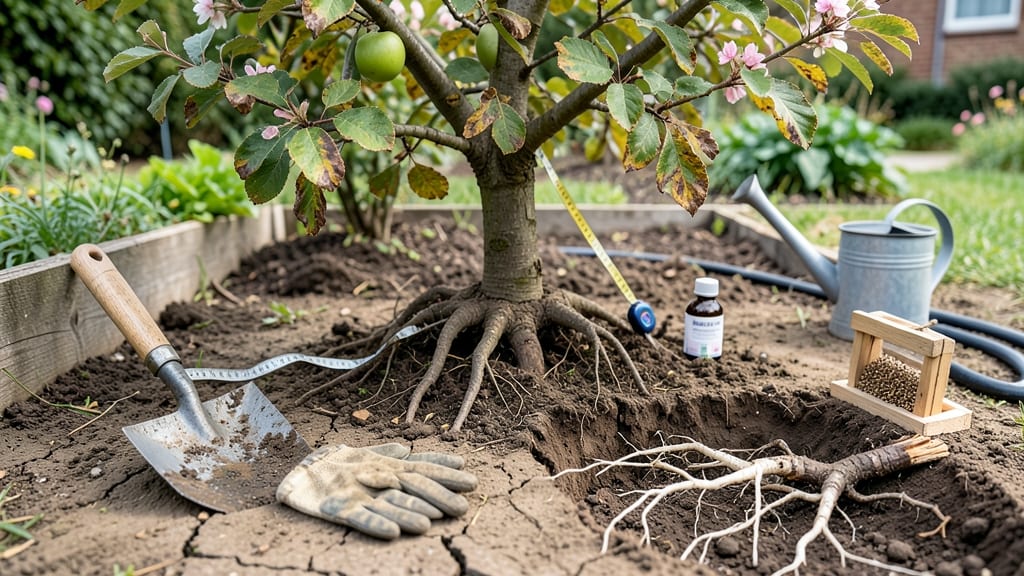
Apple tree root problems can turn your backyard orchard into a slow-motion disaster if you don’t catch them early. 🌳 I’ve seen healthy trees decline in just a few seasons because of issues like root rot or girdling roots—until I learned how to spot and fix them before they spread.
The key is knowing what to look for beneath the soil and acting fast.
Most root problems start with poor drainage, compacted soil, or fungal infections that creep in when the roots are stressed. Symptoms like wilting leaves, stunted growth, or mushrooms popping up at the base are red flags you can’t ignore.
The good news? Many fixes—like aerating the soil or pruning affected roots—are simpler than they sound.
By the end of this guide, you’ll be able to diagnose the five most common root issues and stop them before they weaken your tree. We’re talking stronger roots, better fruit production, and a tree that thrives for years—not just seasons. Let’s get your apple tree back on track.
Whether you’re dealing with a young sapling or a mature tree, these solutions work for any size. The sooner you act, the sooner your tree will bounce back—and you’ll avoid the heartbreak of losing it altogether.
Root Causes Of Apple Tree Struggles
Apple trees are resilient, but their roots can face serious threats that weaken—or even kill—the tree. Understanding the why behind these issues helps you act fast. Here’s a breakdown of the most common culprits and the science behind them.
Apple tree roots need well-draining, aerated soil rich in organic matter to thrive. When soil becomes compacted, waterlogged, or nutrient-poor, roots suffocate, leading to stunted growth, fungal infections, and even root rot.
- Why it happens:
- Heavy clay soils hold excess water, cutting off oxygen to roots.
- Over-tilling or foot traffic breaks down soil structure, creating a dense barrier.
- Lack of organic matter (like compost or mulch) starves roots of essential nutrients.
- Improper grading (sloping water toward the trunk) causes water pooling.
💡 Pro Tip: Test your soil’s drainage by digging a 12-inch hole—if water sits for more than 6 hours, you’ve got a problem.
Fungal pathogens like Phytophthora, Armillaria (honey fungus), and Pythium thrive in damp, anaerobic (oxygen-poor) soil. These infections girdle roots, block nutrient uptake, and can kill a tree within months if untreated.
- Why it happens:
- Overwatering or poor drainage creates the perfect fungal breeding ground.
- Wounded roots (from construction, girdling, or improper pruning) provide entry points.
- Contaminated soil from infected plants or tools spreads spores.
- Cool, wet climates (like the Pacific Northwest) accelerate fungal growth.
🔥 Warning Sign: Look for mushrooms at the base of the tree (a sign of Armillaria) or black, mushy roots (root rot).
Insects like grubs, borers, and nematodes chew through roots, disrupting water and nutrient flow. Some, like apple root weevils, target young roots, while nematodes (microscopic worms) pierce root cells, causing wilting and dieback.
- Why it happens:
- Grubs (from Japanese beetles or June bugs) feed on shallow roots, weakening structural support.
- Nematodes thrive in compacted, waterlogged soil with high organic matter.
- Root borers (like the apple root borer) lay eggs in cracks, and larvae burrow into roots.
- Lack of beneficial microbes (like mycorrhizal fungi) leaves roots vulnerable.
🎯 Prevention: Encourage beneficial nematodes (Steinernema carpocapsae) or apply neem oil to deter pests.
Apple trees are hardy, but temperature swings, drought, or frost heave can damage roots over time. Cold snaps can crack roots, while prolonged drought forces roots to seek water deeper, making them brittle and prone to breakage.
- Why it happens:
- Frost heave (freezing/thawing cycles) pushes roots upward, exposing them to drying winds.
- Drought stress causes roots to shrink and pull away from soil, reducing absorption.
- Salt buildup (from deicing or poor irrigation water) burns root tips.
- Urban heat islands (paved areas) bake shallow roots, limiting growth.
✨ Solution: Mulch with wood chips (3-4 inches deep) to insulate roots and retain moisture.
Sometimes, well-meaning actions backfire—like over-pruning, girdling, or chemical misuse—which stress roots and invite problems.
- Why it happens:
- Girdling roots (roots growing in circles, cutting into the trunk) strangle the tree.
- Over-fertilizing with nitrogen burns roots, while lack of potassium weakens disease resistance.
- Herbicide drift (from lawn treatments) kills beneficial microbes and root tissue.
- Improper staking restricts root spread, making trees top-heavy and unstable.
🔪 Fix: If roots are girdling, carefully excavate and prune with a sharp saw—never cut more than 10% of roots at once.
Fixing Apple Tree Root Issues
Apple tree root problems can feel overwhelming, but with the right approach, you can restore your tree’s health and prevent future damage. Below are practical, step-by-step solutions tailored to the most common causes—from fungal infections to physical stress—plus prevention tips to keep your tree thriving.
🔧 Fix It:
- 🌱 Remove Infected Soil & Roots
- Use a sterilized shovel to carefully dig around the infected roots (wear gloves!).
- Cut away blackened, mushy, or hollow roots with pruning shears (sterilize between cuts with rubbing alcohol).
- Dispose of infected debris in a sealed trash bag—do not compost it.
- 💦 Improve Drainage
- Raise the soil level around the tree by adding 1–2 inches of compost or organic matter (like aged wood chips or coconut coir).
- Avoid waterlogging: Ensure the planting area has a slight slope (1–2 inches per foot) to direct water away.
- Install French drains or gravel trenches if your yard has poor drainage.
- 🍄 Apply Fungicides
- Preventative spray: Use a copper-based fungicide (like Copper Sulfate) or phosphite-based fungicide (e.g., Phostrol) every 2–4 weeks during wet seasons.
- Soil drench: Mix 1 tbsp of hydrogen peroxide (3%) per gallon of water and pour it around the root zone (repeats weekly for 3 weeks).
- Organic option: Neem oil (1 tsp per gallon of water) or garlic spray (blended garlic + water) can help suppress fungi.
- 🌿 Boost Tree Immunity
- Fertilize with mycorrhizal fungi (available as a powder) to help roots recover.
- Avoid nitrogen-heavy fertilizers—opt for balanced (10-10-10) or potassium-rich (5-10-15) instead.
💡 Prevention Tips: ✔ Mulch properly: Keep mulch 3–4 inches deep but 6 inches away from the trunk to prevent moisture buildup. ✔ Water deeply but less often: Aim for 1–1.5 inches per week (deep soak 2–3 times/week). ✔ Test your soil: Aim for a pH of 6.0–7.0—fungi thrive in acidic soil.
🔧 Fix It:
- 🔪 Loosen Compacted Soil
- Use a garden fork to aerate the soil around the roots (go 12–18 inches deep).
- Mix in compost or sand to improve root penetration.
- 🌳 Correct Girdling Roots
- If roots are circling the trunk, gently prune them (use a clean saw) without damaging the main root mass.
- Do not remove more than 20% of roots at once—this can stress the tree.
- 🚧 Protect Roots from Future Damage
- Mark root zones with paint or flags before digging near the tree.
- Install root barriers (if nearby construction is inevitable) to deflect heavy machinery.
💡 Prevention Tips: ✔ Plant trees away from sidewalks/driveways (at least 8–10 feet). ✔ Use drip irrigation to avoid soil compaction from foot traffic. ✔ Avoid heavy equipment near the root zone.
🔧 Fix It:
- 🐜 Identify the Pest
- Grubs: Look for chewed roots and white, C-shaped larvae in soil.
- Nematodes: Roots may appear stunted or knotted.
- Voles: Gnawed bark at the base and surface tunnels.
- 🧴 Treat Infestations
- Grubs: Apply beneficial nematodes (Heterorhabditis bacteriophora) or neem oil granules.
- Nematodes: Use marigold plants (natural repellent) or chemical nematicides (like Aldicarb—use cautiously).
- Voles: Set snaps traps or use hardware cloth barriers around the trunk.
- 🌿 Encourage Natural Predators
- Birdhouses (for birds that eat grubs).
- Companion planting (e.g., garlic, onions, or mint to deter pests).
💡 Prevention Tips: ✔ Keep grass short around the tree (grubs love tall grass). ✔ Remove leaf litter (hides pests). ✔ Use raised beds if voles are a recurring issue.
🔧 Fix It:
- 💧 Adjust Watering Habits
- Overwatered? Let the soil dry out 2–3 inches deep before watering again.
- Drought-stressed? Deep-water 2–3 times per week (10–15 gallons per tree).
- 🌱 Improve Soil Moisture Retention
- Add hydromulch or water-absorbing crystals (like polyacrylamide) to sandy soil.
- Mulch heavily (4–6 inches deep) to retain moisture.
- 🌿 Prune Damaged Branches
- Remove wilting or yellowing leaves to reduce water loss.
💡 Prevention Tips: ✔ Use a moisture meter to check soil dampness. ✔ Water in the morning to reduce evaporation. ✔ Group trees together to create a microclimate.
If your tree shows severe wilting, oozing sap, or large-scale root decay, consult an arborist. They can assess deep root issues (like Armillaria root rot) that may require soil fumigation or tree removal in extreme cases.
🌟 Pro Tip: Monitor your tree’s recovery by checking new leaf growth and root health every 4–6 weeks. Healthy roots should be white or tan, not dark or mushy! 🌱
Frequently asked questions
How do I know if my apple tree has root problems?
Look for these key signs: yellowing leaves, stunted growth, or mushrooms at the base (like honey fungus). Dig carefully—healthy roots are white/tan, while diseased ones are black/mushy. If the soil smells sour or roots pull away easily, that’s another red flag.
Can I fix girdling roots myself, or should I call an arborist?
You can try! Use a clean saw to carefully prune roots circling the trunk, but never remove more than 20% of roots at once. For severe cases (like deep girdling), an arborist can assess if the tree needs structural support or removal.
What’s the fastest way to stop root rot spreading?
Act immediately: Remove infected roots (wear gloves!), improve drainage with compost, and apply a copper fungicide or hydrogen peroxide drench (1 tbsp per gallon). Avoid waterlogging—let soil dry between waterings.
Will mulch help or hurt my apple tree’s roots?
Mulch is great—but only if applied correctly! Keep it 3–4 inches deep and 6 inches away from the trunk to prevent rot. Use wood chips or straw, and avoid piling mulch against the bark.
How often should I check my apple tree’s roots for problems?
Inspect roots twice a year: once in early spring (before blooms) and again in fall (after harvest). For young trees, check monthly—early detection saves the tree!