
Landscaping
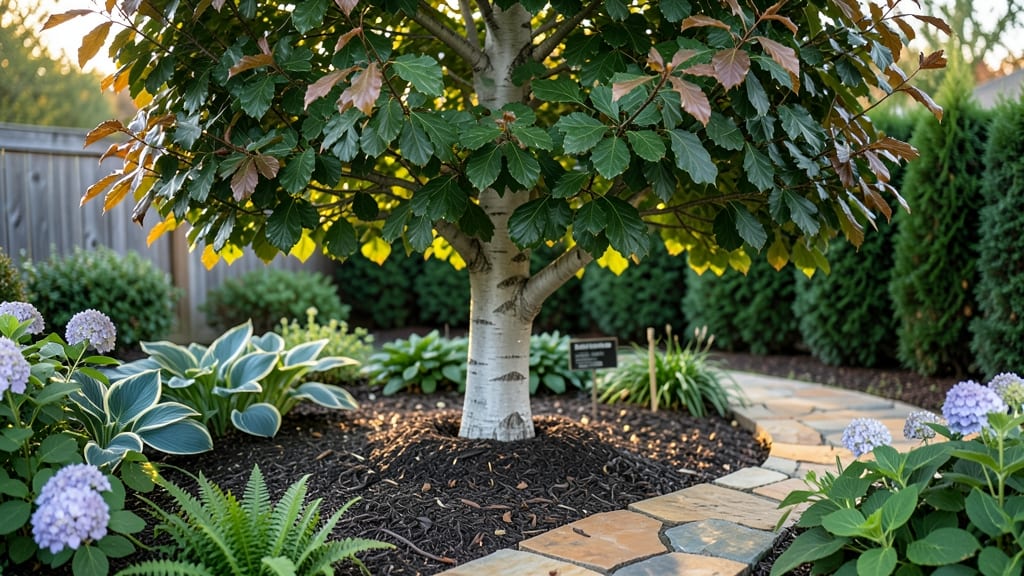
Beech tree landscaping transforms any yard into a timeless, four-season masterpiece—no fancy tricks required. 🌳 I planted mine as a statement piece near the patio, and now it’s the centerpiece that never fades, even in winter when its coppery bark shines like polished bronze.
The key isn’t just where you place it, but how you let it shine alongside simpler plants that won’t compete for attention.
Start with sunlight and space: beech trees need full sun to partial shade and 30-50 feet of clearance to spread their branches gracefully. Pair them with low-growing perennials like hostas or ferns to highlight their elegant canopies, or add a gravel path underneath to keep the area tidy.
They’re drought-tolerant once established, so watering becomes a non-issue after the first year.
What you’ll love most is the year-round drama: silvery-green leaves in summer, fiery fall colors, and sculptural branches in winter that catch every snowflake. The bark alone turns heads—no pruning required.
Even better, their dense canopy provides shade for smaller plants below, creating a cool microclimate perfect for heat-sensitive flowers.
Works for both formal gardens (as a solitary specimen) and wild landscapes (as part of a native woodland edge). The only real rule? Give it room to grow—and watch your yard become the envy of the neighborhood without the upkeep. Ready to plant a legacy?
📚 In This Guide
- What you need
- Instructions
- Tips and common mistakes
- Wrapping up and next steps
What you need
- ● Beech tree saplings: Choose between Fagus sylvatica (European beech) or Fagus grandifolia (American beech). Buy 1–3 trees, depending on your design (spaced 20–30 ft apart for mature growth).
- ● High-quality soil: 5–10 bags of loamy, well-draining soil (amend with compost for nutrient-rich planting).
- ● Mulch: 2–3 cubic yards of wood chips or pine straw (3–4 inches deep) to retain moisture and suppress weeds.
- ● Organic fertilizer: Slow-release, balanced 10-10-10 or tree-specific fertilizer (1–2 bags).
- ● Watering system: Drip irrigation kit or soaker hoses (50–100 ft, depending on spacing).
- ● Shovel & spade (for digging planting holes 2x wider than the root ball).
- ● Wheelbarrow (for hauling soil/mulch).
- ● Pruning shears (sharp, bypass-style for clean cuts).
- ● Measuring tape & stakes (to mark planting locations).
- ● Garden gloves (heavy-duty, waterproof for comfort).
- ○ Optional: Post-hole digger (if staking young trees for support).
- ● 💡 Soil test: Check pH (ideal: 6.0–7.0) before planting—adjust with lime or sulfur if needed.
- ● 🌡️ Timing: Plant in early spring or fall (avoid extreme heat or frost).
- ● 🎯 Site prep: Clear weeds/grass in a 6-foot radius around each tree for easy maintenance.
Step-by-Step guide to planting and maintaining beech trees for year-round landscaping
Here's how to establish beech trees with minimal fuss while maximizing their stunning year-round appeal.
🌱 Step 1: Select and Prepare the Planting Site
Beech trees thrive in well-draining soil with partial shade to full sun—they tolerate both but show their best color in morning sun with afternoon shade. Test your soil first: dig a 6-inch deep hole and check for moisture retention. If it stays soggy for hours, amending with compost improves drainage dramatically. I always look for a spot with 6-8 feet of clearance around mature size, as beech trees grow 40-70 feet tall with a 30-50 foot spread.
Choose a location with sheltered wind—young trees struggle with strong winds that dry out their roots. A slight slope helps water drain away from the trunk, preventing root rot. Mark the planting area with stakes and string to visualize the tree's mature shape before digging. This prevents costly mistakes later when roots reach out beyond the intended space.
🪴 Step 2: Plant the Beech Tree at the Correct Depth and Stake
Dig a hole twice as wide as the root ball but no deeper—beech trees hate having their roots buried too deep. The top of the root ball should sit 1-2 inches above ground level to prevent waterlogging. Gently loosen any circling roots with your fingers; I always use a pruning shear to trim any roots growing inward more than 6 inches to encourage outward growth.
Place the tree in the hole and backfill with the native soil, tamping down lightly every 6 inches to eliminate air pockets. Water deeply until the soil settles, then create a 2-inch deep basin around the base to direct water to the roots. Install two stakes diagonally 18-24 inches from the trunk and secure with soft tree ties—never wire, which can girdle the trunk as it grows.
☀️ Step 3: Mulch and Water for Establishment
Spread 3-4 inches of mulch (wood chips or shredded bark) in the basin, keeping it 6 inches away from the trunk to prevent rot. Water deeply once a week during the first year, aiming for 1-1.5 gallons per week unless rain provides 1 inch of moisture. You'll know you're watering correctly when the soil 6 inches down feels consistently moist but not waterlogged.
Beech trees develop shallow but extensive root systems, so focus watering on the outer edges of the root zone rather than just the trunk. Avoid overhead watering, which can spread fungal diseases. After the first year, reduce watering to once every 2-3 weeks unless there's a prolonged dry spell—mature beech trees are remarkably drought-tolerant once established.
✂️ Step 4: Prune for Structure and Health
Wait until late winter or early spring before dormancy breaks to prune. Remove any dead, diseased, or crossing branches first using clean, sharp pruners. Make cuts just outside the branch collar—the swollen area where the branch meets the trunk—to promote faster healing. For larger branches over 2 inches thick, use three-cut pruning to prevent tearing the bark.
Shape the tree by opening the canopy to allow light penetration—beech trees develop beautiful bronze fall foliage when they receive adequate sunlight. Never remove more than 25% of the canopy in one season. After pruning, apply wound dressing only if the cut is larger than 4 inches in diameter; smaller cuts heal naturally without treatment. This is where many gardeners go wrong—I've seen trees stressed by over-pruning in a single season.
🌿 Step 5: Maintain for Year-Round Beauty
Beech trees reward patience with glossy green leaves in summer, stunning bronze foliage in fall, and attractive exfoliating bark in winter. Rake up fallen leaves in fall to prevent beech leaf disease (a fungal issue spreading in many regions). Fertilize only if growth is slow—apply a balanced 10-10-10 fertilizer in early spring at half the recommended rate for large trees.
Monitor for beech bark disease (caused by scale insects and fungus) by checking the bark annually. Infected branches should be pruned and sterilized tools used between cuts. Mature beech trees develop characterful bark that peels in papery layers—never remove this naturally exfoliating bark, as it protects the tree. With proper care, your beech tree will become the centerpiece of your landscape for decades, offering four-season interest with minimal effort.
Tips & tricks for planting and maintaining beech trees
These insights will help you create a thriving, low-maintenance landscape feature that delivers beauty through every season.
Soil Preparation: Before amending with compost, consider testing your soil's pH level—beech trees prefer a slightly acidic to neutral range (6.0-7.0). If your soil is too alkaline, add sulfur or peat moss to adjust it gradually. I've seen trees struggle in heavy clay soils, so if yours is dense, mix in perlite or coarse sand to improve aeration. The 6-inch deep test hole in Step 1 is your best diagnostic tool for understanding drainage and compaction issues.
Root Ball Handling: When removing your beech tree from the container, gently squeeze the root ball to encourage roots to spread outward before planting. This prevents the "pot-bound" effect where roots circle tightly. In Step 2, after trimming circling roots, I recommend soaking the root ball for 10-15 minutes before planting—this helps hydrate dry roots and reduces transplant shock. Just be sure to drain excess water before placing in the hole.
Staking Strategy: The 18-24 inch diagonal staking in Step 2 serves two purposes: stabilizing the tree and encouraging straight growth. Use flexible tree ties that can be adjusted as the trunk grows—most garden centers sell these in bright colors that fade over time. I've found that removing stakes after just one growing season (around 6-12 months) gives trees better wind resistance than leaving them in too long.
Watering Wisdom: During the first year, the 1-1.5 gallons per week guideline assumes average rainfall conditions. In hot, dry climates, you may need to supplement with 2 gallons weekly. The key is maintaining that 6-inch deep moisture level—stick your finger in the soil to check. For the outer edge watering technique, imagine a donut shape around your tree's root zone rather than just watering at the trunk.
Pro Tips for Beech Tree Landscaping
- These insights will help you create a thriving, low-maintenance landscape feature that delivers beauty through every season.
- Soil Preparation: Before amending with compost, consider testing your soil's pH level—beech trees prefer a slightly acidic to neutral range (6.0-7.0).
- Root Ball Handling: When removing your beech tree from the container, gently squeeze the root ball to encourage roots to spread outward before planting.
Frequently asked questions
Got questions about beech tree landscaping?
Here are the answers to the most common ones to help you plant, care for, and enjoy your trees with confidence!
When is the best time to plant a beech tree?
The ideal time to plant beech trees is in early spring or fall—when soil is workable but not frozen. Avoid planting in extreme heat or drought. Young trees benefit from cooler weather, which reduces stress and encourages root growth. If you must plant in summer, water deeply and mulch to retain moisture.
How much sunlight does a beech tree need?
Beech trees thrive in full sun to partial shade (6+ hours of sunlight daily). While they tolerate shade, their stunning foliage and growth rate improve with more light. For urban or shaded landscapes, choose a European beech (Fagus sylvatica), which adapts better than American beech.
What’s the best mulch for beech trees?
Use 3–4 inches of organic mulch (like wood chips or shredded bark) to retain moisture and regulate soil temperature. Keep mulch 3–6 inches away from the trunk to prevent rot. Avoid fresh wood chips, which can draw pests. Replenish mulch annually for long-term benefits.
Why are my beech tree leaves turning brown or yellow?
Brown/yellow leaves often signal drought stress, nutrient deficiency, or pests. Check soil moisture first—beech trees hate dry roots. Yellowing between veins may indicate iron deficiency (test soil pH; amend if acidic). For pests, inspect for scale insects or spider mites and treat with horticultural oil if needed.
Can I grow beech trees in containers?
Yes, but they need large containers (20+ gallons) with drainage holes and well-draining soil. Dwarf varieties like ‘Purpureum’ or ‘Fastigiata’ work best. Move pots to shaded areas in summer and water consistently. Expect slower growth—container trees rarely reach full height.
Are beech trees deer-resistant?
Not entirely! While deer rarely eat mature beech trees, young saplings are vulnerable. Use deer repellent sprays, fencing, or companion plants (like daffodils) to deter them. Mature trees’ tough bark and height make them less appealing once established.
Wrapping up and next steps
Beech tree landscaping offers timeless beauty with minimal fuss—whether you’re drawn to their golden autumn hues, sturdy canopies, or lush green foliage. These trees thrive in diverse climates, making them a versatile, low-maintenance choice for any yard or garden.
With the right placement, soil prep, and occasional care, you’ll enjoy year-round elegance that enhances curb appeal and wildlife support.
Ready to transform your outdoor space? Start small—plant a single beech tree as a statement piece or sketch a design with a mix of varieties for layered interest. Explore local nurseries or consult a landscaper to bring your vision to life! 🌳✨