
Pests and Diseases
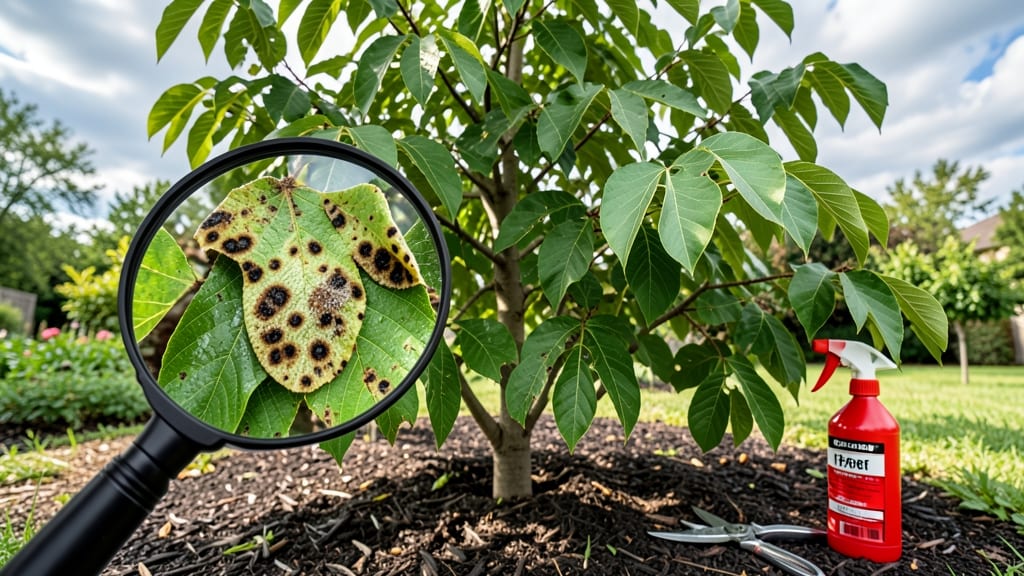
Black spots on pecan tree leaves typically signal fungal infections like anthracnose or scab, which worsen in wet, humid weather. The best defense is removing infected foliage immediately, treating with copper fungicide, and improving air circulation around the tree to prevent further damage.
Fungal diseases thrive when pecan trees sit in soggy soil or dense shade, creating perfect conditions for spores to spread. 🌿 Anthracnose, for example, starts as tiny dark spots that grow into larger lesions, while scab appears as olive-green or black crusty patches.
I've seen these issues flare up most dramatically after heavy spring rains or when trees are overcrowded. The key to stopping them is acting fast—pruning out affected leaves before the spores mature can cut transmission by up to 70%.
Beyond fungicides, organic growers swear by neem oil sprays and baking soda mixtures (1 tablespoon per gallon of water) to disrupt fungal growth. Mulching with wood chips helps regulate soil moisture, while strategic pruning opens the canopy to sunlight and airflow.
I recommend checking your trees every 7-10 days during peak growing season for new spots, as early intervention makes all the difference.
💡 In This Article
- Identifying Fungal Diseases Causing Black Spots on Pecan Leaves
- Organic Remedies and Preventive Care for Pecan Leaf Spots
Identifying fungal diseases causing black spots on pecan leaves
Fungal pathogens like anthracnose and scab target pecan trees by exploiting their natural weaknesses—thin leaf cuticles and high moisture retention. Anthracnose (Colletotrichum spp.) thrives in 70-90% humidity, producing dark, sunken lesions that often appear along leaf veins.
Under a microscope, you'd see the fungus's acervuli (spore-producing structures) erupting through the leaf surface, releasing thousands of spores per square inch. These spores germinate within 12-24 hours in damp conditions, creating a feedback loop of infection.
Scab (Venturia spp.) takes a different approach, forming olive-green to black crusty patches that resemble cracked paint. The fungus overwinters in infected leaves and buds, then spreads via splashing rain or wind.
What makes scab particularly insidious is its ability to infect both leaves and nuts—once established, it can reduce pecan yields by 30-50% in severe cases. Leaf spots (Alternaria spp.) often appear as concentric rings with dark centers, caused by the fungus's mycelium spreading outward from initial infection points.
All three pathogens share one critical requirement: free water on leaf surfaces for 6+ hours.
The lifecycle of these fungi follows a predictable pattern: spores land on leaves, germinate in moisture, penetrate the leaf tissue, and establish feeding structures within 3-5 days. The key environmental triggers are poor drainage (keeping roots waterlogged) and dense canopy growth (trapping humidity).
I've noticed anthracnose outbreaks peak after prolonged 50°F+ nighttime temperatures combined with afternoon showers—a perfect storm for spore release and germination. 🌧️ Understanding this lifecycle helps explain why preventive measures like copper fungicides (which disrupt spore germination) work best when applied before symptoms appear.
Visual diagnosis is your first line of defense. Anthracnose spots start as tiny 1-2mm dark flecks that expand into 1/4-inch lesions with yellow halos, while scab appears as raised, velvety patches that can merge into large infected areas.
Leaf spots often have irregular edges and may drop prematurely, leaving the tree vulnerable to secondary infections. The texture of infected leaves becomes papery and brittle—almost like crumpled parchment—due to the fungus's enzymatic breakdown of leaf tissues.
This physical change is a clear sign the tree is under stress and needs intervention.
Seasonal patterns play a huge role in disease pressure. Early spring (March-May) sees the highest risk as new leaves emerge vulnerable, while late summer (August-September) brings secondary outbreaks from spores overwintering in leaf litter.
I recommend monitoring your trees during these windows, especially after 0.5-inch+ rainfall events, which can increase spore splash by 400%. The combination of warm temperatures and high humidity creates ideal conditions for fungal reproduction—think of it as the perfect storm for leaf pathogens. 🌡️
For accurate identification, collect a few infected leaves and place them in a paper bag with a damp paper towel. After 3-5 days, check for fungal growth on the inside of the bag—a white or gray fuzzy coating indicates active mycelium.
This simple test helps distinguish between fungal infections and other issues like insect damage or nutrient deficiencies. The sooner you can confirm the pathogen, the faster you can implement targeted treatments before the disease spreads systemically.