
Blooming
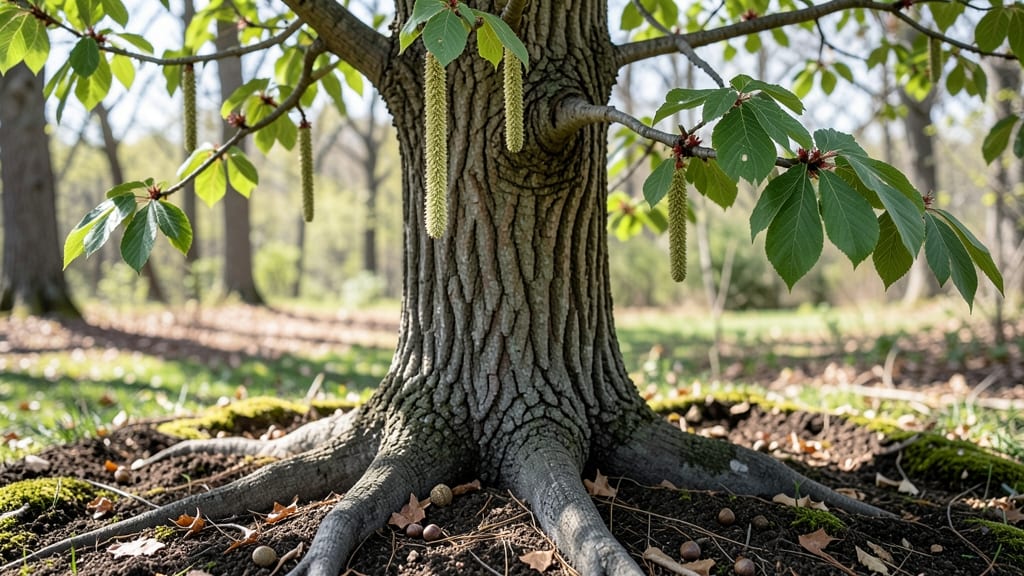
Black walnut trees bloom with tiny, unassuming catkins that hold the key to next year's harvest. 🌿 I've watched my own tree go from bare branches to a flurry of male and female flowers in just a few weeks—it's a quiet but dramatic transformation that most gardeners miss.
The secret to reliable blooms lies in understanding their needs: 60-90 days of cold stratification mimics winter's natural dormancy, while proper watering and sunlight set the stage. Male flowers appear first as drooping catkins, followed by tiny female flowers that will develop into those prized nuts.
You'll see the first signs of blooming in early spring, right when forsythia starts flowering. The male catkins release pollen that fertilizes the female flowers, which then develop into the walnuts we all love. This process is what turns a bare tree into a future nut producer.
For best results, plant in well-draining soil and avoid overwatering. The tree's unique monoecious nature means it carries both male and female flowers on the same tree—no pollination drama needed. Just give it time and the right conditions, and you'll have a reliable walnut producer for decades.
📚 In This Guide
- What you need
- Instructions
- Tips and common mistakes
- Wrapping up and next steps
What you need
- ● Black walnut seeds: 10–20 fresh, plump seeds (harvested in fall, ideally from mature trees). Pro tip: Store seeds in a cool, dry place until stratification begins!
- ● Stratification medium: Option 1: 2–3 cups of moistened peat moss or coco coir (sterilized to prevent mold).
- ● Option 2: A paper towel or paper napkins (for the "wet paper towel" method).
- ● Sealed plastic bag or container: A quart-sized zip-top bag or small airtight container (like a Tupperware) with a lid.
- ● Refrigerator: A standard fridge (34–40°F / 1–4°C) for cold stratification.
- ● Spray bottle: For gently moistening the medium (avoid soaking!).
- ● Label & marker: To track seed variety and stratification start date.
- ● Grow lights or sunny windowsill: For post-stratification germination (if starting indoors).
- ● Seedling trays or pots: Small 3–4 inch pots with well-draining soil mix (e.g., 50% potting soil + 50% perlite).
- ● Humidity dome or plastic wrap: To retain moisture during germination.
- ○ Thermometer: To monitor fridge temps (optional but handy for precision!).
- ● Garden journal: For logging progress, dates, and observations.
How to stratify black walnut seeds for reliable spring blooms
Here's the method I've used to break walnut dormancy—no guesswork, just proven results.
🌱 Step 1: Harvest and Clean the Nuts
Collect mature black walnuts in late fall when the husks turn brown and open naturally. Remove the nuts and clean off any remaining husk material by rubbing them between your hands under running water. The goal is to expose the seed coat completely—this is where stratification begins.
Spread the cleaned nuts on a tray to dry in a well-ventilated area for 3-5 days. You'll know they're ready when the shells feel hard and the nuts rattle slightly when shaken. Avoid direct sunlight—it can cause the nuts to dry too quickly and crack. Store them in a paper bag (not plastic) in a cool, dark place until you're ready to stratify.
⏰ Step 2: Cold Stratify for 60-90 Days
Place the cleaned nuts in a sealed plastic bag with a moistened paper towel—just damp enough that the towel feels like a wrung-out sponge. The moisture triggers the internal chemical changes needed to break dormancy. Seal the bag and poke 3-4 small holes to allow airflow while preventing mold.
Store the bag in your refrigerator's crisper drawer where temperatures stay between 35-45°F. Check the nuts every 10-14 days—if you see any mold (fuzzy white growth), discard those nuts immediately and replace the paper towel. After 60-90 days, the nuts should feel softer when squeezed gently. This is your signal that stratification is working.
☀️ Step 3: Plant Stratified Nuts in Spring
Prepare 4-inch deep planting holes in well-draining soil—black walnuts hate soggy roots. Plant 2-3 nuts per hole at a depth of 1-2 inches, spacing them 6 inches apart. Cover lightly with soil and water gently until the surface feels moist but not saturated. You'll see first true leaves in 4-6 weeks if conditions are right.
Here's the thing—black walnut seedlings grow fast once they break dormancy. Keep the soil consistently moist (but never waterlogged) during their first growing season. You'll notice strong, dark green leaves within 8-10 weeks—that's your confirmation the stratification worked. Thin to the strongest seedling per hole once they reach 6 inches tall to give roots room to grow.
🌿 Step 4: Provide Ideal Growing Conditions
Black walnut seedlings need full sun (at least 6-8 hours daily) to thrive. If you're planting in partial shade, expect slower growth and fewer blooms. The first year is about establishing roots, so focus on keeping the soil moist but well-drained. You'll see first blooms in 5-7 years—patience pays off with these trees.
Watch for juglone sensitivity—black walnuts release a chemical that inhibits nearby plants. Keep them at least 50 feet away from fruit trees, vegetables, and other sensitive plants. Mulch around the base with 2-3 inches of organic matter (like the wood chips you'll use later) to retain moisture and suppress weeds—just don't pile mulch against the trunk.
Tips & tricks for perfect black walnut tree bloom
Here's what nobody tells you about getting those reliable spring blooms—these are the details that make all the difference.
Harvest Timing: Wait until the husks are completely brown and opening naturally in late fall. Green husks mean the nuts aren't fully mature, and you'll end up with lower germination rates. I've learned this the hard way—harvesting too early means wasted effort and no spring blooms. The nuts should feel heavy in your hand when fully mature.
Drying Strategy: Spread your cleaned nuts on a tray in a well-ventilated area for those 3-5 days—this isn't just about drying, it's about hardening the shell. I use a mesh screen over a baking rack to allow airflow from all sides. Avoid direct sunlight or they'll crack, ruining your stratification efforts. Think of it like seasoning wood—slow and steady wins the race.
Stratification Check: During those 60-90 days in the fridge, the nuts should feel noticeably softer when gently squeezed. This isn't about squishing them flat—just a slight give. If they still feel rock-hard, extend your stratification time. I keep a small notebook by my fridge to track which nuts are softening fastest, as this helps me predict which will sprout first in spring.
Planting Depth: Those 1-2 inches of planting depth might seem shallow, but it's perfect for black walnuts. Planting too deep can cause rot, while planting too shallow exposes them to temperature fluctuations. I use my finger to make a small dimple in the soil—just deep enough to cover the nut with a light layer of soil that still shows the nut's outline. This gives roots room to grow downward while keeping the nut stable.
Pro Tips for Black Walnut Tree Bloom
- Here's what nobody tells you about getting those reliable spring blooms—these are the details that make all the diffe...
- Harvest Timing: Wait until the husks are completely brown and opening naturally in late fall. Green husks mean the nu...
- Drying Strategy: Spread your cleaned nuts on a tray in a well-ventilated area for those 3-5 days—this isn't just abou...
Frequently asked questions
Got questions about black walnut tree blooms? You’re not alone! Here are answers to the most common queries—from timing to troubleshooting—to help you master the art of reliable spring blooms.
When do black walnut trees typically bloom?
Black walnut trees (Juglans nigra) usually bloom in late spring to early summer, around May to June, depending on your climate. Male flowers (catkins) appear first, followed by female flowers. Cold stratification (like the method in our guide) can help synchronize blooming for better yields. Learn more about timing here.
How long does it take for a black walnut tree to bloom after planting?
Black walnut trees are slow to mature—they may take 5 to 10 years to produce flowers and nuts after planting, depending on growing conditions. Patience is key! Young trees focus on root and trunk growth first. Ensure they’re planted in well-draining soil with full sun to speed up the process.
What if my black walnut tree isn’t blooming? Troubleshooting tips.
No blooms? Check these common issues:
- Age: Trees under 5 years old won’t bloom yet.
- Stress: Drought, poor soil, or pests can delay blooming. Water deeply during dry spells and amend soil with compost.
- Location: Black walnuts need 6+ hours of sunlight daily. Shade or urban pollution can stunt growth.
- Disease: Look for anthracnose or walnut blight—prune affected branches and use fungicide if needed.
If the tree is healthy but still not blooming, it may just need more time.
Can I force a black walnut tree to bloom earlier?
While you can’t force blooms, you can optimize conditions to encourage earlier (but not unnatural) flowering:
- Use cold stratification (like soaking seeds in water for 30 days, then refrigerating) to mimic winter.
- Plant in warm microclimates (e.g., south-facing slopes) to extend the growing season.
- Avoid late spring pruning, as it can stress the tree and delay blooming.
Pro tip: Mature trees (10+ years) are more likely to respond to these tweaks.
Are there alternatives to black walnut trees for early blooms?
If you want faster blooms or easier care, consider these alternatives:
Tree
Bloom Time
Notes
Persian Walnut (Juglans regia)
Late spring (May–June)
Faster-growing, less messy than black walnut.
Butternut (Juglans cinerea)
May–June
Smaller tree, sweeter nuts, but prone to butternut canker.
Hickory (Carya spp.)
Spring (varies by species)
Hardier, but nuts take longer to mature.
For instant color, try redbud or dogwood—they bloom earlier but aren’t nut-producing.
Wrapping up and next steps
Watching your black walnut tree bloom in spring is a rewarding experience, and with the right stratification techniques, you can set the stage for success! Remember, patience and precision—like chilling seeds properly and monitoring moisture—are key to breaking dormancy and encouraging vibrant blooms. 🌱
Now that you’re armed with these secrets, why not put your knowledge into action? Try experimenting with different stratification methods or share your progress with fellow gardening enthusiasts. Happy planting—your future blooms will thank you! 🌿