
Pruning
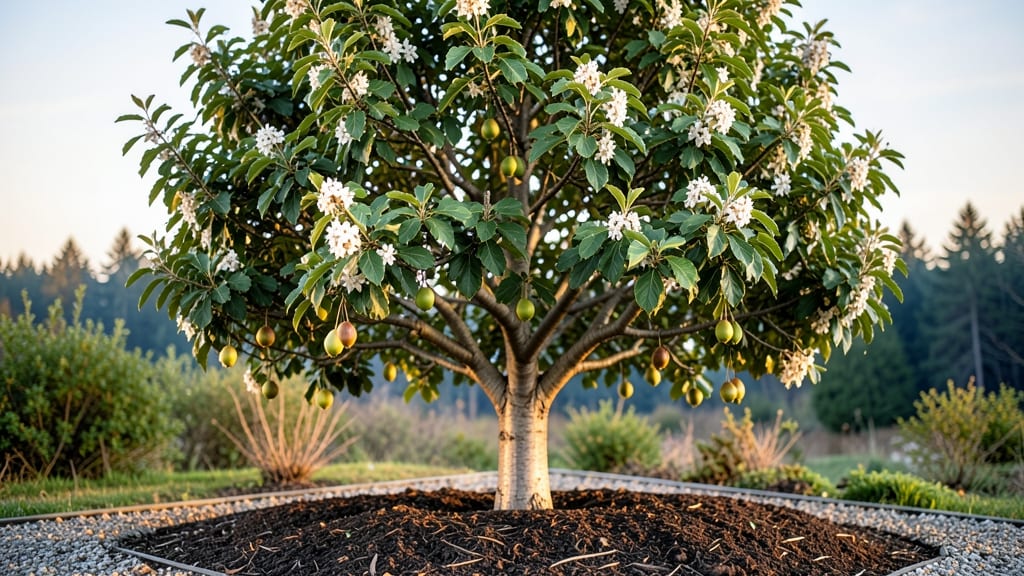
The Bradford pear tree size grows to 30-50 feet tall—taller than most people realize, which is why I always recommend measuring your space before planting. 🌳 Their wide, rounded canopy spreads 25-40 feet, making them perfect for large yards but a poor fit for tight urban lots.
The variety you choose (like 'Aristocrat' or 'Chanticleer') can shift that range by 5-10 feet, so check the tag before buying.
Fast growth is their signature—3-5 feet per year when young—until they hit maturity around 10-15 years old. That speed means they fill space quickly, but it also demands regular pruning to maintain shape and prevent weak branches.
I’ve seen neighbors skip this and end up with trees that lean dangerously over driveways after just a decade.
What you’ll love is their springtime spectacle: clusters of white blossoms that cover the whole tree, followed by small (but messy) pears that birds adore. The trade-off? Those pears create cleanup work, and the tree’s dense branches can block sunlight to nearby plants.
If you want the beauty without the hassle, consider a cleaner alternative like a crabapple.
For managing their size, prune in late winter while dormant, and never remove more than 25% of the canopy at once. In tight spaces, opt for dwarf varieties like 'Little Bradford,' which tops out at 20-25 feet. Just remember: these trees are built for bold statements—not for cramped corners.
📚 In This Guide
- What you need
- Instructions
- Tips and common mistakes
- Wrapping up and next steps
What you need
- ● Safety gear: Work gloves (heavy-duty, cut-resistant) – 1 pair
- ● Safety goggles – 1 pair
- ● Long-sleeved shirt and pants (preferably lightweight and breathable)
- ● Pruning tools: Bypass pruners (sharp, high-quality) – 1 pair
- ● Loppers (for thicker branches, 16–24" cutting capacity) – 1 pair
- ● Pruning saw (for large branches, 20–24" blade) – 1
- ● Extension pole pruners (for high branches, 6–10 ft reach) – 1
- ● Measuring & marking tools: Measuring tape (25 ft) – 1
- ● Permanent marker or chalk (for marking cuts) – 1
- ● String line (for aligning cuts, 50 ft) – 1
- ● Cleaning supplies: Rubbing alcohol (70% or higher) – small bottle
- ○ Pruning sealant (optional but recommended for large cuts) – 1 small tube
- ● Ladder (extension or step ladder, 12–20 ft) – 1 (safety note: Use stabilizers!)
- ● Tree climbing spikes (if experienced) – set of 2–4
- ● Wheelbarrow or tarp (for debris cleanup) – 1
- ● Disinfectant spray (for sterilizing tools between cuts)
- ● Camera or phone (to document your tree’s progress!)
Understanding Bradford pear tree size: key dimensions by variety
Here's how to predict and manage the mature height of your Bradford pear—critical for spacing, pruning, and long-term care.
🌿 Step 1: Identify Your Variety's Mature Height Range
The classic Bradford pear (Pyrus calleryana 'Bradford') typically reaches 40-50 feet tall at maturity, with a 30-40 foot spread. However, modern cultivars like 'Aristocrat' or 'Chanticleer' stay more compact at 30-40 feet tall and 25-35 feet wide. Always check the nursery tag—some grafted trees combine Bradford with other varieties, altering growth patterns.
Here's the thing—rootstock matters. Trees grafted onto Callery pear rootstock grow faster and larger, while those on quince rootstock remain smaller. If you're planting near power lines or sidewalks, choose a dwarf variety like 'Cleveland Select' (25-30 feet) to avoid future conflicts. I always verify the rootstock before buying, especially for urban landscapes.
☀️ Step 2: Assess Your Site's Sunlight and Soil Impact
Bradford pears thrive in full sun (6+ hours daily), but their final height depends on growing conditions. In rich, well-drained soil, they grow faster and taller. Amend clay or sandy soil with 2-3 inches of compost before planting to encourage strong root development. Poor soil slows growth by up to 20%, keeping trees smaller but potentially weaker.
Watch for these visual cues: Trees in partial shade develop narrower canopies but may grow taller as they stretch for light. If you notice new growth leaning toward a window or gap in the canopy, your tree is compensating for insufficient sunlight. This doesn't change mature height but affects overall health and fruit production.
✂️ Step 3: Prune Strategically to Control Height
Prune Bradford pears in late winter (before buds swell) to shape and limit height. Remove suckers at the base and water sprouts (vertical shoots) to redirect energy into the main canopy. For height control, cut back 1/3 of the tallest branches annually—never remove more than 25% of the canopy in one season to avoid stress.
This is the moment that matters: If you see fast vertical growth (more than 2 feet per year), your tree needs pruning. Bradford pears respond well to heading cuts (pruning just above a lateral bud), which encourages bushier growth. Avoid topping—it creates weak, storm-prone branches. I always prune with clean, sharp tools and sterilize them between cuts to prevent bacterial infections.
🪴 Step 4: Monitor Growth Rates Annually
Bradford pears grow 12-24 inches per year when young, but this slows as they mature. Measure your tree's height and spread once a year in early spring before new growth begins. Record these dimensions to track progress—most trees reach 50% of their mature height by age 10. If growth stalls, check for root competition, pests, or disease.
Real talk: Bradford pears are fast growers, but their branching habit (often narrow and upright) makes them prone to storm damage. If your tree grows taller than expected, consider cabling or bracing the main branches to prevent splits. I've seen Bradford pears reach 60 feet in ideal conditions, but proper pruning keeps them within manageable limits.
⏰ Step 5: Plan for Long-Term Space Needs
Bradford pears have a lifespan of 30-50 years, so their mature size affects your property for decades. If planting near a house, maintain at least 20 feet of clearance from walls and roofs. For street planting, follow local codes—many require 30+ feet of clearance for power lines. I always sketch a 10-year projection of the tree's canopy to visualize its future size.
Here's the thing—Bradford pears are notoriously messy during bloom and fruit drop. If you're concerned about cleanup, consider a columnar variety like 'Fastigiata' (20-30 feet tall, 8-10 feet wide). These stay narrow but still produce abundant flowers. Just remember: No Bradford pear stays perfectly small—even dwarf varieties will outgrow their space over time.
Tips & tricks for managing Bradford pear tree dimensions
Took me years to learn these practical strategies—here’s how to keep your Bradford pear’s growth in check without sacrificing beauty or health.
Rootstock Selection: The foundation of your tree’s size starts with rootstock. Bradford pears grafted onto Callery pear rootstock will reach their full 40-50 foot potential, while those on quince rootstock stay compact at 25-30 feet. Always ask the nursery for details—this single choice determines whether you’ll need a ladder or not in 10 years. I’ve seen homeowners plant Bradfords near power lines only to discover too late their tree was grafted onto fast-growing rootstock.
Pruning Precision: When pruning in late winter (Step 3), focus on heading cuts rather than topping. Cut just above lateral buds to encourage bushier growth—this reduces the risk of weak, storm-prone branches. I learned this the hard way after seeing a neighbor’s Bradford snap in half during a windstorm because they’d topped it. Remember: Never remove more than 25% of the canopy in one season, or you’ll stress the tree.
Soil Preparation: Amending your planting hole with 2-3 inches of compost (Step 2) isn’t just about nutrients—it’s about growth control. Well-drained, nutrient-rich soil helps the tree establish strong roots that support its natural size. Poor soil can stunt growth by 20% or more, but it also weakens the tree’s structure. Test your soil before planting, especially if you’re in clay-heavy or sandy areas.
Visual Growth Tracking: Most Bradford pears hit 50% of their mature height by age 10 (Step 4). Use a simple tape measure and mark your tree’s height annually in early spring. If you notice growth exceeding 2 feet per year in its first decade, it’s time to adjust your pruning strategy. I keep a garden journal with photos—it’s surprising how much difference a few strategic cuts make over time.
Pro Tips for Bradford Pear Tree Size
- Took me years to learn these practical strategies—here’s how to keep your Bradford pear’s growth in check without sacrificing beauty or health.
- Rootstock Selection: The foundation of your tree’s size starts with rootstock.
- Pruning Precision: When pruning in late winter (Step 3), focus on heading cuts rather than topping.
Frequently asked questions
Got questions about your Bradford pear tree’s size, growth, or care? We’ve got answers! Here are some of the most common queries—plus quick tips to keep your tree thriving.
How tall does a Bradford pear tree grow at maturity?
A mature Bradford pear typically reaches 30 to 50 feet tall with a spread of 30 to 40 feet. However, size can vary based on soil, sunlight, and pruning habits. Dwarf varieties (like ‘Littleleaf Bradford’) stay under 20 feet, making them ideal for smaller yards.
How fast does a Bradford pear tree grow?
Bradford pears are fast-growing, adding 2 to 3 feet per year in ideal conditions. Young trees may grow even faster (up to 5 feet/year) before reaching maturity. Growth slows as the tree ages, but proper pruning can encourage healthier, more controlled expansion.
Can I prune a Bradford pear to control its size?
Yes! Pruning in late winter or early spring helps manage height and shape. Remove suckers, dead branches, and crossing limbs to prevent disease and improve airflow. Avoid heavy pruning after summer—it can stimulate weak, disease-prone growth. Pro tip: Use sterilized tools to prevent bacterial infections!
Are there smaller Bradford pear alternatives?
If space is limited, consider these compact options:
- ‘Littleleaf Bradford’ – 15–20 ft tall, dense canopy.
- Callery Pear ‘Aristocrat’ – 25–35 ft tall, disease-resistant.
- ‘Cleveland Select’ – 30–40 ft tall, fewer thorns.
Why is my Bradford pear tree growing unevenly or leaning?
Uneven growth often stems from poor sunlight, root damage, or weak structural support. Check for:
- Shade from buildings/trees (relocate if needed).
- Compacting soil or buried roots (aerate the area).
- Storm damage (stake young trees for stability).
Bonus Tip: When should I plant a Bradford pear?
Plant in early spring or fall (avoid extreme heat or frost). Choose a spot with full sun (6+ hours/day) and well-draining soil. Amend heavy clay with compost to prevent root rot—a common issue in Bradford pears.
Wrapping up and next steps
The Bradford pear tree is a stunning addition to any landscape, but its mature size—typically 30-50 feet tall—means thoughtful planning is key. Whether you’re choosing a variety like the Callery Pear or the Chanticleer, understanding growth habits helps you select the perfect spot and maintain its health.
With the right care, your tree can thrive for decades, offering beauty and shade!
Ready to get started? Measure your space, pick the right variety, and give your Bradford pear the love it deserves! 🌳✨