
Trees
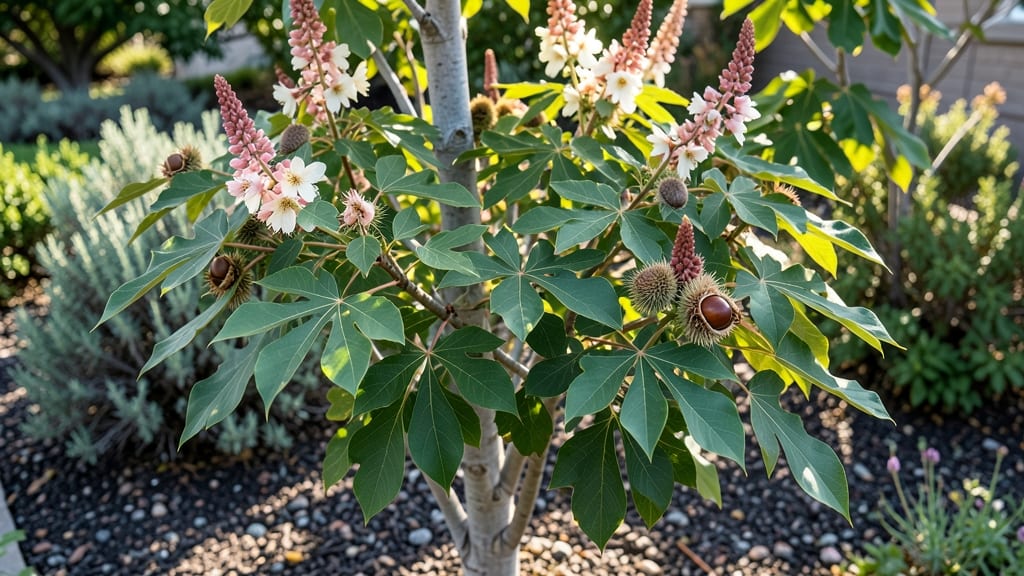
Buckeye trees in Colorado thrive with native varieties like the Colorado buckeye (Aesculus glabra), which handles USDA zones 3-7, while non-native species such as horse chestnut struggle in higher elevations. Opt for cold-resistant types to ensure strong growth and seed production.
Colorado's native buckeye varieties are perfectly adapted to the state's cold winters and hot summers, with deep root systems that resist drought and freeze damage. 🌳 The Aesculus glabra stands out for its ability to produce vibrant yellow flowers and edible seeds, even in harsh conditions.
Non-native species, however, often fail to thrive above 6,000 feet due to their sensitivity to temperature swings.
For best results, plant buckeye trees in well-draining soil with morning sun exposure, avoiding low-lying areas where frost collects. Mulching in late fall helps protect roots during sudden temperature drops, while regular pruning in early spring encourages healthy foliage growth.
Native varieties also attract pollinators, making them a great choice for eco-friendly landscaping.
💡 In This Article
- Colorado’s Native Buckeye Species and Their Cold Adaptations
- Planting and Caring for Buckeye Trees in Colorado Climates
Colorado’s native buckeye species and their cold adaptations
The native Colorado buckeye (Aesculus glabra), also called Ohio buckeye, is a standout in Colorado’s landscape due to its remarkable cold tolerance. This species thrives in USDA zones 3-7, meaning it can withstand temperatures as low as -30°F to -40°F without significant damage.
Its survival strategy lies in a combination of deep root systems (reaching up to 6 feet) and thick bark that insulates the trunk. Unlike non-native varieties, A. glabra also produces a waxy coating on its leaves, which helps prevent ice formation during sudden freezes.
What sets native buckeyes apart is their ability to adapt to Colorado’s dry, continental climate. While non-native species like horse chestnut (Aesculus hippocastanum) struggle above 6,000 feet, A. glabra thrives in these elevations by entering dormancy earlier in fall and emerging later in spring.
This adaptation ensures its vibrant yellow-green foliage and red-brown seeds remain consistent, even in harsh winters. The tree’s drought resistance comes from its extensive root network, which taps into moisture deep underground, reducing reliance on surface water.
The cold-hardiness of native buckeyes directly impacts their seed production. When temperatures drop below 20°F, non-native species often suffer flower damage, but A. glabra maintains its reproductive cycle. This consistency makes it ideal for Colorado gardeners seeking reliable seed yields.
Additionally, the tree’s compound leaves (with 5-7 leaflets) help it recover quickly from late spring frosts, a common challenge in Colorado’s variable climate. 🌿
One key difference between native and non-native buckeyes is their response to temperature fluctuations. Native species exhibit a phenomenon called "cold acclimation," where they gradually harden their tissues as fall progresses. Non-native varieties, however, lack this adaptive mechanism, making them vulnerable to sudden temperature swings.
For example, a 10°F drop in 24 hours can stress horse chestnuts but barely affects A. glabra, which has evolved to handle Colorado’s unpredictable weather patterns.
Colorado’s native buckeyes also boast superior drought tolerance compared to their non-native counterparts. While horse chestnuts may require consistent moisture, A. glabra can survive with as little as 12 inches of annual rainfall, making it perfect for Colorado’s arid regions.
This resilience is due to its ability to close leaf stomata (pores) during dry spells, reducing water loss. The tree’s deep roots also help stabilize soil, preventing erosion—a critical benefit in Colorado’s mountainous terrain.
For those interested in landscaping, native buckeyes offer additional advantages. Their bright yellow flowers in late spring attract pollinators, while their glossy seeds provide food for wildlife.
Unlike non-native species, which may require chemical treatments to prevent pests, A. glabra naturally repels many insects due to its toxic sap—a trait inherited from its evolutionary adaptations to Colorado’s harsh environment. 🌳