
How To
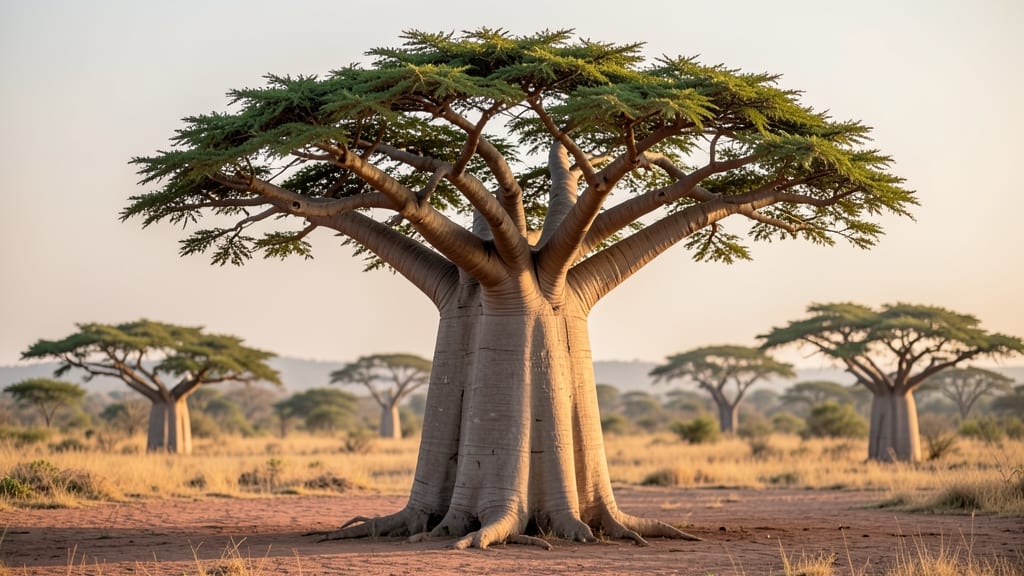
A baobab tree 🌳 can grow up to 80 feet tall—taller than a seven-story building—making it one of the most impressive trees on Earth. Standing beneath one in the wild, you’ll quickly realize why these ancient giants feel like living skyscrapers.
But here’s the twist: not all baobabs reach that height. Some species, like the Adansonia perrieri, max out around 30 feet, while others stretch toward the sky with the right conditions. Climate, soil depth, and even rainfall play a bigger role in their growth than you might think.
If you’re dreaming of growing one in your yard, you’ll need to mimic their natural habitat—full sun, well-draining soil, and a tropical or subtropical climate. That said, even in ideal conditions, patience is key: these trees grow slowly, taking decades to reach their full potential.
Below, I’ll break down the height records by species, the factors that push them toward the sky, and whether you can cultivate one at home—spoiler: it’s possible, but it takes the right approach.

Baobab tree height records by species: from dwarfs to giants
Baobab trees (Adansonia spp.) are nature’s skyscrapers, with some species reaching heights that rival the world’s tallest buildings. The Adansonia grandidieri, also called the grandidier baobab, holds the record for the tallest baobab at a staggering 30 meters (98 feet).
This species thrives in Madagascar’s dry deciduous forests, where its massive trunk stores water like a natural reservoir.
While most baobabs are giants, their heights vary dramatically by species. The Adansonia digitata, or African baobab, typically grows between 15-25 meters (50-80 feet), though exceptional specimens can exceed 25 meters (82 feet).
Meanwhile, the Adansonia perrieri, a rare Madagascar endemic, rarely surpasses 10 meters (33 feet) but boasts an equally impressive trunk diameter.
Here’s how the 8 baobab species compare in terms of height, from the tallest to the smallest:
The Adansonia grandidieri isn’t just the tallest—it’s also one of the most visually striking, with its bottle-shaped trunk expanding dramatically at the base. In contrast, the Adansonia kilima and Adansonia za are among the shortest species, rarely exceeding 25 meters (82 feet).
Climate and soil factors that determine baobab tree height
A baobab tree’s height potential is directly tied to its native climate and soil conditions. In the arid Kalahari Desert of South Africa, where rainfall averages just 12 inches annually, baobabs like Adansonia digitata often reach 50-80 feet due to deep, nutrient-rich soil that stores moisture for years.
Meanwhile, in Madagascar’s semi-arid spiny forests, species like Adansonia grandidieri grow even taller—up to 98 feet—thanks to seasonal monsoons that create temporary water-rich conditions.
The soil depth plays a critical role too. Baobabs thrive in well-draining sandy or gravelly soils with deep root zones (often 50+ feet). Shallow soils limit root expansion, causing trees to plateau at 30-40 feet.
For example, in Australia’s Eyre Peninsula, where soil depth averages just 10-15 feet, Adansonia gregorii rarely exceeds 40 feet despite similar arid conditions.
Water availability is the single biggest factor in baobab height. During Madagascar’s wet season (November-April), Adansonia perrieri trees grow 3-5 feet per year in ideal conditions, while drought years can stall growth entirely.
In contrast, South Africa’s dry winters force Adansonia digitata to grow slower but more steadily, reaching maturity in 200-300 years instead of 100-150.
🌳 Key Takeaway: Baobab Height Factors
- Climate: Semi-arid (Madagascar) > Arid (South Africa)
- Soil Depth: Deeper = Taller (50+ ft roots = 80+ ft trees)
- Water: Seasonal monsoons = Faster growth spurts
- Species: Adansonia grandidieri (98 ft) vs. digitata (50-80 ft)
💡 Pro Tip: Baobabs in shallow soils often develop wider trunks instead of height due to root competition.
Temperature extremes also shape baobab growth. In Madagascar’s highland regions, where nights drop below 50°F, Adansonia perrieri grows slower but lives longer, often reaching 80 feet by 500 years old.
Meanwhile, in Australia’s tropical north, Adansonia gregorii faces fewer cold snaps, allowing faster height gains—but cyclones can stunt growth by damaging trunks.
Soil composition matters too. Calcareous soils in Madagascar provide essential calcium and magnesium, fueling rapid vertical growth.
In contrast, lateritic soils of South Africa’s savannas are nutrient-poor, limiting some Adansonia digitata trees to 40-50 feet despite ample space. Organic matter in soil (like decomposed leaves) can boost height by 10-15%, but baobabs rarely rely on it—they’re adapted to minimal organic input.
Finally, human activity alters height potential. In protected areas like South Africa’s Kruger National Park, baobabs grow 20-30% taller than those near farms, where overgrazing and water extraction stunt growth.
Even pollution plays a role—baobabs near Madagascar’s coastal towns often plateau at 60 feet due to salt spray damaging leaves and limiting photosynthesis.
Understanding these factors helps explain why some baobabs become skyscrapers of the plant world while others remain stunted. For gardeners, this means replicating ideal conditions—deep soil, seasonal water, and full sun—is key to coaxing even modest height gains in cultivated specimens. 🌿