
Light Requirements
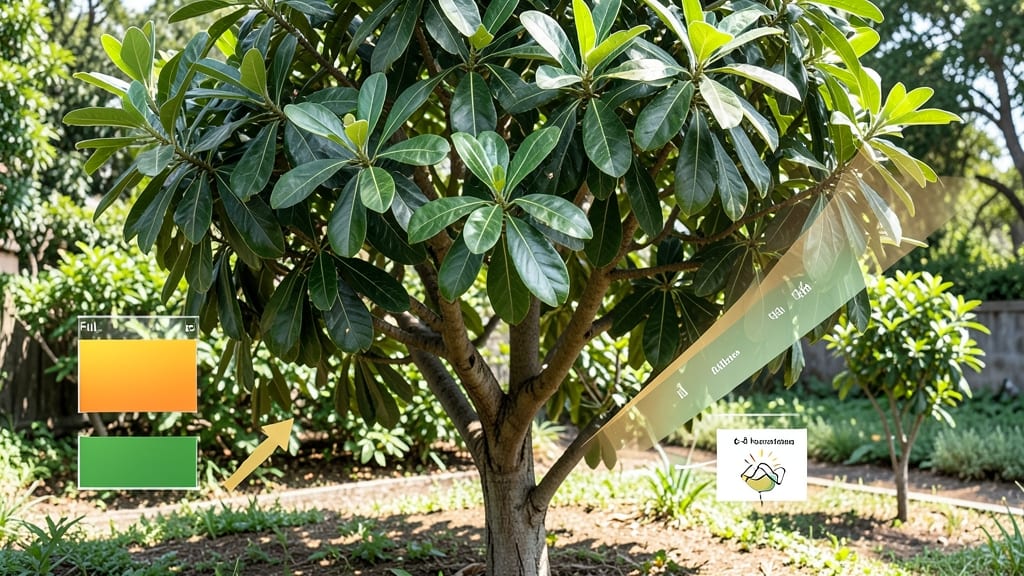
An avocado tree needs at least 6 hours of direct sunlight daily to grow strong and produce fruit, but many growers accidentally give it too little—or too much—without realizing it.
Picture this: You’ve nurtured your 🥑 seedling for months, only to watch it stretch toward the light with weak, leggy stems and no sign of fruit. That’s the classic sign of insufficient sunlight, and it’s easier to fix than you think.
Whether you’re growing in a container on a balcony or planting in Zone 6a, the right sunlight balance is the key to a healthy tree. Too little, and your avocado will struggle; too much, and it risks sunburn.
I’ll break down exactly how to position your tree for success, from seedlings to mature fruit-bearing giants.
You’ll learn how to spot the warning signs of poor light exposure, adjust for seasonal changes, and even optimize indoor growing conditions. By the end, you’ll know exactly how much sun your avocado tree craves—and how to give it just the right amount.


Avocado tree sunlight requirements by growth stage: seedlings vs mature trees
Avocado trees (Persea americana) are sun worshippers—6+ hours of direct sunlight daily is non-negotiable for healthy growth and fruit production. But their sunlight needs change dramatically as they mature, from delicate seedlings to towering fruit-bearing giants.
Understanding these shifts is key to avoiding leggy stems, weak branches, or—worse—no avocados at all.
Seedlings are the most sensitive stage. They need bright, indirect light (like a south-facing window) to prevent scorching, yet too little light leads to stunted growth and pale leaves.
Mature trees, on the other hand, crave full, unfiltered sun—they’ll stretch toward light if deprived, producing fewer flowers and fruit. Let’s break down the exact requirements at each stage.
⚠️ CRITICAL NOTE: Avocado trees cannot tolerate shade. Even partial shade (like dappled light from other trees) reduces fruit yield by up to 50%. If you’re in a cooler climate (USDA Zones 8-10), prioritize south or west exposure to maximize sunlight hours.
For seedlings, start with 4-6 hours of morning sun to avoid burning tender leaves. Gradually increase exposure over 2-3 weeks to full sun once they’re established. Think of it like sunbathing: you wouldn’t slather on SPF 100 and jump into the midday sun—acclimate slowly to prevent leaf scorch.
By the time your tree hits juvenile stage (1-3 years), it’s ready for 6-8 hours of direct sun. This is when you’ll see the first signs of flowering, but less than 6 hours delays this process by 1-2 years.
Place it where it gets unobstructed light, like a southwest-facing backyard or a large patio with no towering trees nearby.
Once mature (3+ years), your avocado tree becomes a sunlight glutton. It needs 8+ hours daily to produce quality fruit. If you’re in a cooler climate (Zones 7-9), a southwest exposure is ideal—it captures the intense afternoon sun without the harsh east-facing morning rays.
In hotter zones (10+), east-facing is better to avoid heat stress.
Container-grown trees face unique challenges. Even with 6+ hours of sun, they often produce 20% fewer avocados due to root restrictions.
To compensate, rotate the pot weekly so all sides get equal light, and use a reflective surface (like white paint on a fence) to bounce extra light onto the tree. This trick can add 1-2 extra hours of effective sunlight.
Pro tip: Use a light meter (or your phone’s lux app) to measure sunlight. Avocado trees thrive at 10,000+ lux—anything below 5,000 lux is a red flag.
If your tree isn’t getting enough, consider pruning nearby shade trees or relocating it to a sunnier spot before the next growing season.
Remember, sunlight isn’t just about quantity—it’s about quality. Direct sun (not filtered light) triggers the photosynthesis needed for fruit development. Without it, your tree will focus on leaf growth instead of avocados.
So, if you’re dreaming of homegrown guacamole, prioritize that sun—your future harvest depends on it! 🌞🥑
Signs your avocado tree isn’t getting enough sunlight (and how to fix it)
If your avocado tree looks pale, leggy, or refuses to bear fruit, it’s likely begging for more sunlight. Avocados are sun-hungry plants that demand 6-8 hours of direct light daily—any less, and you’ll see telltale signs like yellowing leaves or weak stems.
Even mature trees struggle when deprived, leading to sparse foliage and no flowers. The good news? Adjusting light exposure can revive your tree with minimal effort.
First, check the location of your avocado. If it’s indoors near a north-facing window or outdoors under a canopy, it’s likely starved for light. Outdoor trees in shady spots or urban balconies with limited sun exposure suffer the most.
Even a few hours less than ideal can stunt growth, so reassess your tree’s placement before assuming it’s a pest or disease issue.
Minimum: 6 hours of direct sunlight daily
Optimal: 8+ hours for fruit production
Danger Zone: Less than 4 hours = stunted growth, no flowers
Indoor Fix: South-facing window + grow lights for 12-14 hours/day
Outdoor Fix: Move to full sun or prune nearby shade trees
Watch for yellowing leaves, especially on newer growth. This is your tree’s way of saying, “I need more light!” Older leaves may stay green, but the leggy stems and sparse foliage are dead giveaways.
Another red flag? No flowers—avocados need ample sunlight to trigger blooming. Even if your tree has leaves, weak stems and small, pale leaves mean it’s not getting enough energy from the sun.
For container-grown avocados, rotate the pot every few weeks to ensure even light exposure. If your tree is indoors, supplement with a grow light (LED or fluorescent) for 12-14 hours/day. Place it 6-12 inches above the tree and adjust as it grows.
Outdoor trees may need seasonal adjustments: in winter, move potted trees to a sunnier spot or use a clear plastic cover to extend daylight.
Pruning can also help. If your tree is too tall for its current light source, prune the top to encourage bushier growth closer to the light. Just avoid cutting more than 25% of the canopy at once to prevent stress.
For outdoor trees, remove any overhanging branches from nearby trees or structures blocking sunlight. Even a few extra hours of direct light can make a dramatic difference in leaf color and stem strength.
Finally, repot if needed. If your avocado is root-bound, its roots may be competing for nutrients instead of growing toward sunlight. Choose a pot 2-4 inches larger and use well-draining soil mixed with perlite.
Place the new pot in the sunniest spot available—even a temporary move to a brighter location can jumpstart recovery. With the right light, your avocado will reward you with darker green leaves, stronger stems, and eventually, those coveted fruits.