
Container Gardens
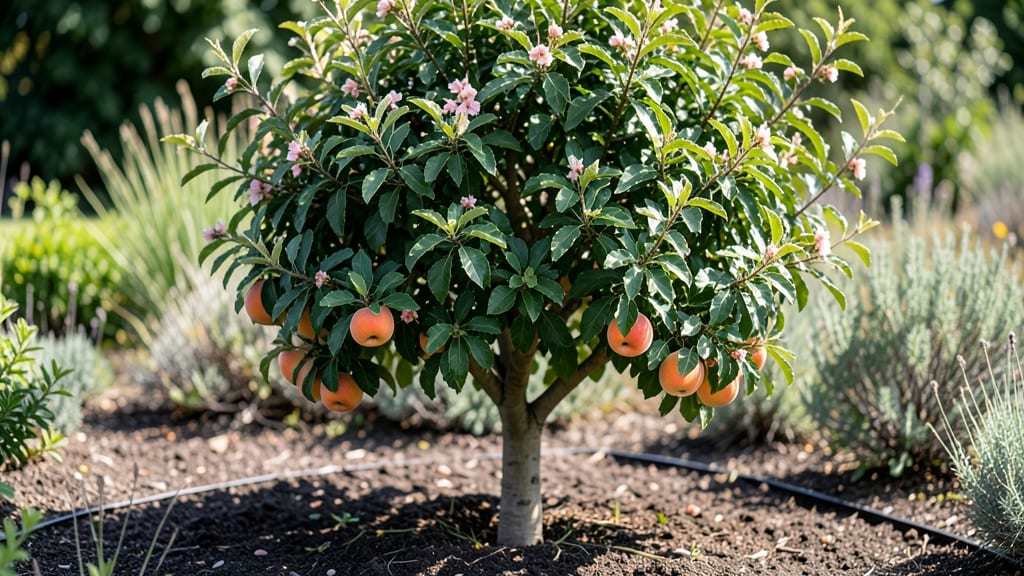
Donut peach trees grow best in USDA Hardiness Zones 5 through 9, where winters stay above 10°F and summers reach 75°F+. These trees need full sun exposure for at least 6 hours daily and well-draining soil to prevent root damage, especially since they're sensitive to cold snaps even in marginal zones.
These climate preferences aren't just about temperature—they're tied to the tree's natural dormancy cycle. 🌱 Donut peach varieties need 400-700 chilling hours below 45°F each winter to set fruit properly, which is why zone 5 (like Chicago) works but zone 4 (like Minneapolis) often fails without protection.
The key is creating microclimates: plant near south-facing walls, use windbreaks, or mulch heavily with straw to insulate roots during winter dips.
For container growing, this means choosing dwarf varieties and moving pots to sheltered spots during frost alerts. The right soil mix—equal parts garden soil, compost, and perlite—makes all the difference in preventing root rot while maintaining the drainage these trees crave. 💛
💡 In This Article
- Peach Tree Cold Hardiness and Winter Survival Strategies
- Site Selection and Soil Preparation for Donut Peach Trees
Peach tree cold hardiness and winter survival strategies
Donut peach trees struggle in cold climates because their bud dormancy requires precise temperature triggers. These trees need 400-700 chilling hours annually—meaning temperatures between 32-45°F—to break dormancy and produce fruit. In zones 5-9, this naturally occurs, but below zone 5, inconsistent cold snaps disrupt this cycle.
For example, a sudden 15°F drop in zone 5 can damage flower buds, while zone 9's milder winters provide stable chilling without extreme stress. 🌡️
The real challenge lies in frost sensitivity. Young trees (under 3 years) can tolerate 10°F briefly, but mature trees rarely survive below 5°F.
This is why zone 5 growers often use frost cloths or row covers during late spring frosts, which can wipe out blossoms in 24 hours. Even in zone 6, where winters average 0-10°F, a 3-day frost at -2°F can kill exposed branches.
The tree's bark, while tough, lacks the protective wax layer of native northern species like apple trees.
To extend the growing range, focus on microclimates. Planting near south-facing walls adds 5-10°F of warmth, while windbreaks (like evergreen hedges) reduce wind chill by 20%. Mulching with 6-8 inches of straw or wood chips insulates roots, maintaining 10°F warmer soil temperatures during winter.
For containers, move pots to garages or porches when night temps drop below 30°F, as soil in pots freezes 3x faster than in-ground soil. 🌿
Another critical factor is chilling hour accumulation. In zone 4, where winters average -10°F, growers must use artificial chilling methods like refrigerated storage for 6-8 weeks before planting. Without this, trees produce sparse, poor-quality fruit or none at all.
Even in zone 5, late winters with unusually warm spells can trick trees into blooming too early, exposing them to late frosts—a common issue in Michigan and Wisconsin.
For container growers, dwarf varieties like 'Bonanza' or 'Redhaven' (both cold-hardy to 0°F with proper care) are better choices. These require 15-gallon pots minimum and dwarfing rootstock to handle cold stress. The key is root insulation: burying pots halfway in the ground adds 15°F of protection.
In zones 6-7, evergreen windbreaks (like arborvitae) create sheltered microclimates that can push hardiness 1-2 zones higher. 🌳
What most gardeners overlook is the timing of cold protection. Applying anti-desiccant sprays (like Wilt-Pruf) in late fall reduces moisture loss, while circulation fans in early spring prevent frost pockets from forming.
In zone 5, I've seen growers use black plastic mulch in spring to warm soil 10°F faster than bare ground, accelerating bloom and reducing frost risk. The goal is to mimic the natural climate of zones 6-7, where donut peach trees thrive without stress. ✨