
Size
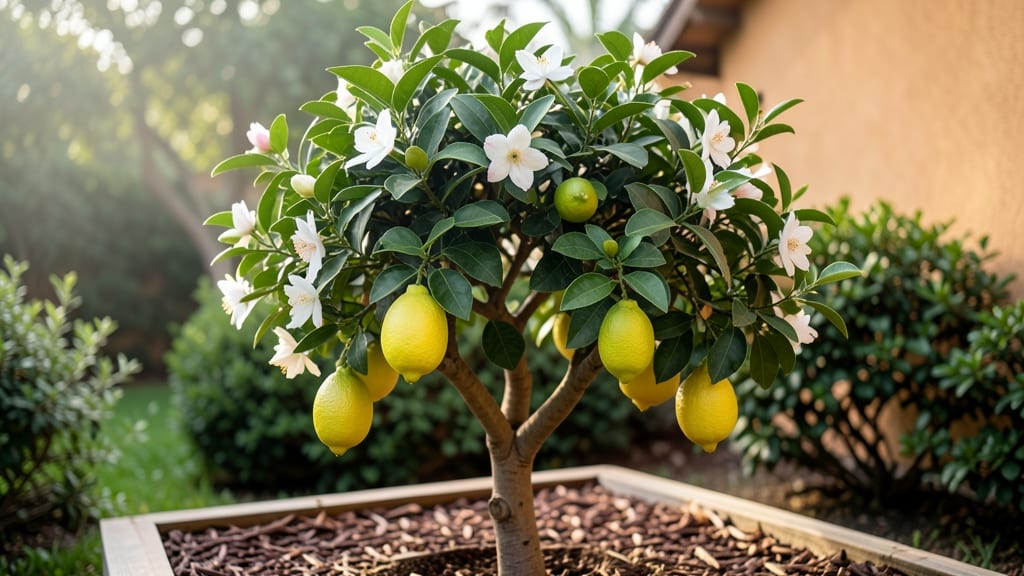
The dwarf Meyer lemon tree size makes it an ideal choice for small spaces, patios, or even large containers—growing to just 6 to 8 feet tall. If you dream of fresh Meyer lemons but lack yard space, this size is a game-changer.
Unlike its standard counterpart, which can tower over 20 feet, the dwarf variety stays compact while still producing sweet, juicy fruit year after year.
But size isn’t just about height—it’s also about spread, container needs, and how much room your tree truly needs to thrive. Whether you’re planning a ground planting or a stylish patio pot, getting these details right ensures healthy growth and a bountiful harvest.
Below, I’ll break down everything you need to know—from mature dimensions and spacing rules to container sizing tips and pruning tricks—to keep your dwarf Meyer lemon tree happy and productive.

Mature height & width of dwarf Meyer lemon trees (container vs ground)
A dwarf Meyer lemon tree is a fantastic choice for small gardens, patios, or even large containers—thanks to its compact size compared to standard varieties. At maturity, these trees typically reach 6 to 8 feet tall and spread 4 to 6 feet wide, making them ideal for urban spaces.
However, their final size depends heavily on whether you grow them in containers or plant them directly in the ground.
The key difference lies in root restriction. Container-grown trees stay smaller because their roots can’t expand freely, while in-ground planting allows for more natural growth. Understanding these differences helps you plan spacing, pruning, and even fruit production.
Let’s break down the specifics to ensure your dwarf Meyer lemon thrives in its chosen environment.
| Growth Factor | Container-Grown (Potted) | In-Ground Planted |
|---|---|---|
| Mature Height | 4–6 ft | 6–8 ft |
| Mature Spread | 3–5 ft | 4–6 ft |
| Container Size Needed | 15–25 gallon | N/A (in-ground) |
| Root Growth | Restricted | Unrestricted |
| Fruit Production Age | 3–5 years | 2–4 years |
| Pruning Needs | Moderate (shape control) | Regular (airflow) |
When grown in containers, your dwarf Meyer lemon will max out around 4 to 6 feet tall and 3 to 5 feet wide, assuming you use a 15–25 gallon pot.
The restricted root space naturally limits growth, which is great for patios or balconies. However, you’ll need to repot every 2–3 years to accommodate growth and prevent root binding.
For in-ground planting, expect the full 6 to 8 feet tall and 4 to 6 feet wide range. These trees have room to spread their roots and branches, leading to a fuller canopy and potentially more fruit.
If space is tight, you can prune to manage height, but avoid cutting back more than 25% of the canopy in a single season.
Another critical factor is the container material. Terracotta pots dry out faster but provide better airflow, while plastic retains moisture longer but can trap heat. For optimal growth, choose a pot with drainage holes and consider elevating it slightly to improve airflow around the roots.
This helps prevent fungal issues like root rot, especially in humid climates.
Pruning plays a huge role in managing size. Container-grown trees benefit from light pruning to encourage bushier growth, while in-ground trees may need regular structural pruning to maintain shape and improve airflow. Always prune in late winter or early spring before new growth begins to minimize stress on the tree.
If you’re growing your dwarf Meyer lemon in a small container (under 15 gallons), expect even slower growth and potentially fewer lemons. The tree will focus energy on root development rather than fruit production.
For the best results, aim for at least a 20-gallon pot if you’re keeping it potted long-term.
One common mistake is assuming a dwarf tree will stay tiny forever. Even with restricted roots, these trees will grow over time. Plan for future expansion by leaving extra space around your container or in-ground planting area.
A general rule is to allow at least 3 feet of clearance around the tree for airflow and maintenance access.
For those in colder climates (USDA Zones 8–10), container-grown trees offer flexibility. You can move them indoors during winter or wrap the pot in burlap and insulation to protect roots. In-ground trees, however, may need winter protection like mulch or frost cloth to prevent root damage.
Finally, remember that sunlight and soil quality directly impact size. A dwarf Meyer lemon in full sun with well-draining, slightly acidic soil (pH 6.0–7.0) will grow more vigorously than one in partial shade or poor soil. Amend your soil with compost or citrus-specific fertilizer to encourage healthy, compact growth
Optimal spacing & sunlight requirements for healthy growth
A dwarf Meyer lemon tree thrives with proper spacing and sunlight—both critical for fruit production and disease prevention. Unlike standard trees, these compact varieties need careful planning to avoid overcrowding while maximizing growth. Sunlight exposure directly impacts tree health, while airflow prevents fungal issues like powdery mildew.
Let’s break down the exact spacing and light needs for both container and ground planting.
Your dwarf Meyer lemon tree will mature between 6-8 feet tall and spread 4-6 feet wide, but its growth depends heavily on sunlight and available space. In containers, roots are confined, so pruning and repotting become essential.
For in-ground planting, proper spacing ensures airflow and sunlight penetration to all branches. Overcrowding leads to weak growth and poor fruit quality, while insufficient sunlight reduces lemon production.
🌱 Key Requirements:
- Sunlight: 6-8 hours of direct sunlight daily (south-facing spot ideal)
- Container spacing: 12-18 inches from other plants (or walls) for airflow
- Ground spacing: 8-10 feet apart for multiple trees (or 10 feet from structures)
- Minimum pot size: 15-20 gallons for mature trees (repot every 2-3 years)
- Pruning tip: Trim 1/3 of new growth annually to maintain shape and airflow
For container-grown trees, prioritize south-facing windows or outdoor patios with morning sun. If indoors, supplement with grow lights (12-14 hours/day) to prevent leggy growth.
In-ground plants need full sun exposure—avoid planting under shade trees or structures that cast shadows. Partial shade (3-4 hours of sun) may reduce fruit production significantly.
Airflow is just as critical as sunlight. Overcrowding in containers or tight ground spacing traps humidity, inviting fungal diseases. Space trees at least 3 feet apart in pots and 8 feet apart in-ground to ensure proper circulation.
If growing near a fence or wall, leave 1-2 feet of clearance to avoid root competition and improve airflow to the trunk.
Monitor your tree’s growth annually and adjust spacing or pruning as needed. A well-spaced dwarf Meyer lemon tree in full sun will produce 50-100 lemons per year, while overcrowded or shaded trees may yield far less.
Regularly check for signs of stress—yellowing leaves or sparse foliage often signal insufficient light or poor airflow. 🪴