
Pruning
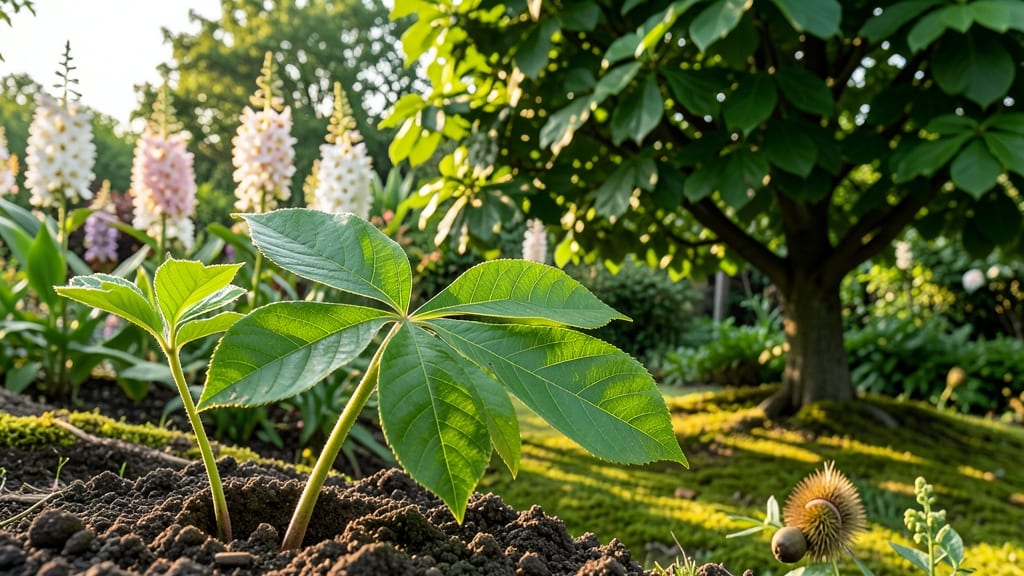
That five-leaf tree identification could be a Japanese maple, a schefflera, or even a hackberry—each with totally different care needs. 🌿 I’ve spent years untangling these lookalikes, and the secret lies in how those leaves attach, the bark texture, and subtle details most guides skip.
A single misidentification can mean overwatering a drought-loving tree or starving it of sunlight.
The first clue? Leaf attachment—palmate (all leaves radiating from one point) vs. pinnate (leaves along a central stem). Then check the bark: smooth and silvery for schefflera, deeply grooved for hackberry, or peeling like paper on mature Japanese maples.
Most beginners overlook bark, but it’s a game-changer for narrowing it down.
Once you’ve got the ID right, your care routine shifts dramatically. A schefflera thrives in bright indirect light and dry soil, while a Japanese maple begs for dappled shade and consistent moisture. Get this wrong, and you’ll see yellowing leaves or stunted growth by summer.
Still stuck? Local botanical gardens often host free identification days—bring a photo and a sample leaf, and you’ll walk away with confidence. The key is patience: even experts need a second opinion sometimes.
The Hidden Forces Behind Leaf Patterns
Understanding why trees develop five distinct leaves—or why some species consistently sport this shape—starts with unraveling the science behind leaf morphology. These patterns aren’t random; they’re shaped by evolution, genetics, and environmental pressures. Here’s why certain trees end up with that signature five-leaf structure.
---
Five-leaf clusters (like those in Acer or Hippocastanaceae species) aren’t just a quirky trait—they’re often a product of natural selection favoring efficiency. Trees with compound leaves (where multiple leaflets attach to a single stem) gain several survival benefits:
- 🔬 Light and Space Optimization: A single stem with five leaflets can capture more sunlight than five separate leaves while reducing wind resistance. This is especially useful in dense forests where competition for light is fierce. - 🌡️ Temperature Regulation: Compound leaves can dissipate heat more effectively.
The larger surface area of five leaflets helps cool the tree in hot climates, a trait seen in species like the **horse chestnut (Aesculus hippocastanum). - 🌿 Reduced Herbivory Risk: Some studies suggest that compound leaves may deter insects, as predators might find it harder to target individual leaflets than a single broad leaf.
Pro Tip: 💡 If you’re identifying a tree with five leaflets, check the leaflet arrangement—some species (like maples) have opposite leaflets, while others (like sumacs) have alternate patterns. This can narrow down the species quickly!
---
Leaf morphology is hardwired into a tree’s genome, and five-leaf structures are often controlled by specific genetic pathways:
- 🧬 Homeotic Genes**: These master regulators determine where and how leaves form. Mutations or variations in genes like _KNOX_ or _ARF_ can influence whether a tree grows simple leaves or compound ones. - 🌱 Meristem Development: The apical meristem (growth tip) dictates leaflet number.
In five-leaf species, the meristem may produce five distinct primordia (leaf buds) before they mature into leaflets. - 🔄 Hybridization: Some five-leaf traits appear in hybrids (e.g., between Acer species), where genetic mixing creates unique leaf structures that neither parent tree alone possesses.
Actionable Insight: ✨ If you’re growing a grafted or hybrid tree, its five-leaf pattern might be a clue to its parentage. Compare it to known species—hybrids often blend traits!
---
Not all five-leaf trees evolved for the same reasons. Environmental factors play a huge role:
| Factor | Effect on Leaf Shape | Example Species | |----------------------|-----------------------------------------------------------------------------------------|-----------------------------------| | Humidity | High moisture may favor compound leaves to prevent water loss while maximizing photosynthesis. | **Sumac (Rhus spp.) | | Wind Exposure | Five leaflets reduce drag, helping trees in windy areas survive storms. | Boxelder (Acer negundo) | | Soil Nutrients | Poor soil may limit leaf size, but compound leaves can still thrive by spreading out. | Horse Chestnut (Aesculus) | | Sunlight Levels | Shade-tolerant trees (like some maples) use compound leaves to efficiently capture dappled light. | Japanese Maple (Acer palmatum) |
Key Takeaway: 🌡️ Trees in temperate climates (like North America and Europe) often develop five-leaf patterns as a balance between growth speed and resource conservation. Tropical species, meanwhile, may prioritize different traits.
--- Sometimes, five-leaf trees owe their traits to human intervention: - 🌿 Nursery Selection: Gardeners and arborists often propagate trees with distinctive foliage (like the five-fingered maple) for ornamental value. - 🧪 Pruning Practices: Heavy pruning can stress a tree, sometimes causing it to revert to juvenile traits, including more leaflets.
This is why some young trees display five-leaf patterns even if mature specimens don’t. - 🌍 Introduced Species: Non-native trees (like the Norway Maple) may retain five-leaf structures from their original habitats, even if local species don’t.
Pro Tip: 🔥 If you’re growing a tree from seed, leaf shape can change as the tree matures. Compare seedling leaves to adult specimens in field guides—juvenile and mature forms sometimes look entirely different!
--- While most five-leaf trees are genetically predisposed, environmental stress or pathogens can sometimes induce abnormal leaf patterns: - 🦠 Viral Infections: Some viruses (like Apple Mosaic Virus) can cause leaf curling or extra leaflets, mimicking a five-leaf structure. - 🌡️ Temperature Extremes: Heatwaves or frost can disrupt cell division, leading to malformed leaves with irregular numbers of leaflets. - 💧 Water Stress: Drought or overwatering can trigger compensatory growth, sometimes resulting in extra leaflets as the tree tries to maximize photosynthesis.
Red Flag: 🚨 If a tree suddenly develops five-leaf clusters where it never did before, check for: ✅ Pests (aphids, mites) ✅ Fungal spots (powdery mildew, leaf spot) ✅ Root issues (root rot, girdling roots)
--- Five-leaf patterns are a powerful identification tool because they’re often species-specific.
By understanding the evolutionary, genetic, and environmental reasons behind them, you can: ✔ Distinguish between similar-looking trees (e.g., maples vs. horse chestnuts). ✔ Predict how a tree might grow based on its habitat. ✔ Spot potential health issues** if leaf patterns change unexpectedly.
Next time you see a tree with five leaflets, ask: Is this a survival trick, a genetic quirk, or a sign of stress? The answer might just lead you to the right species!
Quick Fixes for Common Five-Leaf Confusions
Identifying a five-leaf tree can feel like solving a puzzle—especially when leaves look almost the same but belong to completely different species. Whether you’re dealing with misidentifications, overlapping traits, or just plain curiosity, here’s how to cut through the confusion and pinpoint your tree with confidence.
---
If your tree’s leaves have five leaflets but you’re stuck between options like boxelder, ash, or hawthorn, start by cross-referencing these key features:
#### 🍃 1.
Leaflet Arrangement & Shape - Opposite vs. Alternate Branching: Ash trees have alternate leaves (one leaf per node), while boxelder and hawthorn often grow in opposite pairs. - Toothiness: Ash leaves are smooth-edged or slightly serrated, while hawthorn leaves have sharp, saw-like teeth. - Leaflet Size: Boxelder leaflets are uneven (the terminal leaflet is larger), whereas ash leaflets are nearly identical in size.
Fix: Snap a photo of the branch structure and compare it to a chart. Use a magnifying glass to check tooth patterns up close.
---
Leaves aren’t the whole story—bark, branch patterns, and fruit can seal the deal.
| Tree Type | Bark Texture | Branch Tips | Fruit/Seed Pods | |----------------|---------------------------|---------------------------|-------------------------------| | Boxelder | Rough, deeply grooved | Often twisted | Samara pods (winged seeds) | | Ash | Smooth, diamond-shaped ridges | Thornless | Elongated seed pods (like tiny helicopters) | | Hawthorn | Scaly, dark gray | Spiny thorns | Small red berries (poisonous!) |
Fix: Look up and down the tree. Thorns = hawthorn. Winged seeds = boxelder. Smooth bark with no thorns? Likely ash.
---
If you’re still stuck, leverage technology: - Use an app: Try PictureThis or LeafSnap—upload a photo, and they’ll narrow it down. - Compare with known samples: Search for "[tree type] leaf close-up" on Google Images and overlay your photo. - Check the underside: Some leaves (like black walnut) have fuzzy undersides, while others are smooth.
Pro Tip: 💡 Take two photos: 1. A wide shot of the whole tree (for structure). 2. A close-up of a single leaflet (for texture/tooth details).
---
Leaves aren’t static—they change with the seasons, and timing can help: - Spring: Young leaves on boxelder may look lobed before flattening. - Fall: Ash leaves turn yellow-brown, while hawthorn holds red berries longer. - Winter: Bark and bud shapes become your best friend (e.g., ash has buds with multiple scales).
Fix: Bookmark a seasonal ID guide (like the [USDA Plant Database](https://plants.usda.gov/)) and revisit your tree in different months.
---
Once you’ve nailed the ID, lock in your knowledge with these habits: - Label your trees with stakes or garden flags (especially in mixed landscapes). - Take notes: Jot down 3 key traits (e.g., "boxelder = uneven leaflets + samara pods"). - Join a local plant group: Facebook or iNaturalist communities often host tree-walk ID challenges. - Prune strategically: If you’re removing a tree, save a leaf sample in a herbarium (press it between books for future reference).
--- Final Emoji Nudge: ✨ Now you’re equipped to ID any five-leaf tree like a pro! Next time you spot one, channel your inner botanist—measure, compare, and conquer.
Frequently asked questions
Why do some trees have exactly five leaflets while others have different numbers?
Five leaflets are common in trees like maples and horse chestnuts because this structure optimizes sunlight capture and reduces wind damage. The number often comes from genetic programming—some species (like boxelder) are hardwired for five, while others (like ash) may have 7-9 leaflets. Environmental stress can sometimes alter leaflet counts, but true five-leaf trees maintain this pattern consistently.
Can I identify a tree just by counting its leaflets?
Not reliably! While five leaflets narrow it down to species like Japanese maple or schefflera, you’ll need more clues. Check leaflet arrangement (opposite vs. alternate), bark texture, and branch structure. For example, boxelder has uneven leaflets while ash has smooth-edged ones. Always examine the whole tree, not just the leaves.
What should I do if my tree's leaflets suddenly change number?
Abrupt changes could signal stress from pests, disease, or poor growing conditions. Inspect for aphids, fungal spots, or unusual bark. If the tree is otherwise healthy, it might just be a seasonal variation. For persistent changes, consult a local arborist—they can determine if it's a natural variation or health concern.
Are there any five-leaf trees that aren't good for beginners?
Yes! While Japanese maples are beginner-friendly, species like boxelder can be invasive in some regions. Research your local climate—some five-leaf trees (like hackberry) grow aggressively. Always check with your extension service before planting to avoid ecological issues or property damage.
How can I preserve a leaf sample for future identification?
Press leaves between absorbent paper in a heavy book for 1-2 weeks, then store in a sealed envelope. Label with location and date. For digital records, take high-resolution photos showing both leaf surfaces and branch structure. This creates a permanent reference for future comparisons.