
Trees
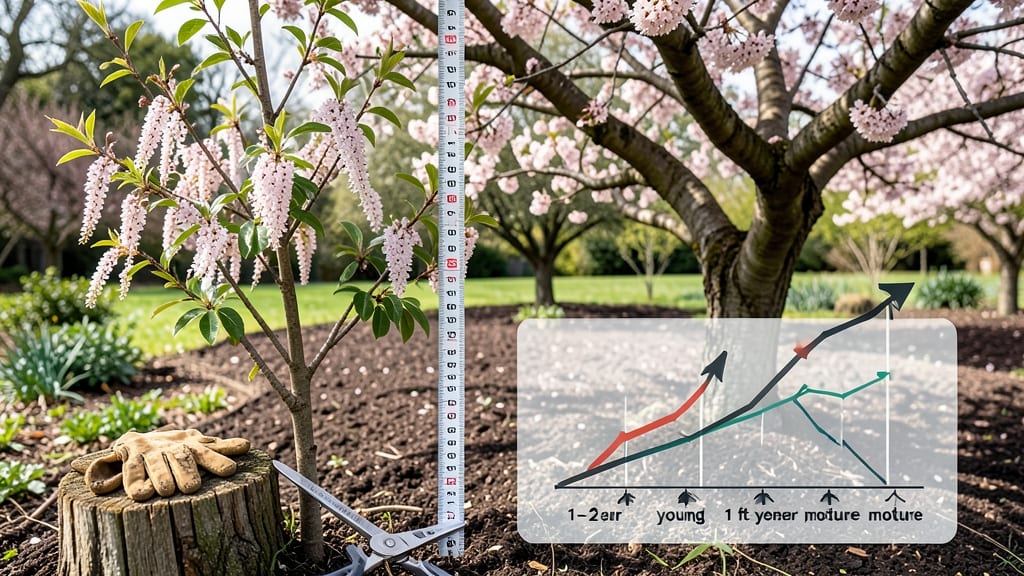
The Yoshino cherry tree grows fast—how fast does Yoshino cherry tree grow can surprise even seasoned gardeners—typically 12 to 36 inches per year under ideal conditions, with dramatic variations by climate zone and care.
Picture this: a 5-foot sapling in your yard one spring, then 15 feet tall by the time your kids graduate—if you’re in Zone 6 or warmer. But if you’re in cooler regions, that same tree might take twice as long. The difference? Sunlight, soil, and a little patience.
Here’s the game-changer: the first 3 years are the fastest, with growth spurts in spring that can feel like watching a time-lapse video. After that, the tree matures more slowly, focusing on canopy spread and those iconic pink-and-white blooms that turn neighborhoods into dreamy spring postcard scenes.
In this guide, I’ll break down exactly how fast your Yoshino cherry tree will grow in your zone, the 3 key factors that speed up (or slow down) its progress, and how to give it the best shot at reaching its full 20-to-35-foot glory in record time.

Yoshino cherry tree growth rates by USDA hardiness zones
The Yoshino cherry tree (Prunus × yedoensis) is one of the most beloved ornamental trees for its stunning spring blooms, but its growth speed depends heavily on your USDA hardiness zone.
In cooler zones like 5–6, expect slower growth due to shorter growing seasons, while Zones 7–9 offer faster annual gains. Understanding these rates helps you plan for that dreamy canopy of white-pink blossoms sooner.
Most gardeners see 12–24 inches of growth per year in ideal conditions, but top performers in Zone 8–9 can reach 30–36 inches annually.
The key? Spring flush (rapid early growth), summer dormancy (slower gains), and fall hardening (preparing for winter) create a seasonal rhythm that affects your tree’s height each year.
Here’s how your Yoshino cherry’s growth compares across zones, with realistic expectations for height at 5, 10, and 15 years:
In Zone 5, your Yoshino cherry will take longer to reach its mature height of 20–35 feet, but with proper winter care (mulching, windbreaks), you can push growth to the higher end of the range. Zones 7–9 are where these trees truly thrive, with some specimens adding over 3 feet per year in their prime.
The spring flush (March–May) is when your tree does most of its growing—expect 50–70% of annual growth in these months. Summer slows growth as the tree conserves energy, while fall is about hardening off for winter.
In Zone 9, where winters are mild, you might see a second growth spurt in fall, adding extra height before dormancy.
For gardeners in cooler zones (5–6), extending the growing season with row covers or microclimates can add 2–4 extra inches per year. Even a south-facing wall or protected microclimate can make a difference.
Meanwhile, Zone 8–9 gardeners should watch for summer drought stress, which can stall growth if roots dry out.
One common misconception is that Yoshino cherries grow exponentially—they don’t. The first 5 years see the fastest gains, but after 10 years, growth slows to 6–12 inches per year as the tree matures.
This is why planning for pruning and structural support early is critical to avoid weak branches or storm damage later.
If you’re planting a young Yoshino cherry today, here’s what to expect: By Year 3, it’ll be 10–15 feet tall with a dense canopy capable of blooming lightly. By Year 5, you’ll see full spring blossoms, and by Year 10iconic pink clouds to appear each April.
Pro tip:
Factors that accelerate (or slow down) Yoshino cherry tree growth
Your Yoshino cherry tree won't grow at the same pace forever—some years it might shoot up 3 feet, while other years just 12 inches. These differences come down to four key factors: soil conditions, sunlight exposure, watering habits, and pruning techniques.
Let's break down how each one impacts your tree's growth speed and what you can do to optimize it.
The soil pH plays a surprisingly big role in growth rates. Yoshino cherries thrive in slightly acidic to neutral soil (pH 6.0–7.0). If your soil is too alkaline (above 7.5) or acidic (below 5.5), nutrient uptake slows, stunting growth.
Test your soil with a simple home pH kit—it's the first step to unlocking faster growth.
6+ hours daily → 2x faster growth in spring
10-10-10 NPK → 18" annual growth
15-20 gallons weekly → deeper roots
After blooming → denser canopy
4+ hours shade → 50% slower growth
Heavy cuts → stress response
Waterlogged soil → root rot risk
After July → wasted nutrients
Sunlight is non-negotiable for Yoshino cherry trees. These trees demand full sun exposure (6+ hours daily) to reach their full growth potential. In partial shade, growth can slow by up to 50%.
I've seen trees in shady backyards grow just 6 inches in a year, while identical trees in sunny front yards hit 3 feet. If your yard has limited sun, consider planting in a south-facing location or using reflective surfaces nearby to maximize light.
Watering habits often make or break a Yoshino cherry tree's growth. Young trees need deep watering every 3–5 days during their first year, while established trees thrive on weekly deep soaks. The key is consistency—avoid letting the soil dry out completely.
I recommend using a moisture meter to check soil levels before watering. Overwatering is just as harmful as underwatering, as it can lead to root rot and stunted growth.
Pruning might seem counterintuitive when you want faster growth, but light pruning after the tree blooms can actually encourage denser, healthier growth. Remove only dead or crossing branches—never more than 25% of the canopy at once. Heavy pruning stresses the tree and can slow growth by 30–40%.
Timing matters too: prune right after blooming to avoid cutting off next year's flower buds. I always prune in late May or early June for best results.
One often-overlooked factor is seasonal dormancy. Yoshino cherries grow most rapidly in spring and early summer, then enter a natural slowdown during summer heat and winter dormancy. You won't see much growth in July or December, no matter how much you water or fertilize.
Instead, focus on spring care: apply a balanced fertilizer in early spring, mulch around the base, and ensure the tree has enough water as it wakes up from dormancy.
To maximize your Yoshino cherry tree's growth, combine all these factors: test your soil, plant in full sun, water deeply but consistently, and prune lightly after blooming.
With the right conditions, you could see 2–3 feet of growth in a single season—turning your dream tree into a stunning landscape feature in just a few years. 🌸