
Blooming
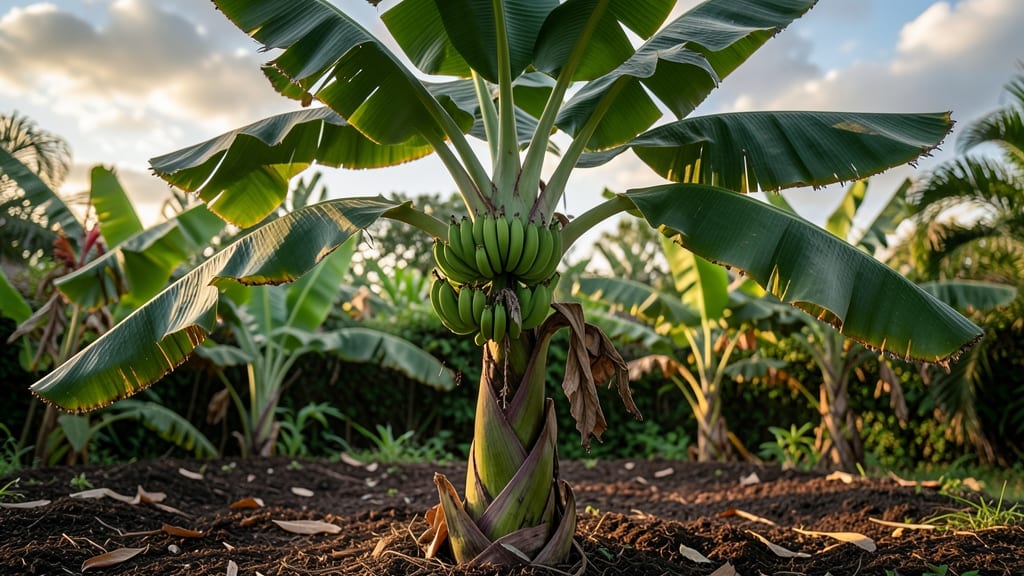
It takes a banana tree 9 to 12 months to produce fruit after planting, with flowering typically occurring around 6 to 10 months. Cavendish varieties mature faster (9-10 months), while plantains may take up to 18 months. Proper care—like consistent watering and warm temperatures—speeds up fruiting, but cold or poor soil can delay it significantly.
Banana trees follow a precise growth cycle where timing depends on both the variety and growing conditions.
The first visible sign of progress is the emergence of a pseudostem—the tree's false trunk—which takes about 3-6 months to reach maturity. 🌱 Once established, the plant focuses energy on developing a flower spike (called a "hand"), which appears when the tree is ready to fruit.
Dwarf varieties like Lady Finger often bloom earlier than their larger counterparts, which is why they produce fruit faster.
What many gardeners overlook is how environmental factors like temperature and soil quality directly impact fruiting time. For example, temperatures below 60°F can stall growth entirely, while nutrient-rich soil with a pH of 5.5–7.0 ensures the tree allocates resources efficiently.
I’ve seen firsthand how a well-maintained banana tree can produce fruit in as little as 8 months under ideal conditions, but neglect often extends the timeline by months.
💡 In This Article
- Banana Tree Growth Stages: From Seed to Fruit
- Factors That Speed Up or Delay Banana Fruit Production
Banana tree growth stages: from seed to fruit
The banana tree's journey from planting to fruiting begins with the development of a robust root system, which typically takes 3-4 months to establish. During this phase, the tree focuses on anchoring itself and absorbing nutrients from the soil.
You'll notice the first shoots emerging from the soil, which will eventually form the iconic pseudostem—a structure made of tightly packed leaves that serves as the tree's trunk. This phase is critical because a weak root system can delay flowering by up to 2-3 months.
Once the pseudostem reaches a height of about 3-5 feet, the tree enters its vegetative growth stage, where it rapidly increases in size. This phase lasts roughly 4-6 months, depending on the variety.
Dwarf varieties like Lady Finger grow faster and can reach fruiting size in as little as 8-9 months, while larger varieties like Gros Michel may take closer to 12-15 months.
The key biological trigger for flowering is a combination of the tree's age, size, and environmental cues, particularly temperature fluctuations that signal maturity.
When the tree is ready to flower, it produces a flower spike (or "hand") that emerges from the center of the pseudostem. This spike can grow up to 3 feet long and is covered in small, purple flowers that eventually develop into bunches of bananas.
The flowering process itself takes about 2-3 weeks, after which the fruit begins to form. What's fascinating is how the tree allocates its energy: it stops producing new leaves and redirects nutrients to the developing fruit, which is why you'll often see older leaves yellowing during this stage.
One often overlooked factor is the selection of suckers—the smaller shoots that grow at the base of the mother plant. Choosing a healthy, vigorous sucker to replace the mother plant can accelerate fruiting by up to 1-2 months.
Giant varieties, like Plantains, require more time because their larger size demands additional resources. For example, a Plantain tree might take 18 months to produce fruit compared to 9-10 months for a Cavendish.
Temperature plays a pivotal role in this process. Banana trees thrive in temperatures between 68-86°F, but they need a slight drop in temperature—around 60-65°F—to trigger flowering. This is why banana trees in tropical climates often flower more predictably.
In cooler regions, gardeners may need to use protective coverings or move potted trees indoors during colder months to maintain consistent growth.
Finally, the fruit development phase lasts about 3-4 months, during which the bananas grow from small buds to their mature size. The color change from green to yellow is a clear indicator that the fruit is nearing harvest.
At this stage, the tree's energy is fully focused on ripening the fruit, making it one of the most rewarding phases for growers.