
How To
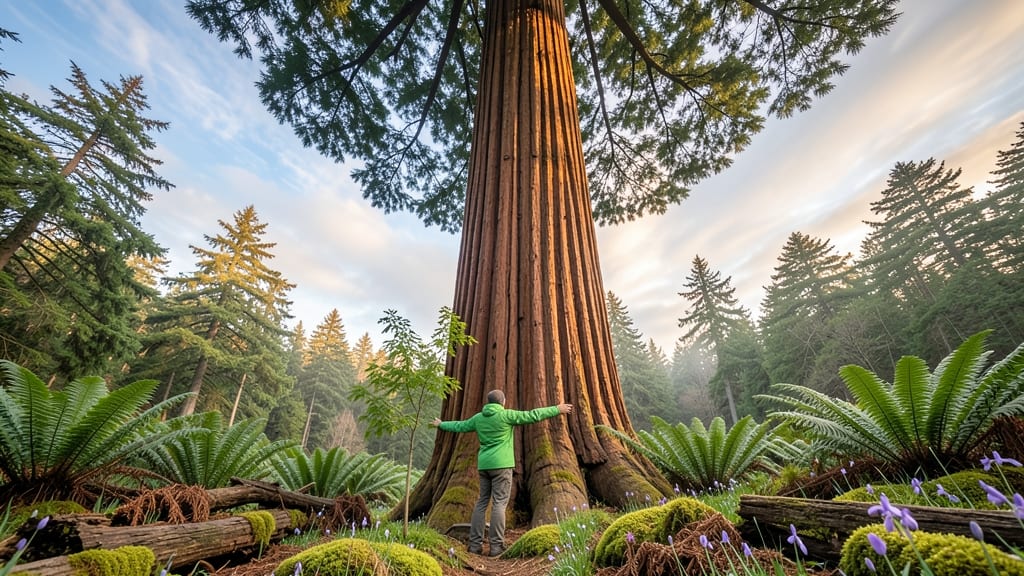
A sequoia tree can grow how tall can a sequoia tree grow up to 350 feet—taller than a 30-story building—making it the most massive living thing on Earth. 🌲
Picture this: you’re standing in a California redwood grove, craning your neck to see the top of a tree that’s been growing for over 2,000 years. That’s the kind of scale we’re talking about, and it’s not just about height—it’s about the secrets behind their explosive growth.
You might assume these giants need perfect conditions to reach such heights, but the truth is even more fascinating. From foggy coastal climates to nutrient-rich soils, sequoias thrive in ways that challenge common gardening wisdom.
And if you’ve ever wondered how long it takes for one to reach its full potential, the answer might surprise you.
In this guide, I’ll break down the record heights by species, the factors that fuel their growth, and even how you can give your own sequoia the best shot at becoming a towering legend. Let’s dive in.

Sequoia tree height records: tallest species compared
When comparing sequoia tree height records, two species dominate the conversation: the Coast Redwood (Sequoia sempervirens) and the Giant Sequoia (Sequoiadendron giganteum). While both are giants, they achieve their impressive heights through different strategies and thrive in distinct environments.
The Coast Redwood holds the title for the tallest trees on Earth, while the Giant Sequoia wins for sheer mass and volume. Let’s break down their record-breaking heights and what makes each species unique.
Measuring these ancient giants requires precision. Researchers use laser technology and climbing techniques to verify heights, often climbing with specialized gear to reach the treetops.
The tallest Coast Redwood, named Hyperion, stands at a staggering 380.1 feet (115.8 meters), while the tallest Giant Sequoia, General Sherman, measures 274.9 feet (83.8 meters) in height but boasts a massive trunk diameter of 36.5 feet.
These measurements highlight how each species maximizes its growth potential in different ways.
Regional variations play a crucial role in their growth. Coast Redwoods thrive in the foggy coastal climates of California, where moisture lingers in the air, allowing them to reach their towering heights. In contrast, Giant Sequoias dominate the Sierra Nevada mountains, where deep, nutrient-rich soils and cooler temperatures support their massive girth. Understanding these environmental factors helps explain why one species grows taller while the other becomes wider.
Growth patterns also differ significantly. Coast Redwoods grow taller and faster in their youth, with some adding 3-4 feet per year under ideal conditions. Giant Sequoias, however, prioritize width and density, with their trunks expanding outward at a remarkable rate. This difference in growth strategy is a key factor in their height records, as Coast Redwoods focus on vertical expansion while Giant Sequoias invest in structural stability.
Now, let’s dive into a detailed comparison of their height records, measurement methods, and the environmental factors that shape their growth.
The Co
How long does it take for a sequoia to reach maximum height?
Sequoias are nature's patience put on display—these majestic trees don't rush their growth. On average, it takes 500 to 1,000 years for a sequoia to reach its full height potential of 200 to 350 feet.
The journey starts small but gains momentum as the tree matures. Understanding this timeline helps appreciate why these giants are so rare and protected.
In their first decade, sequoias grow slowly, often reaching only 2 to 8 feet in height. This early stage is critical, as competition for sunlight and nutrients can determine whether a seedling survives.
Without interference, a sequoia can add 1 to 2 feet per year during its first century, but growth accelerates dramatically in ideal conditions.
- 0-10 years: 2-8 ft (slow growth, high mortality risk)
- 10-100 years: 20-50 ft (accelerated growth in ideal conditions)
- 100-500 years: 100-200 ft (rapid height increase, thick trunk formation)
- 500-1,000+ years: 200-350 ft (maximum height, minimal annual growth)
The first 100 years are where sequoias make their most dramatic height gains. With access to abundant moisture, nutrient-rich soil, and minimal competition, they can grow 2 to 3 feet per year.
However, this growth rate slows as the tree ages, with mature sequoias adding only 0.1 to 0.5 feet annually in their final centuries.
Seasonal variations play a huge role in their growth. Sequoias experience peak growth in spring and early summer, when fog drip (a key water source) and warm temperatures align perfectly.
In drier inland regions, giant sequoias grow more slowly due to limited moisture, while coastal redwoods thrive in the constant coastal fog, which acts like a natural irrigation system.
Human intervention, particularly fire suppression, has altered sequoia growth patterns. Historically, controlled fires cleared underbrush, allowing sunlight to reach seedlings and promoting faster growth. Without these fires, younger trees face increased competition, stunting their early development.
Conservation efforts now aim to reintroduce prescribed burns to restore natural growth cycles.
Climate change adds another layer of uncertainty. Rising temperatures and drought conditions threaten sequoias' ability to reach their full height potential. While some trees may still grow to 200+ feet, others in drier regions could see stunted growth or even decline.
Protecting their natural habitats remains the best way to ensure these giants continue reaching for the sky.