
How To
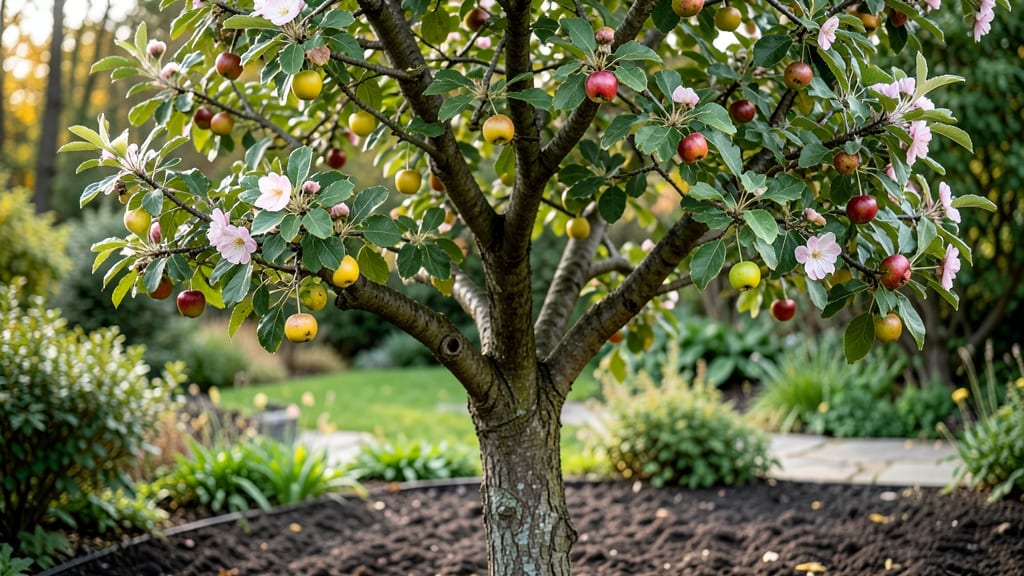
A crab apple tree 🍎 can grow anywhere from 8 feet to over 25 feet tall, depending on the cultivar you choose—so your yard size and vision matter more than you might think.
If you're dreaming of a stunning ornamental tree that offers year-round interest but worry about space constraints, crab apple trees could be your perfect match—yet their mature height varies wildly by cultivar.
Dwarf varieties like 'Dolgo' stay compact at just 8–12 feet, making them ideal for small gardens, while standard types like 'Sargent' can soar to 20–25 feet—taller than a two-story house. Below, I break down how growth rates, pruning, and even your climate can shape their final height.
You’ll discover which cultivars grow the fastest, how to space them for long-term harmony, and the pruning secrets that keep even tall varieties manageable without sacrificing their breathtaking blooms.

Crab apple tree height ranges: dwarf to standard cultivars compared
Choosing the right crab apple tree (Malus spp.) depends heavily on your space—some varieties stay compact enough for small urban yards, while others reach towering heights perfect for large landscapes. The mature height can vary from just 6 feet to over 25 feet, making cultivar selection critical.
Whether you're planning a privacy screen, a specimen tree, or a fruit-bearing focal point, understanding these height differences will help you make the best choice for your garden.
Crab apple trees are prized for their ornamental value, with stunning blooms in spring, colorful fruit in fall, and attractive bark year-round. But their growth rates differ dramatically—some grow 2-3 feet per year, while others mature slowly over decades.
Below, we break down the most popular cultivars by height category, including dwarf, semi-dwarf, and standard varieties, so you can pick the perfect fit for your property.
Pro Tip: Always check the mature height label when purchasing, as even "dwarf" trees can outgrow their space if not pruned properly. For small yards, consider columnar varieties that grow vertically rather than spreading wide.
The dwarf cultivars, like Malus 'Centennial', are ideal for container gardening or tight spaces, while standard varieties like Malus 'Adams' thrive in spacious backyards or parks.
If you're torn between height and spread, consider columnar types like 'Evereste', which grow tall but stay narrow—perfect for narrow lots or urban courtyards.
For fastest growth, Malus 'Royalty' and 'Adams' are top picks, adding 3-4 feet annually under ideal conditions. However, their aggressive growth means you'll need to prune regularly to manage height and shape. On the other hand, dwarf varieties grow more slowly, making them better for low-maintenance gardens.
Another key factor is rootstock. Many dwarf trees are grafted onto stunted rootstock, which naturally limits their height. If you're unsure, ask your nursery about the rootstock type—some can even be topped to further control size.
For example, Malus 'Centennial' often grows on M.9 rootstock, which keeps it under 10 feet even in optimal conditions.
When planting, always consider mature height and canopy spread. A 25-foot tree needs at least 15–20 feet of clearance from structures, power lines, and other plants.
For small yards, stick to dwarf or semi-dwarf varieties and plant them near patio edges or walkways to maximize their ornamental impact without overwhelming the space.
If you're unsure which cultivar to choose, start with Malus 'Golden Hornet'—it strikes a balance between manageable height (12–15 feet) and rapid growth, making it versatile for most gardens.
For maximal fruit production, prioritize standard varieties, but be prepared for regular pruning to keep them in check.
Remember, even dwarf trees can be pruned to stay
Fastest-growing crab apple trees: height progression by year
If you're eager to add a fast-growing crab apple tree to your landscape, understanding their annual height progression helps with planning. Some cultivars like Malus 'Adams' or 'Royalty' can shoot up 3-5 feet per year in ideal conditions, making them perfect for quick ornamental impact.
These varieties are especially popular for their vibrant blooms and disease-resistant fruit, but their rapid growth requires smart pruning to manage height.
For small yards or urban gardens, controlling height is key. Even fast growers can be shaped with proper pruning techniques during their first few years.
The key is to prune in late winter or early spring before new growth begins, focusing on removing overlapping branches and suckers at the base to encourage a strong, compact structure. This approach keeps your tree manageable while preserving its ornamental value.
| Cultivar | Year 1 Height | Year 2 Height | Year 3 Height | Mature Height |
|---|---|---|---|---|
| Malus 'Adams' | 4-6 ft | 8-12 ft | 12-16 ft | 18-22 ft |
| Malus 'Royalty' | 3-5 ft | 7-10 ft | 10-14 ft | 15-20 ft |
| Malus 'Sargent' | 5-7 ft | 10-14 ft | 15-18 ft | 20-25 ft |
By year 3, these fast-growing crab apple trees will already be making a statement in your garden. For example, Malus 'Sargent' can reach 15-18 feet by its third year, while 'Royalty' tends to stay slightly shorter at 10-14 feet.
This rapid growth means you’ll see pink spring blooms and colorful fall fruit much sooner than with slower-growing varieties.
To keep your tree at a desired height, focus on structural pruning during its first few years. Remove up to 25% of new growth annually to encourage a balanced canopy and prevent overcrowding.
Avoid heavy pruning in late summer or fall, as this can stimulate weak, late-season growth that’s vulnerable to frost damage. Instead, schedule pruning for late winter or early spring when the tree is dormant.
For urban gardeners with limited space, consider dwarfing rootstock or container-growing techniques. Some nurseries offer grafted crab apple trees on dwarfing rootstock, which can reduce mature height by 30-50%. Pair this with regular pruning and you can enjoy all the ornamental benefits without sacrificing your patio space.
Just ensure the container is at least 24 inches deep and has good drainage.
With the right cultivar selection and pruning strategy, you can enjoy a fast-growing crab apple tree that fits your space while still delivering stunning seasonal interest.
Whether you choose 'Adams' for its bright red fruit or 'Royalty' for its compact size, these trees are a game-changer for small gardens. 🌳