
How To
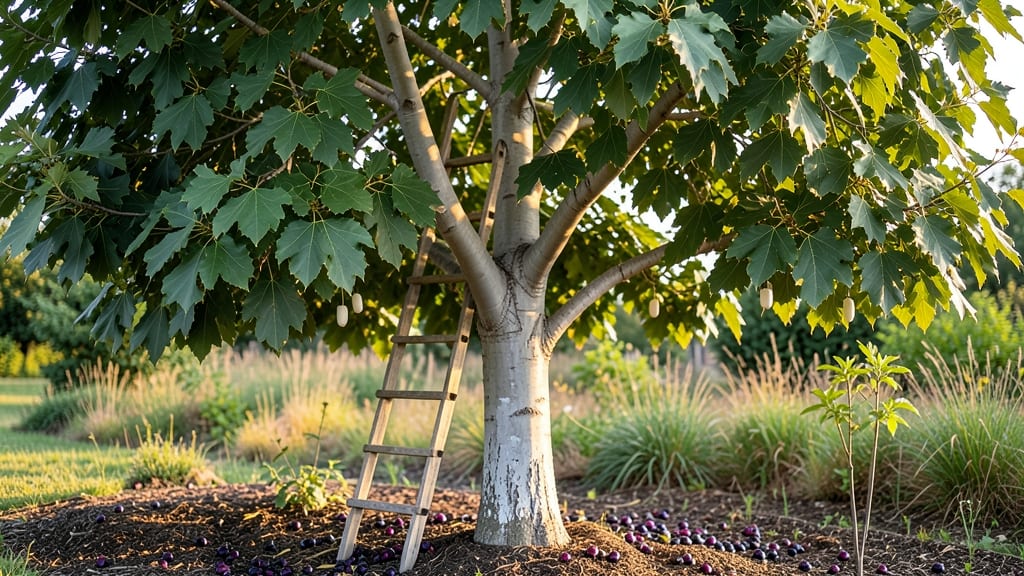
A mulberry tree grows to how tall does a mulberry tree grow heights between 20 and 60 feet—taller than most backyards can comfortably handle without some planning.
If you're dreaming of a towering mulberry tree 🌳 in your backyard but aren't sure how much space to allocate, you're not alone—this fast-growing fruit tree can reach surprising heights depending on the variety and growing conditions.
White mulberries typically stay on the shorter side at 20 to 30 feet, while black mulberries can soar to 50 or 60 feet if left unchecked.
Even dwarf varieties still hit 10 to 15 feet, so measuring your space is the first step to avoiding a tree that outgrows its welcome.
Below, I’ll break down the exact height ranges by variety, how climate zones influence growth, and the easiest ways to keep your mulberry tree at a manageable size—without sacrificing those sweet summer berries.

Mulberry tree height by variety: exact growth expectations
If you're planning to add a mulberry tree to your landscape, understanding its mature height is crucial for proper spacing and long-term care. Mulberries are known for their rapid growth, but the final height varies dramatically between varieties.
From compact dwarf types perfect for small yards to towering standard trees reaching small tree proportions, the options are vast. Let's explore the exact height ranges you can expect from the most popular mulberry varieties.
The Morus nigra (black mulberry) often tops the height charts, while Morus alba (white mulberry) varieties offer more manageable options. Even within these species, specific cultivars can differ by 20 feet or more in mature height.
Knowing these differences helps you choose the right tree for your space while ensuring you have room for its future growth. For example, a giant mulberry planted near a house might require strategic pruning to prevent overgrowth.
The black mulberry (Morus nigra) is the tallest variety, often exceeding 50 feet in ideal conditions, making it better suited for parks or rural settings. In contrast, dwarf varieties like 'White Pearl' stay under 15 feet, perfect for small urban yards or even large containers.
Even within standard varieties, growth rates can vary—some 'Illinois Everbearing' trees may reach 40 feet within 10 years, while others grow more slowly.
Red mulberries (Morus rubra) typically fall between black and white mulberries in height, often reaching 30-50 feet. These native trees are prized for their disease resistance and adaptability to various soil types, making them a favorite for native plant gardens.
If you're considering a red mulberry, plan for its eventual height—these trees can easily outgrow small backyards without proper spacing.
For gardeners with limited space, semi-dwarf varieties like 'Golden Rain' offer a compromise, typically maturing between 15-25 feet. These trees produce abundant fruit while remaining manageable in suburban settings. The key to success with any mulberry variety is understanding its growth potential early.
Planting too close to structures or other trees can lead to root competition and stunted growth over time.
One common misconception is that all mulberries grow at the same rate. While they're generally fast-growing trees, environmental factors like sunlight, soil quality, and water availability can significantly impact their height.
In full sun with rich, well-draining soil, a mulberry tree may grow 3-5 feet per year in its early years. However, in shady conditions or poor soil, growth can be much slower, potentially reducing mature height by 20-30%.
If you're unsure which variety to
How climate zones affect mulberry tree growth height
Your mulberry tree's final height isn't just about genetics—it's heavily influenced by your USDA hardiness zone. Colder zones force trees to grow slower and stay shorter, while warmer climates let them reach their full 60-foot potential. Understanding these patterns helps you plan for the right variety and space.
In warmer zones (8-10), mulberries thrive with minimal stress, often reaching 40-60 feet without intervention. But in cooler zones (5-7), they'll max out at 20-30 feet due to winter dormancy limits. Let's break down how each zone affects growth patterns and what that means for your backyard.
USDA Zone
Avg. Mature Height
Growth Rate
Cold Tolerance
Height Adjustment Tips
3-4
10-15 ft
Slow (1-2 ft/year)
-30°F to -20°F
Choose dwarf varieties or plant in sheltered microclimates
5-6
20-25 ft
Moderate (2-3 ft/year)
-20°F to -10°F
Prune annually to control height and protect branches from ice
7-8
30-40 ft
Fast (3-5 ft/year)
-10°F to 10°F
Provide full sun and deep soil for optimal growth
9-10
40-60 ft
Very Fast (5+ ft/year)
10°F and above
Monitor for pests/diseases in humid climates; mulch heavily
In Zone 3-4, where winters are brutal, mulberries struggle to exceed 15 feet unless you use heat-loving varieties like 'Illinois Everbearing'. These zones require extra winter protection, like wrapping trunks or planting near south-facing walls to capture sunlight.
Zones 7-10 see the most dramatic growth, with trees often hitting 40+ feet by maturity. In Zone 9-10, mulberries grow so vigorously they may need annual pruning just to keep them manageable. The trade-off? These trees produce heavier fruit loads and faster.
For gardeners in transition zones (6-7), height control becomes a balancing act. While these zones support 30-foot trees, inconsistent winters can stunt growth. I recommend regular pruning in late winter to shape the tree while maintaining its fruit-bearing structure.
Always consider your local microclimate—urban areas may be 2-3 zones warmer than rural spots, allowing taller growth. If you're unsure, consult your extension office for precise zone mapping before planting.