
How To
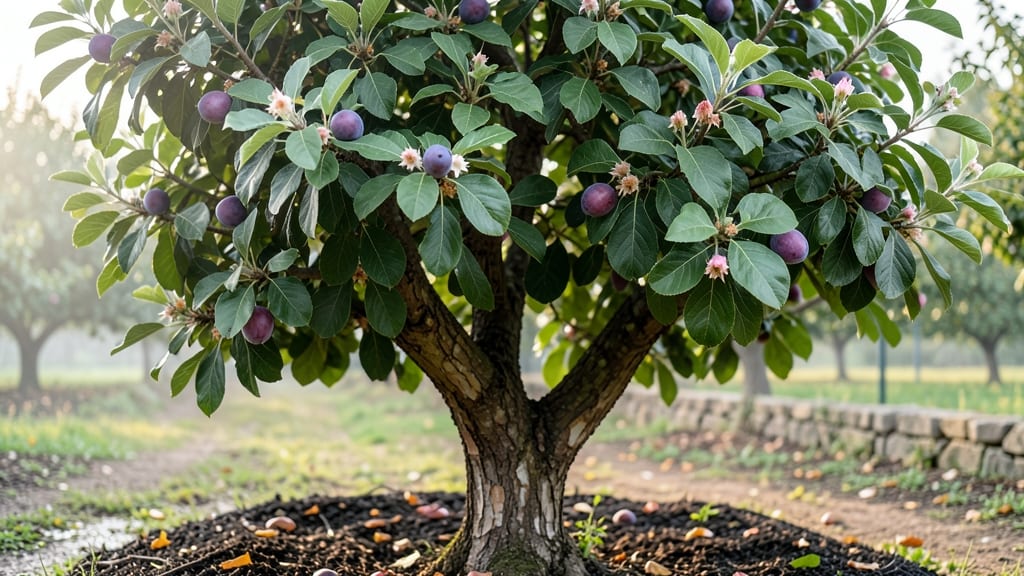
Plum trees grow to how tall does a plum tree grow at maturity, ranging from 15 to 30 feet, but the height of your 🍑 depends entirely on the variety you choose—some stay under 10 feet while others stretch toward the sky.
Picture this: a fast-maturing plum tree in your backyard, its branches heavy with fruit by summer, but you’re stuck guessing whether it’ll fit without shading your patio or blocking the driveway. The right variety makes all the difference.
In this guide, we’ll break down the tallest and shortest plum tree varieties, how to pick one that fits your space, and pruning tricks to keep even the biggest trees in check.
Whether you’ve got a small urban yard or a sprawling rural plot, you’ll find the perfect plum tree size—and the spacing rules to make it thrive.

Plum tree height by variety: fastest-maturing types and their space requirements
If you're dreaming of homegrown plums but worried about space, you're in the right place. Plum trees grow at wildly different rates—some mature in just 3-4 years while others take a decade. The fastest-maturing varieties like Stanley and Methley reach full height quickly, making them perfect for impatient gardeners.
Understanding these growth patterns helps you choose the right tree for your yard's size and layout.
Most standard plum trees tower between 20-30 feet tall, while dwarf varieties stay under 10 feet.
The key difference lies in their rootstock—dwarf trees are grafted onto stunted root systems, while standard trees grow on their own roots. Spacing requirements vary just as much as height, with dwarf trees needing only 8-10 feet of clearance versus 20+ feet for their towering cousins.
Below is a breakdown of the fastest-maturing plum varieties, their mature heights, and the ideal spacing for airflow and sunlight. These varieties are chosen for their quick growth and reliable fruit production, perfect for gardeners who want plums sooner rather than later.
🌱
For small gardens, dwarf varieties like Stanley or Methley are ideal—they mature quickly and fit neatly into tight spaces. These trees typically reach 10-15 feet tall,
How to determine the right plum tree height for your garden layout
Choosing the right plum tree height starts with understanding your garden's unique constraints. Urban yards often limit space, while rural properties may offer more room for mature trees. The key is balancing the plum tree's mature height with your available space, overhead obstructions, and long-term maintenance goals.
Whether you're planting near a driveway or a cozy patio, proper spacing ensures healthy growth and easy fruit harvesting.
Plum trees come in three main height categories: dwarf (8–12 ft), semi-dwarf (12–18 ft), and standard (20–30 ft). Dwarf varieties are ideal for small gardens or containers, while standard trees thrive in spacious orchards.
Your choice depends on your layout, sunlight access, and whether you prioritize convenience over fruit volume. Always check the specific variety's growth habit before planting.
⚠️ Overhead Clearance Warning: Plum Trees Can Grow Taller Than You Think!
Even dwarf plum trees can reach 12+ feet at maturity—taller than most garage doors or two-story homes! Measure your space from the ground to the lowest overhead obstacle (power lines, roofs, or driveways). Add 3–5 feet for canopy spread and future growth. Never plant under power lines—plum trees can grow into them within 5–10 years, creating fire hazards and costly removal.
Begin by measuring your garden's available space from all sides. Note the distance to fences, buildings, and overhead structures like power lines or garage doors. Standard plum trees need at least 15–20 feet of clearance horizontally and vertically.
For semi-dwarf varieties, aim for 10–15 feet, while dwarf trees require just 8–10 feet. Sketch a rough layout to visualize how the tree will fit without blocking sunlight or walkways.
Next, consider your garden's sunlight exposure. Plum trees need 6–8 hours of full sun daily, so avoid planting in shaded corners. If your space has limited sunlight, opt for a dwarf variety, which can adapt slightly better to partial shade.
Always plant on the south or west side of structures to maximize sun exposure. Use a sunlight calculator to map your yard's light patterns before committing to a location.
For urban gardens, container planting is a smart solution. Dwarf plum trees thrive in large pots (at least 24-inch diameter) and can be moved seasonally. Ensure the container has drainage holes and use a well-draining potting mix.
Place the pot near a sunny wall or fence to create a microclimate that extends the growing season. Just remember: container-grown trees may need annual repotting to accommodate root growth.
Finally, account for future growth by leaving extra space around the tree. Prune young plum trees annually to encourage a strong structure and prevent overgrowth. Use open-center pruning for dwarf varieties to keep them compact, while standard trees benefit from central-leader training.
Regular pruning not only controls height but also improves air circulation, reducing disease risk. Always prune in late winter or early spring before new growth begins.