
How To
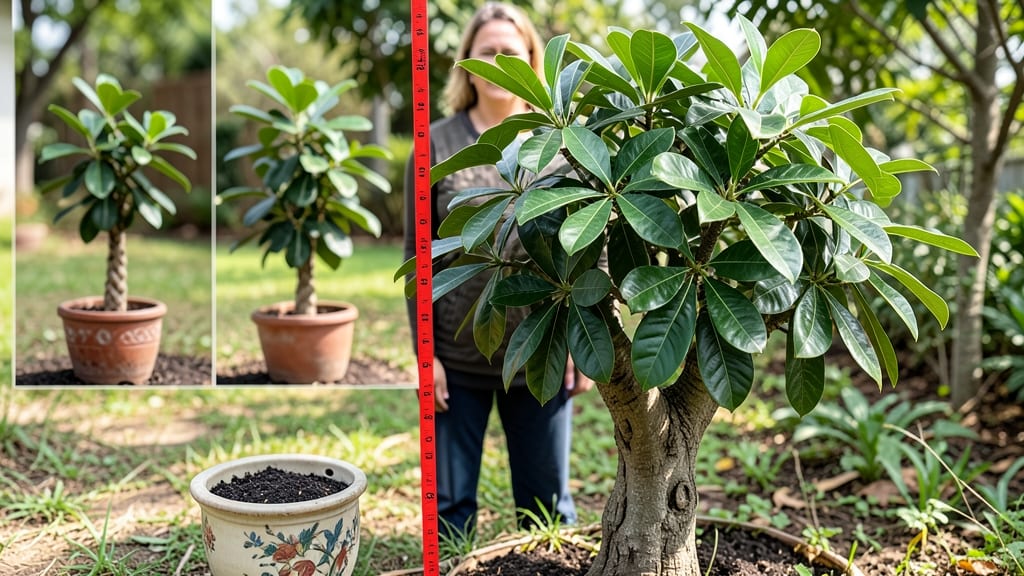
A money tree will grow anywhere from 3 feet to over 10 feet tall indoors, depending on its variety and how you care for it—so your braided friend might soon be a ceiling hugger if you don’t prune it.
Picture this: your 5-leaf Money Tree 🌿 starts as a cute tabletop plant, but within 5 years, it could stretch to your shoulders if left unchecked. That’s why knowing your specific variety’s growth habits is the first step to keeping it at your desired height.
Some types, like the compact 'Variegated Money Tree,' max out around 4-5 feet, while the standard Pachira aquatica can easily hit 8-10 feet if given enough light and space. The key? Pruning, pot size, and sunlight all play a role in controlling its vertical ambitions.
In this guide, I’ll break down exactly how tall each common variety grows, when to trim for height control, and the simple tricks to keep your money tree at the perfect size—whether you want it as a statement plant or a cozy corner buddy.

Money tree height limits by variety: small to towering growth charts
Your money tree (Pachira aquatica) might look like a modest houseplant now, but its future height depends entirely on its variety and care. Some stay compact enough for shelves, while others grow into towering indoor trees.
Understanding these height ranges helps you choose the perfect variety for your space—and plan for its growth over time.
From the braided money tree’s elegant twists to the variegated money tree’s striking foliage, each type has a distinct mature height potential. Even with ideal conditions, growth varies by 1-3 feet between varieties.
Let’s explore the height limits of five popular types and how long they take to reach their full glory.
Pro Tip: Money trees grow 1-2 feet per year under ideal conditions, but pruning and pot size can slow or speed up vertical growth. We’ll cover those tricks later—first, let’s focus on the natural height ranges by variety.
The braided money tree is the tallest variety, often reaching 10 feet indoors with proper care. Its iconic braided trunk starts as a single stem, which gardeners weave together for that signature look. If you love dramatic foliage, this variety delivers—but it needs space to stretch.
On the smaller end, the dwarf money tree stays under 3 feet, making it perfect for desks or shelves. It matures faster too, often reaching its height limit in just 1–2 years. This makes it ideal for beginners or those with limited vertical space.
For a balanced option, the 5-leaf money tree hits 3–5 feet and thrives in medium-sized rooms. Its five-leaf clusters create a fuller look than standard varieties, while keeping growth manageable. This is my personal favorite for living rooms!
Light plays a huge role in height control. Money trees grown in bright indirect light (like an east-facing window) grow 10–20% taller than those in low light. If your plant feels leggy or stretched, it’s likely reaching for more light—time to relocate it!
Pot size also affects height. A smaller pot (like a 6-inch diameter) keeps roots root-bound, slowing vertical growth. But if you upgrade to a 12-inch pot, expect faster upward expansion. Always use pots with drainage holes to prevent root rot.
Pruning is the secret weapon for controlling height. By trimming the top few inches of stems, you encourage bushier growth and prevent towering. I prune mine in early spring to shape it before the growing season kicks in.
🌿
How to control money tree height: pruning, light, and pot size hacks
Your money tree (Pachira aquatica) can grow into a 10-foot indoor giant if left unchecked—but with the right techniques, you can keep it at tabletop height or anywhere in between. The key lies in understanding how pruning, light exposure, and pot size interact to control vertical growth.
Unlike outdoor trees, indoor money trees grow slower, but their height still depends on your hands-on approach.
Most gardeners struggle with two extremes: over-pruning that stunts growth or neglecting pruning that leads to unruly height. The solution? A balanced strategy that combines strategic pruning with light management and pot size adjustments.
Let’s break down how each factor influences your money tree’s height—and how to harness them for your desired look.
Natural vs. Controlled Growth Factors
Natural Growth
- ✅ 6-10 ft tall indoors
- ✅ 1-2 ft/year without pruning
- ✅ Thicker trunk over time
- ✅ Faster growth in bright light
Controlled Growth
- ✅ 3-5 ft max with pruning
- ✅ Slower vertical growth (6-12 in/year)
- ✅ Fuller shape from pruning
- ✅ Smaller pots limit root spread
Pro Tip: Use top-heavy pruning to encourage bushier growth and smaller pots to slow vertical expansion.
Start with pruning, the most direct way to control height. Money trees respond well to tip pruning—simply snip off the top 2-4 inches of new growth to redirect energy toward lateral branches. This method works best in spring or early summer, when the plant is actively growing.
For dramatic height reduction, prune back by 1/3 of the plant’s height at once, but avoid cutting into old wood, as this can stress the tree.
Light exposure plays a surprising role in height control. While money trees thrive in bright indirect light, too much direct sun can spur rapid vertical growth. Place your plant 2-3 feet from an east-facing window for ideal conditions.
If you notice stretched, leggy growth, it’s a sign your tree needs less light. Rotate the pot quarter-turns weekly to ensure even exposure and prevent lopsided growth patterns.
Pot size directly impacts root development, which in turn affects height. A too-large pot encourages faster vertical growth as the tree stretches to fill the space, while a snug pot (just 1-2 inches larger than the root ball) keeps growth compact.
Repot only when you see roots circling the drainage hole, typically every 2-3 years. Use a well-draining mix with perlite or orchid bark to prevent root-bound stress, which can also spur height spikes.
For immediate height control, combine these techniques: prune in spring, move to a smaller pot, and reduce light exposure slightly. Over time, your money tree will grow at a manageable pace—perfect for maintaining a 3-5 foot tabletop statement piece or a 7-foot floor plant.
The key is consistency; adjust one factor at a time and monitor the response.