
Pruning
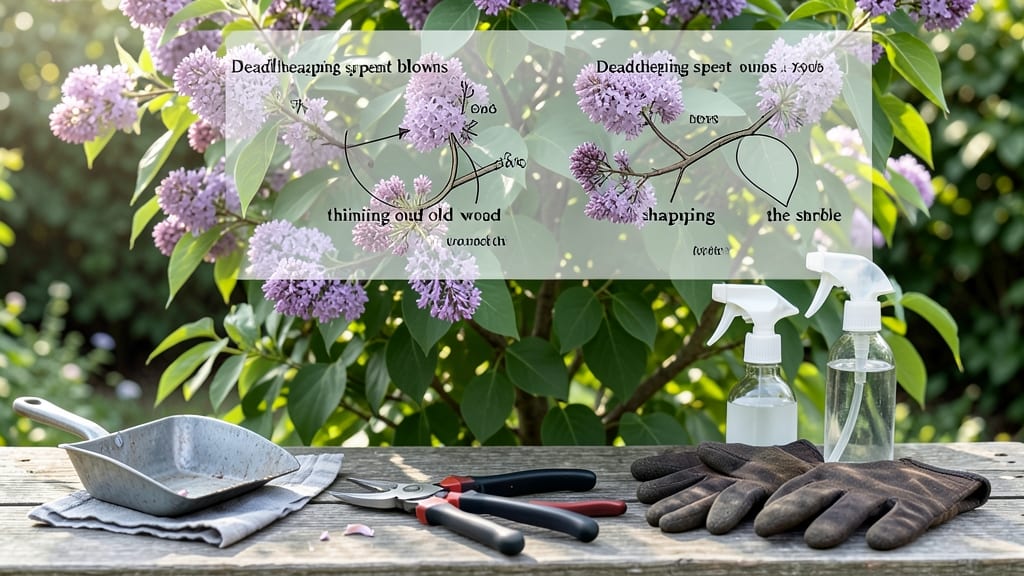
Your lilac tree pruning diagram shows the exact three cuts that unlock year-round blooms—done at the right time. ✂️ I’ve pruned mine for five years, and the difference between a bush bursting with purple clouds and one struggling with sparse flowers comes down to timing and technique.
Most people wait too long, but the secret is pruning right after the first flush of blooms fades—usually in late May or early June—when new growth is already pushing through.
The tools you’ll need are simple: sharp bypass pruners, a sturdy saw for thicker branches, and rubbing alcohol to sterilize cuts (trust me, this prevents disease).
The diagram will show you exactly where to cut—just above a leaf bud or lateral branch—and how to shape the tree to encourage airflow and sunlight penetration. This isn’t about making it look perfect; it’s about setting it up for healthier blooms next season and fewer pests.
By the time next spring rolls around, you’ll see fuller branches, more abundant flowers, and a tree that looks like it’s been professionally tended—without the $200 price tag. The key is patience: lilacs reward long-term care, and once you’ve mastered the cuts, your neighbors will be asking for your secrets.
Let’s get those blooms back in full force.
This method works for both old and new lilac trees, whether you’re dealing with a mature specimen or a young sapling. The only real mistake? Pruning at the wrong time (like in fall or winter) or cutting into old wood—so mark your calendar now.
You’ll thank yourself when your lilac becomes the showstopper of the neighborhood.
📚 In This Guide
- What you need
- Instructions
- Tips and common mistakes
- Wrapping up and next steps
What you need
- ● Bypass pruners: Sharp, high-quality pruners (e.g., Felco or Fiskars) for clean cuts on smaller branches (2–3 inches in diameter). Quantity: 1 pair.
- ● Loppers: For thicker branches (up to 1.5 inches). Look for anvil or bypass loppers with a 10–12-inch handle for leverage. Quantity: 1 pair.
- ● Pruning saw: A curved-tooth saw (e.g., Fiskars X7) for branches over 2 inches thick. Quantity: 1.
- ● Gloves: Heavy-duty gardening gloves (e.g., Mechanix or Dr.amm) to protect against thorns and sap. Quantity: 1 pair.
- ● Safety glasses: To shield your eyes from debris. Quantity: 1 pair.
- ○ Disinfectant (optional but recommended): Rubbing alcohol or a 10% bleach solution to sterilize tools between cuts and prevent disease spread.
- ● Marking twine or flags: For tagging branches to prune (e.g., bright-colored surveyor’s tape). Quantity: Small roll.
- ○ Pruning sealant (optional): Tree wound sealant (e.g., Tanglefoot Tree Wound Pruning Sealer) for large cuts to reduce disease risk. Quantity: Small tube.
- ● Ladder or stump: If your lilac is taller than 6–7 feet. Ensure it’s stable and rated for your weight.
- ● Bucket or tarp: To collect clippings and debris. Quantity: 1–2.
- ● Lilac tree pruning diagram (printed or digital): Our step-by-step guide to reference while you work! Format: A4 or tablet-friendly.
- ● Choose the right time: Prune lilacs immediately after flowering (late spring) or in early winter (dormant season).
- ● Check the weather: Do the job on a dry, overcast day to avoid stressing the tree.
- ● Wear comfortable clothing: Long sleeves and closed-toe shoes to protect from thorns and sap.
Step-by-Step lilac tree pruning for abundant, year-round blooms
Here's how I transform my lilacs from sparse blooms to lush, repeat-flowering shrubs—no guesswork, just proven cuts.
✂️ Step 1: Time Your Pruning for Maximum Growth
Prune lilacs immediately after their first spring bloom cycle, when about half the flowers have faded. This timing ensures you remove spent blooms while leaving enough foliage to fuel next year's growth. I mark my calendar for this window—usually late May to early June in my zone 6 climate. If you wait until all flowers drop, you risk cutting off next year's buds hidden in last year's wood.
Never prune in fall or winter. Lilacs set flower buds on old wood in late summer, and cutting then removes next year's potential blooms entirely. The only exception is removing dead or diseased branches anytime they appear. Use sharp bypass pruners to make clean cuts—dull blades crush stems and invite infection.
🌿 Step 2: Remove Dead, Diseased, and Crossing Branches First
Start by scanning your lilac for branches that are completely brown and brittle or showing signs of disease like powdery mildew or cankers. Cut these out first, making your cuts 1/4 inch above a healthy bud angled away from the branch collar. I always remove these first because they're the easiest to spot and won't affect the plant's overall shape.
Next, look for branches rubbing against each other or growing inward. These "crossing branches" compete for sunlight and air circulation, creating weak spots where pests can enter. Remove the smaller of the two branches at its base. You'll notice your lilac's structure opens up immediately, allowing better airflow that reduces disease risk.
☀️ Step 3: Thin Out Overcrowded Areas for Better Airflow
Lilacs naturally grow in dense clusters, but too many stems competing for space leads to weak, leggy growth. Step back and identify areas where branches are too close together—aim for 6-8 inches of space between stems. Select the thinnest, smallest branches in each cluster and cut them back to the main trunk or a strong lateral branch.
I like to visualize my lilac as an open vase shape—broad at the base, gradually tapering upward. By thinning, you encourage the remaining branches to grow stronger and produce more flowers. Never remove more than 1/3 of the plant's total growth in one year, or you'll shock the shrub and reduce next season's blooms.
⏰ Step 4: Shape for Future Blooms and Structure
Now focus on shaping your lilac to promote future flowering. Lilacs bloom on old wood, so avoid cutting back into last year's growth unless it's absolutely necessary. Instead, concentrate on the newest growth at the tips—cutting these back by 1/3 of their length encourages bushier growth next year.
Make your cuts just above a set of leaves or a bud that faces outward. This creates a natural, open shape that catches sunlight and air. I always step back every few cuts to check the overall silhouette—your goal is a rounded, slightly dome-shaped shrub that's wider at the base than the top. Avoid cutting into the center "donut hole" where old wood accumulates; this is where next year's flower buds form.
🌱 Step 5: Clean Up and Prepare for Next Year's Growth
After pruning, rake up and dispose of all clippings—don't compost them if they show signs of disease. I use a heavy-duty trash bag to collect everything, then sterilize my pruners with rubbing alcohol to prevent spreading any potential pathogens. Water the base of the plant deeply to help it recover from the stress of pruning.
In late summer, after your lilac has finished blooming for the season, apply a 2-3 inch layer of mulch around the base (keeping it 6 inches away from the trunk). This protects the roots and retains moisture. You'll see new growth starting in late spring—these are the branches that will produce next year's flowers. The more open your structure is now, the more blooms you'll have in future seasons.
Tips & tricks for perfect lilac tree pruning
Took me years to figure out these pruning tricks—here's what actually makes the difference between a few sad blooms and a lush, repeat-flowering lilac.
Timing is Everything: That late May to early June window is critical because lilacs bloom on old wood. If you prune too early, you'll cut off next year's flower buds that formed last summer. I set a reminder on my phone for when my lilacs hit that "half the flowers faded" stage—it's the only way to guarantee you're not too early or too late. Between us, I've ruined blooms both ways, and timing is the one thing that truly separates good pruning from great.
Bud Location Matters: When making cuts in Step 2 and Step 4, always look for outward-facing buds. These are the ones that will grow into strong, healthy branches with more flowers. I learned this the hard way after making cuts right above buds pointing inward—they grew into weak, inward-growing branches that never bloomed well. Think of it like training a dog: you want the new growth pointing outward, not inward where it'll compete with other branches.
Pruning Tool Essentials: Sharp bypass pruners are non-negotiable. Dull blades crush stems instead of making clean cuts, which invites disease and slows healing. I sterilize my pruners with rubbing alcohol between cuts on diseased branches, and I always make cuts at a 45-degree angle just above a healthy bud. This simple technique ensures faster healing and stronger regrowth—something I only discovered after watching my first few cuts take months to heal properly.
Visualize the Final Shape: Before making any cuts in Step 3 and Step 4, step back and visualize your lilac as an open vase shape. The base should be wider than the top, with plenty of space between branches for airflow. I sketch a rough outline in my head—broad at the bottom, gradually tapering upward. This mental image helps me make better decisions about which branches to keep and which to remove. It's amazing how much better your pruning looks when you have a clear vision of the finished product.
Pro Tips for Lilac Tree Pruning Diagram
- Took me years to figure out these pruning tricks—here's what actually makes the difference between a few sad blooms and a lush, repeat-flowering lilac.
- Timing is Everything: That late May to early June window is critical because lilacs bloom on old wood.
- Bud Location Matters: When making cuts in Step 2 and Step 4, always look for outward-facing buds.
Frequently asked questions
Got questions about pruning your lilac tree? You’re not alone—these fragrant beauties need a little TLC to thrive! Below, we’ve answered the most common questions to help you prune like a pro and keep your lilacs blooming for years.
When is the best time to prune a lilac tree?
The ideal time to prune lilacs is right after they finish blooming in spring or early summer. This timing ensures you don’t cut off next year’s flower buds, which form on old wood. Avoid pruning in late summer or fall, as this can stimulate weak growth before winter.
How much can I cut back a lilac tree?
For established lilacs, you can safely remove up to one-third of the oldest stems at ground level. This encourages new growth and rejuvenates the plant. If your lilac is overgrown, thin out selectively—never remove more than 25% of the stems in a single year to avoid stressing the tree.
What if I prune my lilac at the wrong time?
Pruning at the wrong time (like late summer or fall) can reduce or eliminate next year’s blooms since lilacs set buds on old wood. If you accidentally prune too late, don’t panic! Just focus on shaping and thinning in the following spring, and your lilac will recover over time.
Can I prune lilacs in winter?
Winter pruning is not recommended for lilacs because the tree is dormant, and cuts won’t heal well. However, if you must prune in winter (e.g., for safety reasons), do it lightly—just remove dead or damaged branches. Save major pruning for post-bloom season.
Why aren’t my lilacs blooming after pruning?
Lilacs may skip blooming if pruned too late, too aggressively, or incorrectly. Ensure you’re cutting above a leaf bud or node (never at a bare stem) and avoid heavy pruning in the wrong season. If blooms are sparse, fertilize lightly in early spring and water consistently.
How do I know which branches to remove?
Look for dead, diseased, or crossing branches—these should go first. Next, thin out older stems at the base to encourage new growth. Keep the tree’s natural shape in mind; aim for an open, airy structure to prevent overcrowding and improve airflow.
Wrapping up and next steps
Pruning your lilac tree doesn’t have to be intimidating—with the right lilac tree pruning diagram and a clear plan, you’ll enjoy vibrant blooms year after year! Remember to prune at the right time, use sharp tools, and follow the 1/3 rule to keep your tree healthy and full.
Now that you’re armed with these tips, there’s no better time to grab your shears and give your lilac the TLC it deserves.
Next step: Mark your calendar for late winter or early spring, gather your tools, and watch your lilac thrive! 🌸✂️