
Pruning
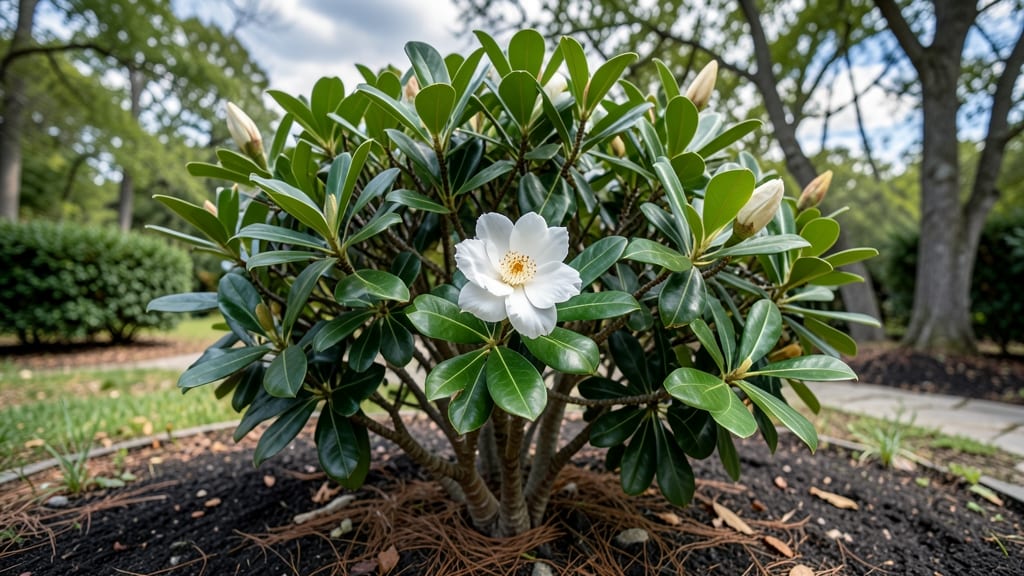
Pruning your magnolia tree shrub isn't just about shaping—it's about unlocking its full potential. 🌿 I've learned that strategic cuts in the right season can transform a leggy shrub into a lush, blooming powerhouse, with stronger branches and more vibrant flowers every year.
The key is understanding when to prune for health, not just aesthetics, and which tools to use to avoid damaging that delicate bark.
Most gardeners wait until spring or summer, but the best time to prune magnolias depends on your goal: encourage blooms or shape growth. For spring-blooming varieties, prune right after flowering when new growth begins, while summer pruning helps maintain shape without sacrificing next year's blooms.
You'll need sharp bypass pruners, rubbing alcohol for sterilizing cuts, and a sturdy ladder if your magnolia has reached lofty heights.
What you'll achieve is a magnolia that thrives—not just survives—with fewer dead branches, better air circulation, and that coveted rounded shape. The blooms become more abundant, and the plant invests energy in growth rather than struggling with overcrowded limbs.
Think of it as a spa day for your magnolia: less stress, more beauty.
This approach works for both landscape planting and container-grown magnolias, though container plants may need more frequent pruning to maintain their compact form. Whether you're dealing with a towering Southern magnolia or a petite saucer magnolia, the same principles apply—just adjust the scale. Let's get those shears ready!
📚 In This Guide
- What you need
- Instructions
- Tips and common mistakes
- Wrapping up and next steps
What you need
- ● Pruning shears: Bypass pruners (for small branches, ¼"–¾" thick)
- ● Loppers: 1 pair (for medium branches, ¾"–2" thick)
- ● Pruning saw: 1 handheld saw (for thick branches, 2"+ thick)
- ● Gloves: Heavy-duty, cut-resistant (2 pairs—one for handling tools, one for branches)
- ● Disinfectant: 70% isopropyl alcohol or 10% bleach solution (1 bottle or spray)
- ● Sealing wax or pruning paste: 1 small tube (to protect large cuts)
- ● Ladder or step stool: Sturdy, extendable (if branches are >6 ft high)
- ● Trash bags or bucket: 1–2 (for collecting clippings)
- ● Sharpie or marker: 1 (for labeling branches if needed)
- ● Extension pole pruners: For high branches without a ladder
- ● Safety goggles: To shield eyes from debris
- ● Work gloves with grip: For better branch control
- ● Hose or spray bottle: To clean tools mid-pruning
- ● Notebook & pen: To track pruning notes (e.g., branch IDs, dates)
Step-by-Step guide to pruning magnolia shrubs for year-round health
Pruning magnolias isn't just about shaping—it's about unlocking their full potential. Here's how to do it right, season by season.
✂️ Step 1: Late Winter Pruning for Structural Balance
Magnolias bloom on old wood, so I time my first pruning for late February to early March—right after the last frost but before buds swell. This is when the tree's energy is dormant but ready to redirect. Start by removing any dead, diseased, or crossing branches first—they're the easiest to spot against the bare branches.
Use clean, sharp pruners to make cuts just outside the branch collar (the swollen area where the branch meets the trunk). Avoid leaving stubs—this invites decay. For larger branches over ½ inch thick, use a pruning saw and seal the cut with pruning sealant to prevent disease entry. You'll see the tree's natural structure emerge as you work.
Next, thin out crowded branches to improve airflow. Aim for an open center—magnolias hate tight canopies that trap moisture. I like to step back every few cuts to visualize the shape. The goal is 30-40% reduction in density, not drastic reshaping. This ensures the tree puts energy into new growth rather than struggling to recover.
☀️ Step 2: Post-Bloom Maintenance in Early Summer
After the spring flowers fade (usually June), focus on shaping and cleaning up. This is when magnolias produce new growth, so you can safely trim without sacrificing next year's blooms. Start by removing any water sprouts—those fast-growing, vertical shoots that appear after heavy pruning. They drain energy from the main structure.
For shaping, I use a hand pruner to trim back overgrown branches to their natural branch points. Never cut more than ¼ of the branch length in one season—magnolias respond poorly to aggressive pruning. Watch for suckers at the base and remove them immediately. These compete with the main shrub for nutrients and weaken overall health.
This is also the time to adjust the height if needed. Topping (cutting the main stem flat) is a no-go—it creates ugly regrowth. Instead, make cuts just above a outward-facing bud to encourage fuller growth. You'll notice new leaves emerging within 2-3 weeks—that's your signal the pruning worked.
⏰ Step 3: Light Pruning in Fall for Winter Readiness
In October, do a quick check for any branches that grew out of balance during summer. Remove only what's necessary—magnolias need time to harden off before winter. Focus on deadheading spent flowers and any branches that look diseased (they'll often have dark spots or oozing sap).
For structural adjustments, limit cuts to smaller branches under ¼ inch thick. Thicker cuts now can stimulate late-season growth that won't harden before frost. I always carry a small pair of pruners on my fall garden walks—you never know when you'll spot a branch that needs trimming.
After pruning, give the base a 2-inch layer of mulch (but keep it 6 inches away from the trunk). This protects roots from temperature swings. You'll see fewer broken branches in spring—a sign the tree is better prepared for winter's weight.
🌱 Step 4: Spring Cleanup and Ongoing Care
As new growth appears in April, do a final check for any winter damage. Prune out any frozen or broken branches—they'll only detract from the tree's health. This is also when I remove any shoots growing from the base that weren't pruned in fall. Magnolias are persistent, and these suckers can take over if left unchecked.
Throughout the growing season, I monitor the tree's shape. If a branch grows too long or starts to droop, I make small, gradual cuts to redirect its energy. The key is patience—magnolias grow slowly, and rushing pruning leads to stress. You'll know you're doing it right when the tree produces vibrant new leaves and abundant blooms year after year.
Tips & tricks for perfect magnolia tree shrub pruning
Took me years to perfect this seasonal approach—here's how to avoid common pitfalls while keeping your magnolias thriving.
Seasonal Timing Secret: The late February to early March window is critical for Step 1 because that's when magnolias are fully dormant but buds haven't yet begun swelling. I check my local frost dates and mark my calendar—pruning too early risks frost damage to fresh cuts, while waiting too long stresses the tree as it prepares to bloom. For those in warmer climates, aim for when daytime temperatures consistently reach 50°F.
Cutting Technique That Changed Everything: When making cuts in Step 1 and Step 2, I've learned to always cut just outside the branch collar at a 45-degree angle—this prevents water from pooling and causing rot. For branches over ½ inch thick, I use a pruning saw and immediately seal the cut with pruning sealant. The key is to make clean cuts that heal properly, not jagged ones that invite disease. I keep a small bottle of sealant in my tool belt during winter pruning sessions.
Visual Airflow Check: After thinning branches in Step 1, I do a simple test: I stand about 10 feet away from the tree and shine a flashlight through the center. If light can pass through easily, you've achieved the open center we want. This prevents moisture buildup that leads to fungal issues. In Step 2, I repeat this check after removing water sprouts—it's amazing how much better airflow improves the tree's overall health.
Mulching Wisdom: That 2-inch layer of mulch in Step 3 isn't just decoration—it's protection. I use shredded hardwood mulch because it breaks down slowly and improves soil structure over time. The critical detail is keeping it 6 inches away from the trunk to prevent moisture-related rot at the base. I always spread it in a donut shape around the tree, creating a protective barrier without smothering the trunk.
Pro Tips for Magnolia Tree Shrub
- Took me years to perfect this seasonal approach—here's how to avoid common pitfalls while keeping your magnolias thriving.
- Seasonal Timing Secret: The late February to early March window is critical for Step 1 because that's when magnolias are fully dormant but buds haven't yet begun swelling.
- Cutting Technique That Changed Everything: When making cuts in Step 1 and Step 2, I've learned to always cut just outside the branch collar at a 45-degree angle—this prevents water from pooling and causing rot.
Frequently asked questions
When is the best time to prune a magnolia tree shrub?
Prune your magnolia after it blooms (late spring to early summer) to avoid cutting off next year’s flowers. Light shaping can also happen in late winter (before buds swell), but avoid heavy pruning then—it stresses the plant. Never prune during active bloom or in fall, as this can encourage weak growth.
Can I prune a magnolia tree shrub in winter?
Winter pruning is possible, but it’s risky for magnolias. If you must prune in cold months, do it early winter (Dec–Jan) and only remove dead/diseased branches. Heavy pruning can expose the plant to frost damage or fungal issues. Best bet: Wait until spring or post-bloom season for safer, healthier cuts.
Why did my magnolia stop blooming after pruning?
Magnolias bloom on old wood, so pruning too late (after buds form) or cutting back more than 1/3 of the plant can reduce—or even eliminate—flowers next year. To encourage blooms, prune selectively: Focus on removing dead wood, crossing branches, or shaping after flowering. Patience pays off!
What’s the difference between pruning a tree vs. a shrub magnolia?
Tree magnolias (like Magnolia grandiflora) need structural pruning to maintain their upright form, while shrub magnolias (e.g., Magnolia stellata) benefit from light shaping to encourage bushiness. Trees: Remove suckers and water sprouts; Shrubs: Trim back overgrown branches to open the center. Both avoid topping—it stunts growth!
My magnolia’s leaves are yellowing after pruning—what’s wrong?
Yellow leaves post-pruning often signal stress from over-pruning or improper cuts. Check for:
- Clean cuts: Use sharp tools to avoid tearing bark.
- Timing: Avoid pruning during heatwaves or drought.
- Watering: Deep-water the plant before and after pruning.
- Watch for pests: Yellowing + spots = possible fungal/bacterial issues.
Pro Tip:
Use a 3-step pruning checklist for magnolias:
- Remove the bad: Dead, diseased, or crossing branches first.
- Shape gently: Thin out dense areas to improve airflow.
- Preserve blooms: Never cut back flowering stems—let them finish their cycle!
Wrapping up and next steps
Mastering the art of magnolia tree shrub pruning is all about patience, precision, and a deep love for nurturing these stunning plants. 🌿 Whether you’re trimming for shape, health, or blooms, the key is to work with—not against—their natural growth patterns.
With the right tools, timing, and techniques, you’ll reward yourself (and your garden!) with lush, vibrant magnolias year after year.
Ready to take the next step? Start small:
- Pick one branch to practice your cuts this season.
- Jot down notes on what works (or doesn’t!) for future reference.
- Join a local gardening group to swap tips with fellow magnolia enthusiasts.