
Container Gardens
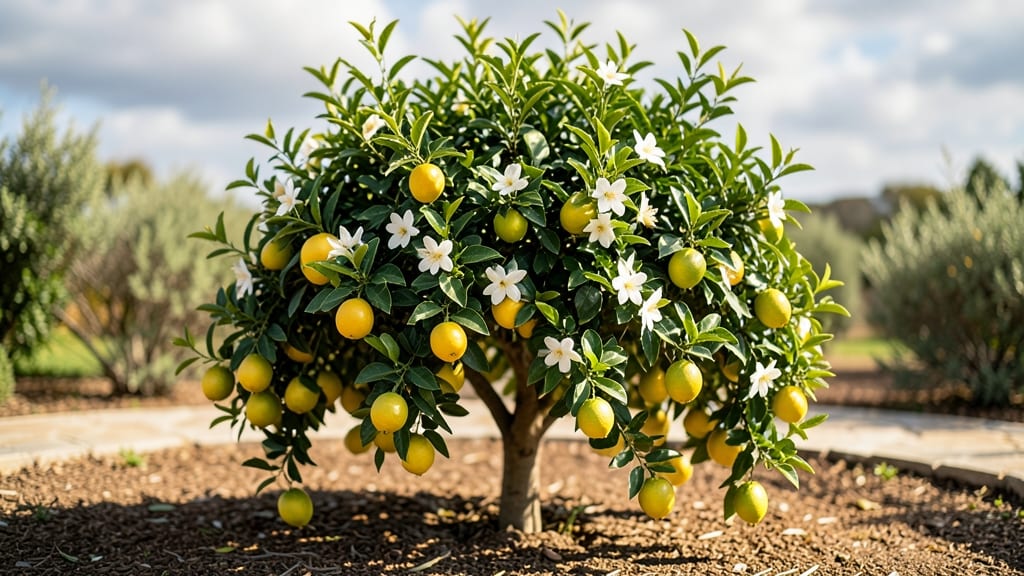
Growing a Meyer lemon tree in USDA Zones 8a-10b is absolutely possible with the right strategies—even if your winters aren’t exactly Mediterranean.
You’ve probably heard that citrus thrives only in warm climates, but this sweet, cold-tolerant variety proves that wrong. Whether you’re in the Pacific Northwest, the Deep South, or a high-desert zone, I’ll show you how to keep your 🍋 tree alive, productive, and even fruiting through chilly months.
The key lies in microclimates, containers, and a few clever tricks—like wrapping the trunk or moving potted trees indoors before frost. We’ll cover soil prep, winter protection, and the three best cold-hardy Meyer varieties that won’t give up on you when temps dip.
By the end, you’ll know exactly how to adapt your care routine by zone, so your tree doesn’t just survive winter—it thrives year-round, giving you homegrown lemons even in cooler regions.
Understanding Meyer lemon tree hardiness in Zones 8a-10b
Meyer lemon trees (Citrus × meyeri) are prized for their sweet, fragrant fruit, but their native tropical origins make them sensitive to cold. While they thrive in USDA Zones 9b-11, strategic care lets them survive—and even thrive—in Zones 8a-10b.
The key lies in understanding their temperature thresholds and seasonal adjustments.
These trees can tolerate brief dips to 25°F (-4°C) with protection, but prolonged exposure below 30°F (-1°C) risks severe damage. In Zone 8a, where winters dip to 10°F (-12°C), container growing or winter blankets become essential. Microclimates—like sunny south-facing walls—can add 5-10°F of warmth, extending their growing season.
Here’s how their hardiness breaks down by zone, including critical temperature thresholds and seasonal care shifts:
| Zone | Winter Low (°F) | Frost Sensitivity | Protection Needed | Growing Season |
|---|---|---|---|---|
| 8a | 10°F (-12°C) | High (damage below 25°F) | Container + insulation | April–October |
| 8b | 15°F (-9°C) | Moderate (damage below 28°F) | Heavy mulch + row cover | March–November |
| 9a | 20°F (-7°C) | Low (damage below 30°F) | Light mulch + frost cloth | Year-round (protected) |
| 10a | 30°F (-1°C) | Minimal (tolerates brief frost) | None (hardy with care) | Year-round |
| 10b | 35°F (2°C) | None (fully hardy) | None | Year-round |
In Zone 8a, where winters are harshest, container growing is your best bet. Move pots indoors or to a garage when temperatures drop below 40°F (4°C), and use insulated grow bags or bubble wrap to shield roots.
For in-ground plants, mulch heavily with straw or leaves to insulate soil, which stays 5-10°F warmer than air.
Spring and fall are critical transition periods. In Zone 8a-9a, delay planting until after the last frost date (typically mid-April) and protect young trees with frost cloth until soil warms to 60°F (15°C).
Conversely, in Zone 10b, these trees can grow year-round with minimal care, though summer heat above 95°F (35°C) may require afternoon shade.
Microclimates play a huge role in extending your tree’s range. A south-facing wall can add 10-15°F of warmth, while black plastic mulch raises soil temperatures by 3-5°F. Even a small greenhouse or cold frame lets you overwinter potted trees in Zone 8a safely.
Pair this with dwarf varieties (like 'Improved Meyer'), which mature at 6-8 feet—easier to protect than standard 12-foot trees.
Watering strategies also shift with the seasons. In Zone 8a-9a, reduce watering in winter to prevent root rot from soggy soil, but keep the root ball slightly moist in containers. Resume deep watering in spring as new growth begins, aiming for 1-2 gallons per watering for mature trees.
Overhead watering at night can promote fungal diseases, so stick to drip irrigation or morning watering.
Pruning in cooler zones focuses on removing dead wood
Best practices for growing Meyer lemons in cold climates
Container gardening is your best bet for growing Meyer lemon trees in USDA Zones 8a-10b. These citrus trees thrive in 15-25 gallon pots with drainage holes, allowing you to move them indoors or under cover when temperatures dip below 40°F (4°C).
Choose a dwarf variety like 'Improved Meyer' to maximize fruit production in limited spaces.
Start with a well-draining potting mix—a blend of peat moss, perlite, and compost works best. Meyer lemons prefer slightly acidic soil with a pH of 6.0-7.0. Avoid heavy clay mixes that retain too much moisture, as citrus roots are prone to root rot in waterlogged conditions.
Add a slow-release citrus fertilizer at planting time for a nutrient boost.
⚠️ WARNING: COLD DAMAGE RISKS Meyer lemons are semi-hardy but can suffer severe damage below 28°F (-2°C). Even brief exposure to frost can kill the tree. In Zone 8a, expect 50%+ fruit loss if not protected.
Use these critical precautions: - Move pots indoors (garage, basement) when night temps drop below 45°F (7°C) - Cover trees with frost blankets or burlap wraps for overnight protection - Avoid mulching heavily—citrus roots need airflow to prevent rot - Never let soil freeze; keep pots insulated with styrofoam cups or bubble wrap around the base
Prune your Meyer lemon in late winter or early spring before new growth begins. Remove dead, diseased, or crossing branches first, then thin out overcrowded areas to improve airflow. Aim to shape the tree into an open vase form to maximize sunlight exposure.
Avoid heavy pruning—citrus trees produce fruit on current season's growth, so limit cuts to 20-30% of the canopy per year.
Watering requires careful balance. In summer months, water when the top 1-2 inches of soil feel dry, typically every 2-3 days. In winter dormancy, reduce to once every 2 weeks to prevent root rot.
Always water at soil level to avoid wetting leaves, which can lead to fungal diseases like citrus scab. Use room-temperature water to prevent shocking the roots.
Boost fruit production by providing consistent afternoon sunlight—at least 6 hours daily. In cooler zones, supplement with a grow light during winter months when daylight shortens. Place your container near a south-facing window or under a greenhouse light to maintain photosynthesis.
Monitor for pests like aphids or spider mites, which thrive in dry indoor air, and treat with neem oil if detected.
Harvest lemons when they turn bright yellow and yield slightly to gentle pressure, typically 6-12 months after flowering. In cold climates, expect a smaller harvest but still enjoy sweeter, more flavorful fruit than store-bought varieties.
Store lemons at room temperature for up to 2 weeks or refrigerate for extended freshness. With these techniques, your Meyer lemon tree can thrive even in marginal zones! 🍋