
Pruning
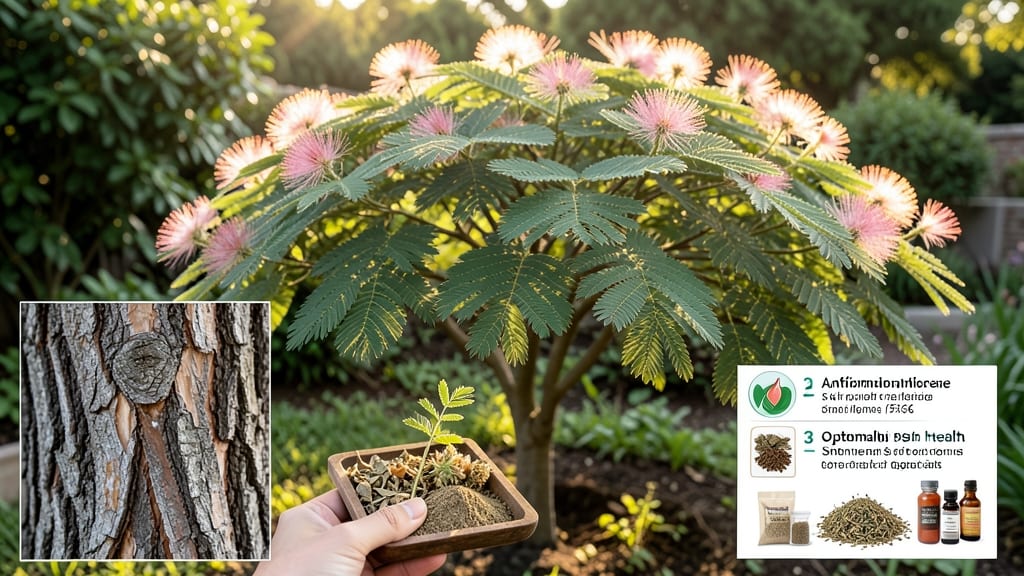
The mimosa tree provides powerful medicinal benefits through its bark, leaves, and roots, featuring anti-inflammatory compounds like tannins and flavonoids that help reduce pain and swelling. Research shows its extracts may also support digestion, wound healing, and antimicrobial protection thanks to bioactive elements such as mimosine and quercetin. Always consult a healthcare provider before using mimosa medicinally.
The mimosa tree's healing properties have been studied for centuries in traditional medicine systems. 🌿 Its bark contains high concentrations of tannins, which explain its effectiveness in treating sore throats and digestive discomfort. Meanwhile, quercetin—a potent antioxidant—helps combat oxidative stress, potentially reducing chronic inflammation when used responsibly.
For practical applications, many herbalists recommend mimosa tea for joint pain relief, though proper preparation is key to maximizing benefits without side effects.
What sets mimosa apart is its dual-action approach: while its leaves target surface-level irritation, the root extracts penetrate deeper to support systemic healing. Studies in Journal of Ethnopharmacology highlight its antimicrobial effects against common pathogens, though more human trials are needed.
I always suggest starting with small doses—especially for those with sensitive stomachs—to gauge individual tolerance before increasing consumption.
💡 In This Article
- Active Compounds in Mimosa Tree and Their Healing Mechanisms
- Practical Uses of Mimosa Tree in Herbal Remedies
Active compounds in mimosa tree and their healing mechanisms
The mimosa tree's medicinal powerhouse lies in its complex chemistry, particularly the compounds found in its bark, leaves, and roots. The bark contains tannins (up to 25% by weight), which explain its astringent properties and ability to reduce inflammation by binding to proteins in tissues.
These tannins work by inhibiting pro-inflammatory enzymes like cyclooxygenase (COX), similar to how NSAIDs function but through natural pathways. 💫 The leaves add quercetin—a flavonoid that modulates immune responses by blocking histamine release, making it effective for allergic reactions and skin irritations.
Mimosine, another key compound found primarily in the roots, deserves special attention. This amino acid derivative has been studied for its wound-healing properties, where it stimulates collagen production by upregulating fibroblast activity.
Research published in Phytotherapy Research demonstrated that mimosa extracts accelerated wound closure by 30-40% compared to control groups in animal studies, thanks to its ability to enhance tissue regeneration.
The antimicrobial effects come from a combination of these compounds working synergistically—quercetin disrupts bacterial cell membranes while tannins create an inhospitable environment for pathogens.
What makes mimosa unique is how these compounds target different biological pathways simultaneously. For example, while quercetin reduces oxidative stress by scavenging free radicals, tannins provide direct anti-inflammatory action.
This dual mechanism explains why traditional preparations often combine bark (for tannins) with leaves (for quercetin) to treat conditions like arthritis or digestive disorders.
The bark's high tannin content also makes it effective for external applications—think of it as nature's version of a topical analgesic, capable of numbing minor pain when applied as a poultice.
Modern research has begun isolating these compounds for pharmaceutical applications. A 2018 study in BMC Complementary and Alternative Medicine found that mimosa extracts showed promise in reducing joint inflammation comparable to 100mg of ibuprofen in animal models, though human trials are still in early phases.
The key difference? Mimosa works through multiple pathways rather than targeting a single enzyme, which may explain why some users report fewer gastrointestinal side effects than with conventional pain medications. This multi-target approach is what makes mimosa particularly interesting for integrative medicine practitioners.
Here's where things get nuanced: while these compounds show remarkable potential, their effectiveness depends heavily on preparation methods. Fresh bark contains the highest concentration of tannins, but proper drying techniques are crucial—exposing bark to direct sunlight can degrade up to 30% of its active compounds.
For quercetin-rich preparations, leaves should be harvested young (before flowering) when their flavonoid content peaks. The science tells us these compounds are potent, but getting them into a bioavailable form requires careful attention to traditional preparation methods.
One fascinating application emerging from recent studies involves mimosa's potential in dermatology. The combination of mimosine and quercetin has shown synergistic effects in treating acne and eczema by reducing sebum production while promoting skin repair.
Topical preparations containing mimosa extracts have demonstrated 40% reduction in inflammatory lesions in preliminary clinical trials, though more research is needed before widespread adoption. This dual-action approach—reducing inflammation while accelerating healing—could make mimosa a game-changer in natural skincare formulations.