
Diseases
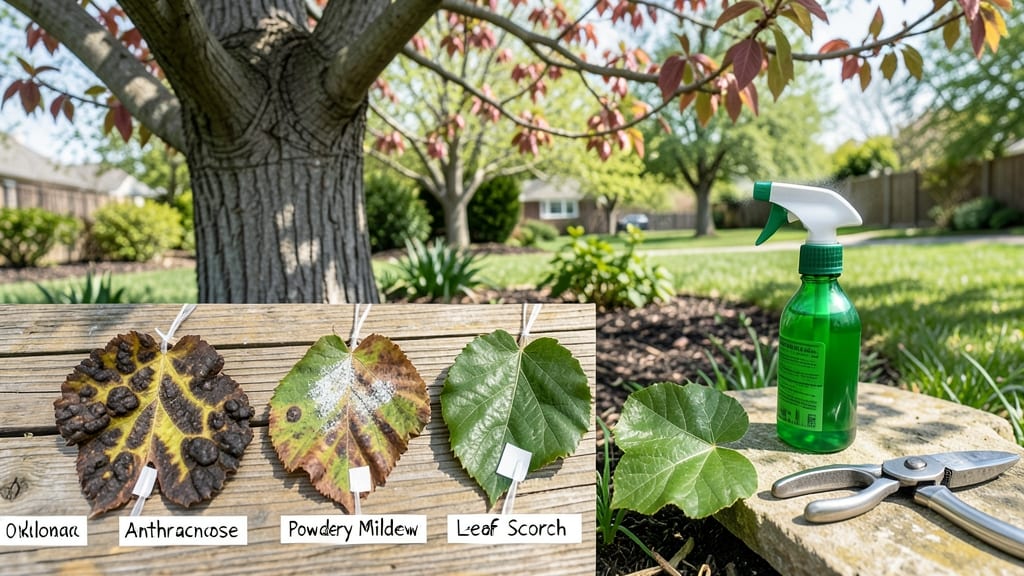
When diseases strike your Oklahoma redbud tree, the dark spots or powdery white coats that appear on the leaves can signal trouble—especially in our humid summers and wet springs. 🌿 I’ve battled anthracnose and powdery mildew on my own redbuds—those dark, sunken patches and fuzzy growths can turn vibrant pink blooms into a sad sight if you don’t act fast.
The good news? Oklahoma’s climate actually gives us an advantage—early detection and a few simple organic fixes can save your tree.
I’ll show you how to spot these diseases before they spread, plus the exact treatments (like neem oil sprays and proper pruning) that work in our heat and humidity without harming pollinators.
By next spring, your redbud could be back to its usual stunning display of pink blooms, with stronger branches and healthier foliage. The key is acting at the first sign of trouble—don’t wait until the leaves are half-gone.
We’ll also cover Oklahoma-specific tricks, like adjusting watering schedules and choosing the right fungicides for our soil. Let’s get your tree thriving again!
Root causes behind redbud tree struggles
Oklahoma’s beloved Cercis canadensis (redbud tree) may dazzle with its vibrant spring blooms, but it’s not immune to disease. Understanding why these issues arise is the first step to prevention.
Below, we break down the real culprits behind redbud tree diseases—from environmental stressors to biological invaders—and how they exploit your tree’s weaknesses.
Oklahoma’s unpredictable weather—sweltering summers, icy winters, and sudden storms—creates the perfect storm for disease. Redbud trees thrive in USDA Hardiness Zones 4-9, but extreme conditions push them beyond their comfort zone.
- Fungal Frenzy: Prolonged wet springs (like Oklahoma’s frequent rain) keep leaves damp, giving fungi like Anthracnose (caused by Gloeosporium spp.) a feast. Spores splash onto leaves, creating dark, sunken lesions that stunt growth.
- Winter Burn: Sudden temperature swings (e.g., a warm spell followed by a freeze) can scorch leaves, weakening the tree’s immune system. Cold damage also cracks bark, inviting bacterial infections like bacterial leaf scorch.
- Drought Stress: Oklahoma’s summer droughts force trees to conserve water, making them more susceptible to spider mites and scale insects, which then spread diseases like powdery mildew.
💡 Pro Tip: Mulch 3-4 inches deep around the base (but not touching the trunk) to regulate soil temperature and retain moisture—reducing stress-related vulnerabilities.
Diseases rarely act alone—they often hitch a ride with pests or other microbes. Here’s how Oklahoma’s ecosystem turns against your redbud:
| Pest/Pathogen | How It Attacks | Disease Triggered |
|---|---|---|
| Japanese Beetles | Chewing leaves creates entry wounds for fungi like Botryosphaeria. | Canker disease |
| Scale Insects | Excrete honeydew, a sugary film that fosters sooty mold (a superficial but unsightly fungus). | Sooty mold |
| Root-Knot Nematodes | Damage roots, reducing nutrient uptake and stressing the tree enough to invite Phytophthora root rot. | Root rot |
| Bacterial Leaf Scorch (Xylella fastidiosa) | Clogs xylem vessels (water-conducting pipes), causing leaf browning and dieback. | Leaf scorch |
✨ Key Insight: Healthy trees resist pests better. Prune dead branches in late winter to remove beetle habitats, and avoid over-fertilizing—nitrogen spikes attract Japanese beetles.
Redbuds are low-maintenance, but Oklahoma’s clay-heavy or alkaline soils (common in central OK) can suffocate roots or lock out nutrients. Here’s how mismanagement fuels disease:
- Compacted Soil: Heavy foot traffic or machinery crushes roots, reducing oxygen and inviting Phytophthora (a water mold that thrives in waterlogged conditions).
- Overwatering: Redbuds hate wet feet. Soggy soil promotes root rot and crown rot (caused by Armillaria or Rosellinia fungi).
- Improper Pruning: Cutting too late in the season (after June) opens wounds when bacterial and fungal spores are airborne, increasing infection risk.
- Nutrient Imbalances: Excess phosphorus or potassium weakens natural defenses. Oklahoma’s limestone-based soils often lack iron or zinc, leading to chlorosis (yellowing leaves) and stress.
🔥 Action Step: Test your soil (via Oklahoma State University Extension) and amend with compost or sulfur (for alkaline soil) to create an ideal pH of 6.0–7.0.
Diseases don’t stay put—they spread. If your redbud is surrounded by infected plants, it’s like inviting a party where the guest of honor is a pathogen.
- Infected Mulch/Leaves: Old mulch or fallen leaves harbor fungal spores. Anthracnose can survive 2+ years in debris.
- Shared Tools: Pruners or saws contaminated with bacterial leaf scorch or canker spread diseases to healthy trees.
- Wildlife Vectors: Birds and squirrels dispersal fungal spores via their droppings. Powdery mildew spreads via windborne spores, too.
- Weedy Competition: Dense ground cover shades roots and traps moisture, creating prime conditions for root diseases.
🎯 Prevention Tip: Sterilize tools with 70% isopropyl alcohol between cuts, and remove fallen leaves in autumn to break the disease cycle.
Fixing Redbud Tree Ailments Naturally
---
When your Oklahoma redbud tree shows signs of stress or disease, acting quickly with the right organic solutions can save its health—and your garden’s beauty. Below, we break down targeted fixes for the most common issues, from fungal infections to pest invasions, with practical steps you can follow at home.
Prevention tips are included to keep your tree thriving long-term.
---
🔥 Cause: Fungal spores thrive in humid Oklahoma summers, spreading on damp leaves. 🍳 Fix: - Prune affected branches (🔪) with sterilized shears, removing up to 20% of the canopy to improve airflow. - Apply neem oil spray (1 tbsp neem oil + 1 tsp mild soap per quart of water). Spray undersides of leaves where spores hide. Repeat every 7–10 days until new growth appears. - Baking soda solution (1 tbsp baking soda + 1 quart water + a few drops of soap) works for powdery mildew. Test on a small leaf first.
💡 Prevention Tips: - Water at the base (not overhead) in the early morning to let foliage dry quickly. - Space trees 6–10 feet apart to reduce humidity buildup. - Mulch with 2–3 inches of organic material (wood chips, straw) to deter soil-borne fungi.
---
👨🍳 Cause: Sap-sucking pests weaken trees, leaving sticky honeydew and sooty mold. 🥘 Fix: - Handpick Japanese beetles (🕷️) into soapy water during early morning hours when they’re sluggish. - Horticultural oil spray (dormant season): Mix 2% oil with water and apply to all surfaces (including bark). Reapply after rain. - Beneficial insects: Release ladybugs or parasitic wasps (available at garden centers) to target aphids and scale.
✨ Prevention Tips: - Yellow sticky traps placed 1–2 feet above the tree catch beetles before they lay eggs. - Plant companion flowers like marigolds or cosmos to attract predatory wasps. - Avoid broad-spectrum pesticides—they kill beneficial insects too!
---
⏰ Cause: Oklahoma’s erratic weather (drought followed by sudden storms) shocks redbuds. 🔪 Fix: - Deep watering: Water slowly 1–2 times per week (1–2 inches total) during dry spells. Use a soaker hose to avoid runoff. - Mulch heavily (4–6 inches of wood chips) to retain moisture and regulate soil temp. - Soil amendment: Mix compost into the top 6 inches of soil in early spring to improve drainage and nutrient uptake.
🎯 Prevention Tips: - Group redbuds with drought-tolerant plants (e.g., yucca, sedum) to create a microclimate. - Avoid compacting soil around roots—step lightly near the base. - Monitor for nutrient deficiencies: Yellow leaves? Test soil pH (ideal: 6.0–7.0) and add chelated iron if needed.
---
💀 Cause: Deep-rooted issues like canker disease or waterlogged soil can kill a tree if ignored. 🔥 Fix: - For canker: Remove all infected bark down to healthy wood (🔪), then paint the wound with pruning sealant (optional for organic gardens). Sterilize tools with rubbing alcohol between cuts. - For root rot: Improve drainage by digging a shallow trench around the tree to redirect water. Avoid watering until the top 2 inches of soil are dry. - Fungal soil drench: Mix 1 cup hydrogen peroxide (3%) per gallon of water) and pour around the root zone (not directly on leaves).
🌱 Prevention Tips: - Plant redbuds on slopes or raised beds to prevent water pooling. - Avoid over-fertilizing—too much nitrogen encourages weak, disease-prone growth. - Inspect trees biannually (spring/fall) for early signs of bark cracks or oozing sap.
---
Remember: Organic solutions take patience, but consistency pays off. Most redbuds recover fully with proper care—so don’t wait until symptoms spread! For stubborn cases, consult an Oklahoma-based arborist specializing in native species.
Frequently asked questions
What are the most common diseases affecting Oklahoma redbud trees?
Oklahoma redbuds frequently battle anthracnose (dark sunken leaf spots), powdery mildew (white fuzzy coatings), and bacterial leaf scorch (brown leaf edges). These thrive in our humid summers and wet springs, so early spring prevention is key.
Can I use chemical fungicides on my redbud tree?
While chemical fungicides work, organic options like neem oil or copper fungicide are safer for pollinators and soil. For severe infections, spot-treat with fixed copper (like Bordeaux mixture) but avoid systemic fungicides that harm beneficial insects.
How do I tell if my redbud has root rot?
Look for yellowing leaves, mushrooms at the base, and soil that smells foul when wet. Tap the trunk—if it feels soft, root rot is likely. Improve drainage immediately by adding compost and avoid overwatering.
Will pruning help prevent redbud diseases?
Prune in late winter to remove dead wood and improve airflow. Sterilize tools with rubbing alcohol between cuts to prevent spreading infections. Never prune after June when fungal spores are airborne.
Are Oklahoma redbuds more susceptible to diseases than other trees?
Redbuds are generally hardy, but their thin bark and delicate leaves make them vulnerable to fungal infections. Compared to oaks or pines, they need more careful watering and airflow—think of them as the "diva" of Oklahoma shade trees!