
Pruning
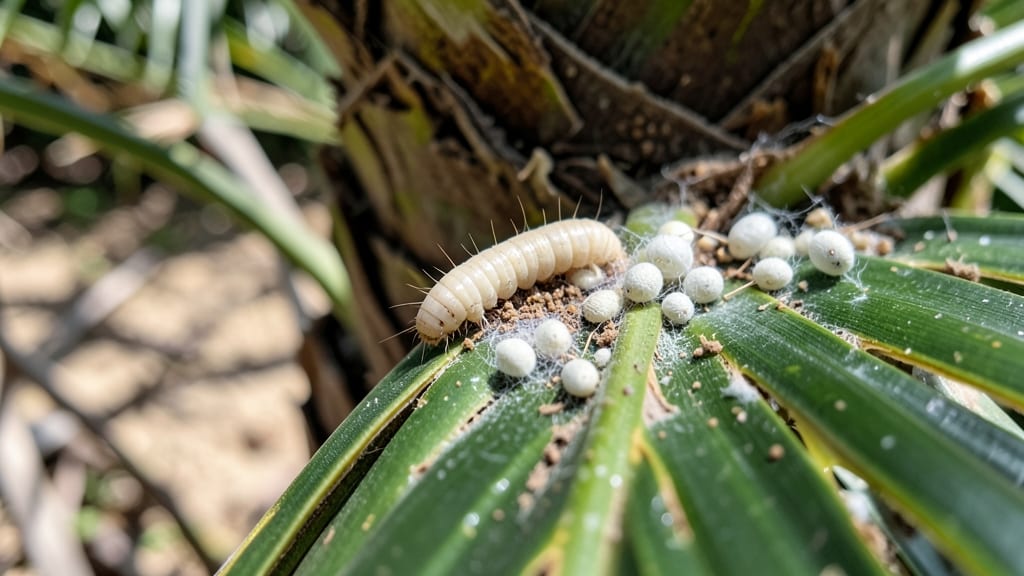
Your palm tree's slow decline might start with tiny invaders—palm weevils, mealybugs, or scale insects—before you even notice the fronds turning brown. 🌿 I've seen healthy palms become skeletal in months when these pests go unchecked, but natural control works better than chemicals for long-term health.
The key is catching them early, before the damage spreads beyond repair.
Start by learning their telltale signs: frass (sawdust-like droppings) on fronds, sticky honeydew on trunks, or tiny white cottony masses hiding in leaf axils. A magnifying glass and a flashlight are your best tools for spotting them before they multiply.
Most homeowners overlook the undersides of fronds where mealybugs hide, and that's where infestations begin.
Once you identify them, you'll use targeted solutions like neem oil sprays, beneficial nematodes, or manual removal with rubbing alcohol-soaked cotton swabs. These methods work because they disrupt the pests' life cycles without harming the tree's roots or nearby plants.
Within 2-4 weeks of consistent treatment, you'll see new growth pushing out and the pests disappearing.
Prevention is simpler than recovery—regular inspections every 4-6 weeks during warm months keep populations low. Healthy palms resist pests better, so fertilize with slow-release organic options and water deeply but infrequently. The secret to saving your palm isn't expensive sprays; it's vigilance and the right timing.
📚 In This Guide
- What you need
- Instructions
- Tips and common mistakes
- Wrapping up and next steps
What you need
- ● Gloves (2 pairs): Heavy-duty, chemical-resistant gloves (e.g., nitrile or rubber) to protect your hands from sap and insects.
- ● Pruning shears: Sharp, bypass pruners (10-12 inch) for trimming infested fronds or branches.
- ● Extension pole: A 6-10 ft telescoping pole with a pruning saw attachment for high branches.
- ● Bucket (5-gallon): For collecting clippings and mixing solutions.
- ● Hose with nozzle: Adjustable nozzle for rinsing off pests or applying solutions.
- ● Neem oil (16 oz): Organic pest control solution (look for 100% cold-pressed for best results).
- ● Dish soap (unscented, 1 tbsp): Acts as an emulsifier for neem oil.
- ● Spray bottle (1-gallon): For mixing and applying your DIY insecticide.
- ○ Garden sprayer (optional): A 1-2 gallon pump sprayer for larger trees.
- ● Beneficial nematodes (5-10 million): Microscopic predators for soil-dwelling pests like palm weevils.
- ● Kaolin clay (5 lbs): A natural barrier to deter insects (mix with water for a spray).
- ● Reflective tape or aluminum foil: Wrap around trunks to confuse and repel pests.
- ● Magnifying glass: For closely inspecting eggs or larvae in crevices.
- ● Disposable trash bags: For sealing and disposing of heavily infested clippings.
Step-by-Step guide to identifying and controlling palm tree pests naturally
Here’s how to spot common palm pests early and use targeted, eco-friendly methods to keep your trees thriving.
🌿 Step 1: Inspect Your Palm Tree for Early Signs of Infestation
Start by examining the fronds, trunk, and soil line for visual cues. Look for yellowing or wilting fronds, which often signal spider mites or scale insects. Check the undersides of leaves for fine webbing (a spider mite telltale) or sticky residue (mealybugs or aphids). Run your fingers along the trunk—small bumps or cottony masses indicate scale or mealybug colonies.
Pay special attention to the crown shaft (the area where the frond meets the trunk). This is a prime hiding spot for palm weevil larvae, which bore into the trunk. Tap the trunk gently with a stick—if it sounds hollow or you hear a dull thud, the weevil may already be inside. Early detection is key, so inspect every 2-4 weeks during warm months.
🔍 Step 2: Identify the Specific Pest and Assess Damage
Each palm pest leaves distinct damage. Spider mites cause stippling (tiny white or yellow dots) on leaves, while palm aphids cluster on new growth, leaving a sticky honeydew trail. Mealybugs appear as white, fluffy patches along leaf axils or trunk crevices. For palm weevils, look for sawdust-like frass (insect waste) at the base of fronds or oozing sap from entry holes.
Assess the severity: Light infestations (a few pests, minimal damage) can be treated with spot applications. Moderate infestations (visible webbing, wilting fronds) require systemic solutions. If you see fronds dying suddenly or the trunk splitting, the tree may already be beyond saving—act fast to prevent spread to nearby palms.
💧 Step 3: Apply Targeted Natural Remedies Based on Pest Type
For soft-bodied pests (aphids, mealybugs, spider mites), use a soapy water spray (1 tablespoon mild castile soap per quart of water). Spray early in the morning on a still day to avoid drift. Reapply every 5-7 days until pests vanish. For scale insects, scrape off visible bumps with a plastic scraper (metal can damage the trunk) and follow up with neem oil spray (1 teaspoon neem oil + 1 teaspoon dish soap per quart of water).
For palm weevils, the most destructive pest, prevention is critical. Inject beneficial nematodes (like Steinernema carpocapsae) into the trunk using a hand pump injector. These microscopic worms seek out and kill larvae inside the trunk. Apply once annually in early spring. If weevils are already present, prune and burn infested fronds immediately to stop the spread.
☀️ Step 4: Strengthen Your Palm Tree’s Natural Defenses
Healthy palms resist pests better. Water deeply but infrequently—overwatering stresses roots and attracts fungus gnats, which weaken the tree. Fertilize in early spring with a slow-release palm fertilizer (look for one with high potassium and magnesium). Avoid over-fertilizing, which attracts sap-sucking insects. Mulch the base with 3-4 inches of wood chips to retain moisture and deter weevils from laying eggs.
Encourage beneficial insects like ladybugs and lacewings by planting native flowering shrubs nearby. These predators feast on spider mites and aphids. Avoid broad-spectrum pesticides, which kill beneficial insects along with pests. Instead, use kaolin clay spray (a natural barrier) on fronds to deter weevils and mealybugs.
⏰ Step 5: Monitor and Maintain Long-Term Pest Control
After treatment, inspect weekly for the first month, then monthly during growing season. Keep a pest log noting where infestations appear—this helps track patterns (e.g., mealybugs love dry, shady palms). If pests return, rotate treatments (e.g., alternate neem oil with soapy water) to prevent resistance. Prune dead fronds promptly—they harbor pests and diseases.
In late fall, apply a preventive trunk sealant (like copper-based spray) to deter weevils from laying eggs. This is especially important if you’ve had weevil issues before. Young palms are most vulnerable—consider wrapping the trunk with aluminum foil (a physical barrier weevils can’t penetrate) for the first 2-3 years of growth.
Tips & tricks for effective palm tree pest management
These practical strategies will help you maximize your natural pest control efforts and protect your palm trees long-term.
Inspection Timing: The 2-4 week inspection schedule in Step 1 is non-negotiable during warm months, but adjust your frequency based on your climate. In humid regions, check every 2 weeks, while drier areas may need monthly inspections. Always inspect after heavy rains, as moisture attracts pests like fungus gnats and aphids. Use a small flashlight to examine leaf undersides and trunk crevices—pests often hide in shaded areas where direct sunlight doesn't reach.
Pest Identification Shortcuts: Create a simple reference chart using the damage patterns from Step 2 to quickly identify pests in the field. For spider mites, look for the "bronzing" effect on leaf surfaces, while mealybugs leave behind a waxy residue that feels like cotton between your fingers. Palm weevils are the most challenging to detect early, so focus on the crown shaft area where they first enter. If you're unsure, take clear photos of the damage and compare them to online resources from your local agricultural extension office.
Treatment Application Techniques: When applying soapy water sprays in Step 3, use a pump sprayer for even coverage rather than a hose attachment, which can miss protected areas. For neem oil applications, mix the solution in a clean spray bottle and apply in the early morning when temperatures are below 85°F to prevent leaf burn. Always test treatments on a small section of fronds first to check for sensitivity. Remember that beneficial insects like ladybugs are also sensitive to soap and neem oil, so apply treatments when these predators are least active.
Long-Term Prevention Strategy: The aluminum foil trunk wrapping mentioned in Step 5 is particularly effective for young palms, but don't limit this to just the first two years. Consider using a more decorative option like landscape fabric or even commercial palm weevil barriers for older trees. For established palms, create a 2-foot wide mulch barrier around the trunk using coarse wood chips to deter weevils from reaching the base. This physical barrier works in combination with your other treatments to create a multi-layered defense system.
Pro Tips for Palm Tree Insects
- These practical strategies will help you maximize your natural pest control efforts and protect your palm trees long-term.
- Inspection Timing: The 2-4 week inspection schedule in Step 1 is non-negotiable during warm months, but adjust your frequency based on your climate.
- Pest Identification Shortcuts: Create a simple reference chart using the damage patterns from Step 2 to quickly identify pests in the field.
Frequently asked questions
Got questions about managing palm tree insects naturally? You’re not alone! Here are some of the most common concerns—and straightforward answers to keep your palms thriving without harsh chemicals.
What are the most common insects that attack palm trees?
Palm trees often face threats from palm weevils (the most destructive), palm aphids, mealybugs, scale insects, and thrips. These pests target weak or stressed trees, so early detection is key. Look for frass (sawdust-like debris), wilting fronds, or sticky residue on leaves.
How do I know if my palm tree has an infestation?
Watch for these red flags: yellowing fronds, oozing sap, hollow stems (a weevil sign), or tiny black/brown insects crawling on leaves. Pro tip: Tap the trunk—if it sounds hollow, it’s likely infested. Act fast to prevent spread!
Can I use neem oil or soap sprays instead of pesticides?
Neem oil (1–2% concentration) or insecticidal soap are effective against soft-bodied pests like aphids and mealybugs. For weevils, prune infected fronds immediately and apply kaolin clay as a barrier. Always test sprays on a small area first to avoid leaf burn.
What’s the best time of year to treat palm tree insects?
Target treatments in early spring or late fall when pests are most active but temperatures are mild. Avoid summer heat, which can stress trees further. If you spot an infestation mid-season, act quickly—delaying treatment lets pests multiply faster.
Will natural methods work if my palm tree is already dying?
If the tree is severely infested or structurally compromised, natural methods may not save it. In these cases, consult an arborist to assess whether removal is safer than spreading the problem. For early-stage issues, though, natural controls can turn things around!
Still unsure? Drop your specific pest or symptom in the comments—we’re happy to help!
Wrapping up and next steps
From neem oil sprays to beneficial nematodes🐛, you now have eco-friendly, chemical-free tools to manage palm tree insects while keeping your garden thriving. The key is consistency and patience—nature’s balance takes time, but the results are worth it! 🌿
Ready to take action? Start by inspecting your palm trees this weekend, and pick one method to test. Share your progress or tips in the comments—let’s grow a healthier, greener community together! 🌱✨