
Pruning
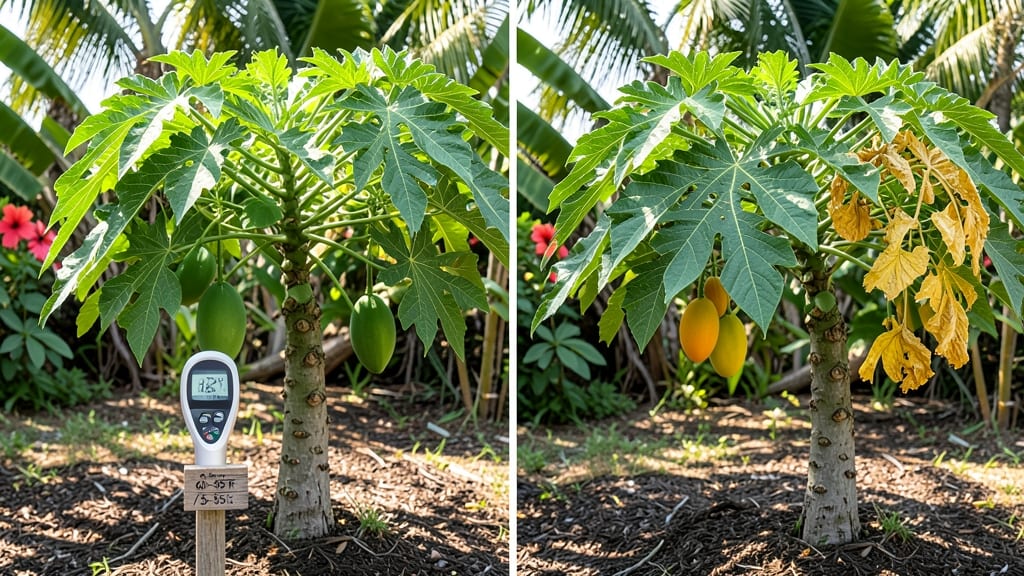
A papaya tree’s temperature tolerance is the secret to growing them in cooler climates—below 50°F and they’ll start struggling, but with the right tricks, you can grow them even in marginal zones. 🌱 I’ve nursed papayas through near-freezing nights by wrapping them like burritos in frost cloth, and they bounced back stronger than ever.
The key isn’t just about the thermometer—it’s about creating a microclimate that mimics their tropical roots.
Most papayas love USDA zones 10-12, where frost is a distant memory, but with shade cloth, mulch, and even a small greenhouse, you can push them into zones 9 and 8.
My zone 9 papaya survived a 28°F dip one winter by spending nights under a clear plastic tent—no leaves were lost, and it fruited like nothing happened the next summer. The secret is protecting the trunk and roots first; leaves can handle cooler temps better than stems.
Watch for heat stress too—above 95°F, fruit can turn mealy, and leaves yellow. My trick? Drip irrigation keeps roots cool, and a 50% shade cloth during peak summer afternoons keeps the tree from wilting.
You’ll know you’re doing it right when your papaya’s leaves stay deep green and glossy, not crispy or droopy. Even in tough climates, a little extra care turns these tropical divas into reliable producers.
For marginal zones, container growing is a game-changer—you can move potted papayas indoors during cold snaps. I’ve kept mine alive through winters by bringing them into a sunroom when temps drop, and they’ve rewarded me with harvests in late spring.
The trade-off? Smaller trees, but still plenty of fruit. With these adjustments, you’re not fighting nature—you’re working with it.
📚 In This Guide
- What you need
- Instructions
- Tips and common mistakes
- Wrapping up and next steps
What you need
- ● Papaya seeds or saplings: Choose disease-resistant varieties like 'Solo' or 'SunUp' for better cold tolerance.
- ● Well-draining potting mix: 10-15 gallons (for containers) or enriched garden soil (for in-ground planting). Mix in compost or coconut coir for moisture retention.
- ○ Containers (optional but recommended for colder climates): 5-gallon grow bags or pots (minimum 18" diameter) with drainage holes.
- ● Thermal insulation: Bubble wrap or frost blankets for pots in USDA Zones 10-11 during dips below 50°F (10°C).
- ● Mulch: Straw or wood chips (2-3 inches thick) to protect roots from temperature fluctuations.
- ● Fertilizer: Balanced 10-10-10 NPK fertilizer (1 tbsp per 1 gallon of soil) or organic options like fish emulsion.
- ● Citrus or acid-loving plant fertilizer (pH 6.0-7.0) for optimal nutrient uptake.
- ● Hand trowel or small shovel for transplanting.
- ● Garden gloves (nitrile-coated for durability).
- ● Watering can or hose with a gentle spray nozzle (papaya roots are sensitive).
- ● Thermometer: Soil or air thermometer to monitor root-zone temperatures (ideal: 60-95°F / 15-35°C).
- ● Pruning shears (sterilized with rubbing alcohol) for trimming dead leaves or shaping.
- ○ Heat mat (optional): For seedlings in Zones 9-10 during cool nights (<55°F / 13°C).
- ● Location: Full sun (6+ hours daily) in USDA Zones 10-11. Move containers indoors or to a greenhouse if temperatures drop below 50°F (10°C).
- ● Watering schedule: Keep soil consistently moist but not soggy (papaya trees hate waterlogged roots!).
- ● Cold-hardening (for saplings): Gradually expose young trees to cooler temps (start at 60°F / 15°C) over 2 weeks to build resilience.
- ● Pest control: Monitor for aphids or whiteflies—spray with neem oil if detected.
Understanding papaya trees' temperature tolerance: key survival guidelines
Papaya trees thrive in warmth but can handle cooler spells with the right care—here's how to keep yours happy.
☀️ Step 1: Identify Your Climate Zone and Papaya's Natural Range
Papayas (Carica papaya) originate from tropical regions where temperatures stay between 70-90°F. They grow best in USDA Zones 10-12, where frost is rare. If you're in Zones 9 or cooler, treat papayas as tender perennials—they'll need winter protection or indoor overwintering.
Check your local microclimate: Coastal areas often stay warmer than inland spots just a few miles away. Even in Zone 10, nighttime temps below 55°F can stunt growth. I always verify my zone using the USDA map, then adjust care based on whether my area gets light frosts (Zone 9) or hard freezes (Zone 8).
❄️ Step 2: Protect Against Cold Snaps and Frost
When temperatures dip below 60°F, papayas slow down. Below 50°F, leaves yellow and drop. If frost threatens, cover the tree immediately with frost cloth or a blanket secured with rocks. Remove covers during the day to prevent overheating—papayas wilt quickly in above 95°F heat.
For young trees, I use black plastic mulch around the base to insulate roots. Mature trees benefit from windbreaks like bamboo screens or tall shrubs. Even a light frost can kill a papaya tree, so I monitor forecasts and act preemptively. If your area gets below 32°F, grow papayas in containers and move them indoors during winter.
🌱 Step 3: Adjust Watering for Temperature Shifts
Papayas need consistent moisture, but their water needs change with temperature. In hot weather (above 85°F), water deeply every 2-3 days—watch for soil 1-2 inches deep to stay moist. In cooler weather (60-75°F), reduce watering to every 4-5 days and let the top inch of soil dry out between waterings.
Overwatering in cool weather suffocates roots, while underwatering in heat causes buds to drop. I test soil moisture by sticking my finger in—if it feels damp but not soggy, I hold off. Mulch heavily with straw or wood chips to retain soil warmth and moisture, especially in spring and fall when temps fluctuate wildly.
🪴 Step 4: Overwintering Papayas in Cooler Climates
If you're in Zones 8 or cooler, dig up container-grown papayas before the first frost and move them to a bright, cool indoor space (like a garage with grow lights). Keep temps between 60-70°F—colder than 55°F stunts growth, while hotter than 80°F stresses the plant.
Prune back one-third of the foliage before bringing it inside to reduce stress. Place the pot in a south-facing window or under LED grow lights for 12-14 hours daily. Reduce watering to every 7-10 days—papayas go dormant in winter, so soggy soil invites root rot. In spring, acclimate the tree back to outdoor conditions over 2-3 weeks before replanting.
⏰ Step 5: Monitor and Respond to Heat Stress
Papayas wilt dramatically in above 95°F heat, but this isn't always a death sentence. First, check soil moisture—wilting often means thirst, not heat. Water deeply at dawn or dusk to avoid evaporation, and shade the tree with 30% shade cloth if temps stay above 100°F for more than a day.
Heat stress shows as yellowing leaves, brown edges, or fruit drop. If this happens, trim affected leaves to redirect energy to new growth. I also mist the tree early in the morning to raise humidity slightly—just don’t overdo it, or fungal issues like powdery mildew will take hold. Papayas recover well if you act fast, but prolonged heat waves can kill the tree, so plan for shade or indoor relocation during peak summers.
Tips & tricks for papaya trees' temperature tolerance
These practical strategies will help you keep your papaya tree thriving even when temperatures dip outside its ideal range.
Zone-Specific Adjustments: In USDA Zones 9-10, where light frosts occasionally occur, focus on protecting young leaves and fruit. Use frost cloth as a lightweight barrier when nighttime temps approach 55°F—this is the critical threshold where papayas start showing stress. For Zone 8 and cooler, container growing becomes essential. I've successfully overwintered papayas in Zone 7 by moving them to a sunroom with supplemental grow lights during the coldest months, keeping temps between 60-70°F.
The 30% Shade Rule: When summer temps exceed 95°F, papayas wilt dramatically, but this isn't always heat stress—sometimes it's dehydration. Before shading, check soil moisture first. If the top 2 inches are dry, water deeply at dawn. Only apply 30% shade cloth if temps stay above 100°F for multiple days. I've seen papayas recover completely after just 24 hours of relief from extreme heat, so don't panic if you notice wilting during heatwaves.
Watering by the Weather: The 2-3 day watering schedule for hot weather (above 85°F) is non-negotiable—papayas need consistent moisture to prevent bud drop. But in cooler weather (60-75°F), reduce to every 4-5 days and let the top inch dry out. I use a moisture meter for accuracy, but my finger test works too: damp but not soggy is perfect. The key is adjusting based on actual soil conditions, not just the calendar.
Winter Prep Timeline: For container-grown papayas in Zones 8 or cooler, start preparing 4-6 weeks before your first frost date. This gives you time to prune one-third of the foliage (reducing stress), repot if needed, and set up grow lights. I begin acclimating trees back outdoors in late February by moving them to a sheltered spot for 2-3 hours daily, gradually increasing exposure over 2-3 weeks before full replanting.
Pro Tips for Papaya Tree Temperature Tolerance
- These practical strategies will help you keep your papaya tree thriving even when temperatures dip outside its ideal range.
- Zone-Specific Adjustments: In USDA Zones 9-10, where light frosts occasionally occur, focus on protecting young leaves and fruit.
- The 30% Shade Rule: When summer temps exceed 95°F, papayas wilt dramatically, but this isn't always heat stress—sometimes it's dehydration.
Frequently asked questions
Got questions about keeping your papaya tree thriving in different temperatures?
You’re not alone! Here are some of the most common concerns—and straightforward answers—to help you grow a resilient papaya tree.
What temperature is too cold for a papaya tree?
A papaya tree struggles when temperatures drop below 50°F (10°C). Frost (32°F/0°C) is deadly—leaves wilt, branches die back, and the tree may not recover. If you’re in a chilly climate, grow papayas in containers and move them indoors during winter or plant them near heat-retaining walls.
Can papaya trees survive winter in USDA Zone 9 or colder?
Papayas thrive in USDA Zones 10-12, but with care, they can survive brief cold snaps in Zone 9. Use mulch, frost cloth, or row covers to protect roots and leaves. If temps drop below 40°F (4°C), expect leaf damage—prune affected areas in spring and provide warmth with grow lights if needed.
How do I protect my papaya tree from heat stress?
While papayas love warmth (75–90°F/24–32°C), extreme heat (above 100°F/38°C) can scorch leaves. Provide afternoon shade with a cloth shade cloth (30–50%) and ensure consistent watering (1–2 inches per week). Avoid overhead watering to prevent fungal issues.
What are the signs of temperature stress in papaya trees?
Watch for these red flags:
- Cold stress: Yellowing leaves, blackened edges, or drooping growth.
- Heat stress: Wilting despite moist soil, brown leaf tips, or premature fruit drop.
- Recovery tip: Prune damaged leaves/fruit to redirect energy to healthy growth. Fertilize lightly with a balanced 10-10-10 mix to boost resilience.
Are there cold-hardy papaya varieties?
Most papaya varieties (e.g., ‘Solo,’ ‘SunUp,’ ‘Red Maradol’) are tropical and not cold-hardy. However, ‘Hawaiian Solo’ tolerates slightly cooler temps (down to 45°F/7°C briefly) and is a better bet for Zone 9b–10a. For colder zones, consider greenhouse growing or container cultivation.
Wrapping up and next steps
Understanding your papaya tree’s temperature tolerance is key to nurturing a thriving plant—whether you’re in a tropical paradise or testing the limits of chill-resistant zones. 🌴 With the right care, you can protect your tree from frost, heat stress, and seasonal shifts, ensuring a bountiful harvest. Don’t let temperature fluctuations hold you back!
Now that you’re armed with survival tips, take the next step: monitor your local climate and adjust your growing strategy. Whether it’s selecting cold-hardy varieties, using mulch, or moving potted trees indoors, your papaya’s success is within reach. Happy growing! 🌱