
Pruning
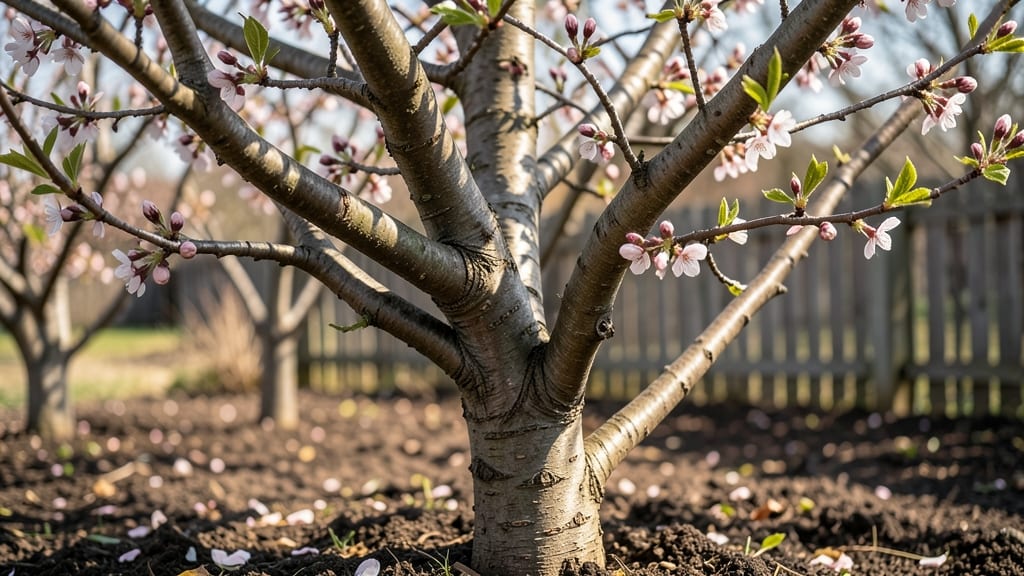
Peach tree branches need strategic trimming to produce stronger fruit and avoid breakage—something I learned the hard way after a storm snapped off half my harvest. 🌳 The right cuts encourage new growth while removing weak limbs that weigh down the tree, but timing and technique make all the difference.
You’ll need sharp pruning shears, rubbing alcohol for sterilization, and a clear day to work. Start by removing dead, crossing, or diseased branches first—they’re the easiest to spot and the most critical to cut. Then focus on shaping the tree to let sunlight reach the center where fruit forms.
After pruning, you’ll see thicker branches that support heavier fruit loads, fewer broken limbs in storms, and more consistent harvests year after year. The tree’s energy shifts from struggling with weak wood to producing juicier peaches with fewer pests.
Works for young trees or mature ones needing rejuvenation. Just avoid heavy pruning in late summer—wait until late winter or early spring when the tree is dormant. Here’s how to do it right the first time.
📚 In This Guide
- What you need
- Instructions
- Tips and common mistakes
- Wrapping up and next steps
What you need
- ● Pruning shears: Bypass pruners (for cuts up to ½ inch thick) – 1 pair (look for ergonomic, sharp blades like blank">Felco F-2 or blank">Gonicc G09)
- ● Loppers: Bypass or anvil type (for branches ½–1.5 inches thick) – 1 pair (e.g., blank">Corona TL-4201)
- ● Pruning saw: Curved-tooth (for branches 1.5+ inches thick) – 1 (e.g., blank">Fiskars X27)
- ● Rubbing alcohol (70%+) or bleach solution: (1 part bleach to 10 parts water) – small bottle (for sterilizing tools)
- ● Garden gloves: Cut-resistant – 1 pair (e.g., blank">Wet & Forget)
- ● Disposable pruning bags or bucket: – 1 (for collecting debris)
- ● Ladder or step stool: (if tree is >6 feet tall) – 1 (ensure it’s stable and rated for your height)
- ● Hand pruners: Compact bypass (for small branches) – 1 pair (e.g., blank">Felco F-1)
- ● Tree wound paint or pruning sealant: (controversial but useful for large cuts) – small tube
- ● Notebook & pen: (to sketch your tree’s structure before/after pruning)
- ● Safety glasses: (if working near your face or in windy conditions)
- ● Extension pole pruners: (for high branches without a ladder) – 1 (e.g., Teleflex 1000)
Step-by-Step guide to pruning peach tree branches
Here's how I prune peach trees to boost fruit production and keep them healthy.
✂️ Step 1: Identify and Remove Dead or Diseased Branches
Start by examining each branch for signs of life. Dead branches appear brittle, have no leaves, and snap when bent. Diseased branches may show dark spots, oozing sap, or unusual growths. Use clean, sharp pruning shears to cut these branches back to the trunk or to a healthy bud. I always disinfect my tools with rubbing alcohol between cuts to prevent spreading disease.
Watch for branches that cross or rub against each other—they create wounds that invite pests and disease. These should be pruned back to a point where they no longer interfere. Remember, peach trees are sensitive to over-pruning, so remove only what's absolutely necessary. If a branch is less than 1/4 inch thick, you can snap it off by hand instead of cutting.
✂️ Step 2: Thin Out Crowded Branches for Better Airflow
Peach trees produce more fruit when branches have room to breathe. Look for areas where branches grow too close together, blocking sunlight and airflow. Remove the weaker branch where two compete for the same space—keep the one with the stronger structure and better angle. I aim to leave 6-8 inches between branches to ensure good airflow.
Focus on removing branches that grow straight up or down, as these don't contribute much to fruit production. Instead, encourage horizontal branches by pruning vertical "water sprouts" back to a lateral bud. This redirecting energy to fruit-bearing wood. If you're unsure which branch to keep, choose the one with the most buds or the best angle for sunlight exposure.
✂️ Step 3: Shape the Tree for Optimal Fruit Production
Peach trees thrive with an open-center shape that allows sunlight to reach the center. Start by selecting 3-5 main scaffold branches spaced evenly around the trunk. These should be 4-6 feet from the ground and spread out like spokes on a wheel. Prune any branches that grow too close to the trunk or compete with the main scaffold.
Cut back scaffold branches to a lateral bud or side branch to encourage outward growth. Avoid leaving stubs—always cut just above a bud or branch collar. For mature trees, I focus on maintaining this open center while removing any branches that grow inward. You'll know you're on the right track when sunlight can easily reach the center of the tree without obstruction.
✂️ Step 4: Prune for Fruit Production and Tree Health
In late winter or early spring, before buds swell, prune to remove any branches that produced fruit the previous year. These branches are exhausted and won't produce well again. Look for branches with less than 3 buds—these are too small to bear significant fruit and should be removed. Cut just above a healthy bud that faces the outside of the tree to encourage outward growth.
Finally, prune any suckers that grow from the base of the tree or from the graft union. These compete with the main tree for nutrients and can weaken fruit production. Use sharp shears to make clean cuts at a 45-degree angle just above a bud. After pruning, apply a thin layer of wound dressing to larger cuts to protect the tree from disease and pests.
Tips & tricks for pruning peach tree branches
Here's what nobody tells you about pruning peach trees—these insights will help you avoid common mistakes and maximize fruit production.
Tool Prep: Always disinfect your pruning shears with rubbing alcohol between cuts, especially when removing diseased branches. I learned this the hard way after seeing my tree decline from cross-contamination. Keep a small spray bottle of diluted alcohol (1 part alcohol to 3 parts water) handy for quick cleanups between branches—this prevents spreading disease from one infected branch to healthy wood.
Visual Cues for Healthy Cuts: When pruning branches in Step 1, look for the branch collar—the swollen area where the branch meets the trunk. Always cut just outside this collar, never leaving a stub. For branches less than 1/4 inch thick, snap them cleanly by hand at the base—this prevents tearing and creates a smoother wound. The goal is to make cuts that heal quickly without creating entry points for pests.
Branch Spacing Strategy: In Step 2, maintaining 6-8 inches between branches isn't just about aesthetics—it's about sunlight penetration. I use a simple trick: hold your hand between branches. If you can't fit your palm comfortably, they're too close. This spacing prevents fungal diseases that thrive in crowded, damp conditions. For mature trees, prioritize removing branches that grow inward—they block light from reaching the center where fruit develops.
Timing Tip: Late winter or early spring pruning (before buds swell) gives your tree the entire growing season to heal and produce new growth. If you must prune in summer, do it immediately after harvest to avoid stressing the tree during fruit development. I always mark my calendar for late February—this timing ensures the tree has time to recover before the next growing season.
Pro Tips for Peach Tree Branches
- Here's what nobody tells you about pruning peach trees—these insights will help you avoid common mistakes and maximize fruit production.
- Tool Prep: Always disinfect your pruning shears with rubbing alcohol between cuts, especially when removing diseased branches.
- Visual Cues for Healthy Cuts: When pruning branches in Step 1, look for the branch collar—the swollen area where the branch meets the trunk.
Frequently asked questions
Got questions about peach tree branches? You’re not alone! Here are answers to the most common concerns—whether you're a first-time pruner or a seasoned gardener looking to refine your technique.
When is the best time to trim peach tree branches?
The ideal time to prune peach trees is late winter or early spring, just before buds swell but before new growth starts. This timing promotes healthy regrowth and fruit production. Avoid pruning in fall, as it can leave wounds vulnerable to disease.
How much of a peach tree’s branches should I cut back?
Remove 15–25% of the tree’s total branches during each pruning session to avoid stressing the tree. Focus on:
- Dead, diseased, or crossing branches
- Suckers (shoots growing from the base)
- Water sprouts (fast-growing vertical shoots)
What if my peach tree branches are dying or look unhealthy?
Check for signs like brown, mushy wood (fungal infection), oozing sap (bacterial canker), or peeling bark. Prune affected branches 6 inches below the damage with sterilized tools. Dispose of infected branches immediately and treat the tree with a copper fungicide if needed.
Will trimming peach tree branches reduce fruit production?
Not if done correctly! Proper pruning increases fruit quality and yield by directing energy to healthy branches. Over-pruning (removing too many branches at once) can temporarily reduce fruit, but strategic cuts—like opening the canopy—boost long-term production.
Can I use peach tree branches for anything other than pruning?
Repurpose pruned branches in creative ways:
- Chop into mulch for your garden
- Use as natural stakes for vining plants
- Dry and bundle for kindling or craft projects
- Compost them (if disease-free) for nutrient-rich soil
Wrapping up and next steps
Caring for your peach tree branches isn’t just about aesthetics—it’s the secret to a bountiful harvest and a healthier tree! By mastering strategic pruning, you’ll encourage stronger growth, better fruit production, and fewer pests.
Whether you’re a seasoned gardener or just starting, every snip brings you closer to that perfect peach-picking moment.
Ready to take the next step? Grab those shears and start trimming! Need a refresher? Bookmark this guide or share it with fellow gardening enthusiasts. Your peach tree—and your future fruit—will thank you! 🌱🍑