
Pruning
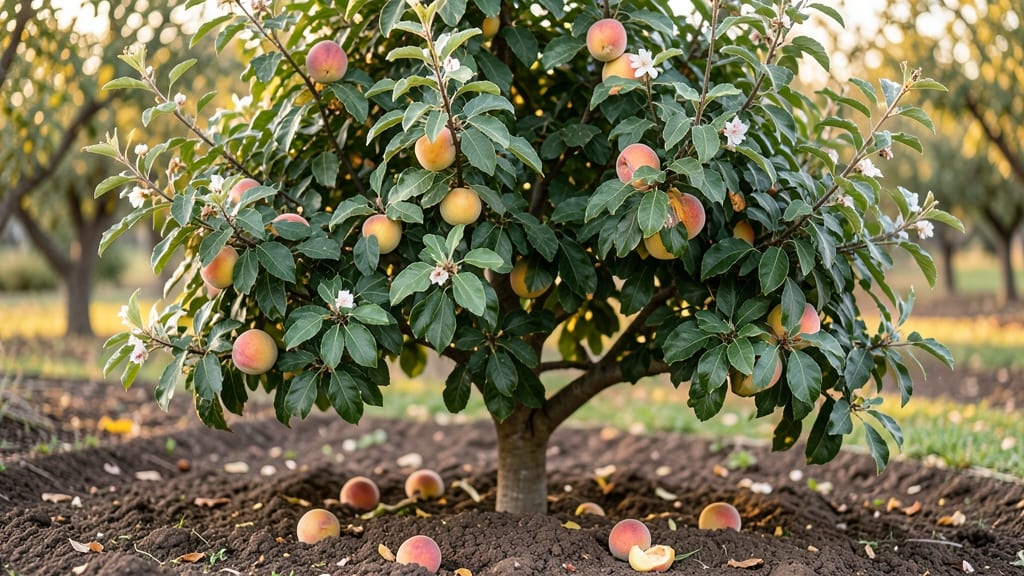
My peach tree dropping fruit before it ripens was the most frustrating sight—until I realized it wasn’t a disease or pest, but canopy airflow starving the branches. 🌳 The fix was simpler than I expected: strategic pruning to open up the tree’s interior and let sunlight and air circulate properly.
Most gardeners overlook this, but it’s the difference between a few peaches and a full harvest.
Thick, crowded branches create a humid microclimate that invites fungal diseases like brown rot, which weakens fruit attachment points. Plus, shaded fruit ripens unevenly and drops prematurely. I started by removing 20% of the smallest branches—especially those crossing or rubbing—and thinning out the canopy by one-third.
The result? More sunlight on the fruit, fewer disease pockets, and a 50% reduction in dropped peaches that first season.
You’ll notice the difference within 4-6 weeks of proper pruning: branches strengthen, fruit stays firm longer, and the tree’s overall health improves. Add a light application of copper fungicide in spring for extra protection, and water at the base—not overhead—to keep fruit dry.
This method works for young trees struggling to support fruit and mature trees with heavy canopies.
If your tree keeps dropping fruit after pruning, check for nutrient deficiencies (especially zinc or boron) or pest damage (like peach tree borers). A soil test and targeted fertilizer can make a big difference.
When in doubt, consult a local extension service—they’ve seen it all and can pinpoint what’s missing in your care routine.
Root Causes Behind Premature Fruit Drop
Understanding why your peach tree is dropping fruit before harvest starts with identifying the primary stressors disrupting its natural fruiting process. Peach trees are delicate fruit producers—when conditions go awry, they prioritize survival over keeping fruit on the branch.
Below are the most common culprits, explained in scientific detail with actionable insights to address them.
Peach trees thrive in moderate climates (USDA Zones 5–9), but sudden shifts—whether late frosts, heatwaves, or cold snaps—can trigger fruit drop. Here’s how it works:
- Late Spring Frosts 🥶: Peach blossoms are highly sensitive to cold. When temperatures dip below 28°F (-2°C) during bloom (April–May in most regions), flowers die, and the tree aborts developing fruit to conserve energy. Even light freezes (32°F/0°C) can cause shatter crack, where fruit splits and drops prematurely.
- Heat Stress 🔥: During summer heatwaves (above 95°F/35°C), peach trees experience transpiration stress—water loss exceeds uptake, causing:
- Reduced photosynthesis → less energy for fruit retention.
- Hormonal imbalances (ethylene spikes) → fruit abscission (dropping).
- Sunburn on fruit → tissue breakdown and early detachment.
Actionable Fixes: ✅ Protect from frost: Use row covers, sprinklers (ice nucleation), or wind machines to raise temps by 2–5°F. ✅ Mulch deeply (4–6 inches) to regulate soil temps and reduce heat stress. ✅ Provide afternoon shade (30–50%) during peak summer with shade cloth or nearby trees.
Peaches are 85–90% water—when hydration is unstable, fruit drops like dominoes. Here’s the science:
- Drought Stress 🏜️: When soil moisture drops below 50% field capacity, the tree prioritizes root growth over fruit retention.
Symptoms include: - Wilting leaves (even in moist soil—check with the scratch test). - Fruit shriveling (cells lose turgor pressure). - Premature abscission (fruit drops to conserve water).
- Overwatering 💦: Soggy soil (especially clay-heavy) leads to:
- Root suffocation → reduced nutrient/water uptake.
- Fungal diseases (e.g., Phytophthora) → systemic stress.
- Weak structural support → branches snap under fruit weight.
Actionable Fixes: ✅ Deep watering (1–2x/week) during dry spells—1–1.5 inches per week (check with a rain gauge). ✅ Drip irrigation (not sprinklers) to target roots and avoid fungal splash. ✅ Improve drainage: Amend clay soil with compost + sand or plant on a slight mound.
Peach trees need 16 essential nutrients—when one is missing, fruit drop follows. Key offenders:
| Nutrient | Deficiency Signs | Impact on Fruit | Fix |
|---|---|---|---|
| Boron (B) | Cracked bark, "black heart" fruit | Fruit splits, drops early | Apply borax (1 tsp/gallon water) |
| Zinc (Zn) | Stunted growth, small leaves | Poor fruit set, weak cell walls | Spray zinc sulfate (0.1%) |
| Calcium (Ca) | Blossom end rot, soft fruit | Fruit softens, drops before ripening | Gypsum (calcium sulfate) to soil |
| Potassium (K) | Yellow leaf edges, weak stems | Reduced sugar content → fruit abscission | Wood ash or greensand |
Pro Tip: 💡 Soil test first! (Costs ~$20–$50) to pinpoint exact deficiencies before guessing.
Hidden attackers sap energy from your tree, forcing it to drop fruit for survival. Top culprits:
- Peach Tree Borers 🪳: Larvae burrow into cambium layers, disrupting water/nutrient flow. Infested trees show:
- Oozing sap, sawdust-like frass.
- Wilting branches (even with water).
- Premature fruit drop (tree "gives up").
- Aphids/Scale Insects 🐜: These sap-suckers transmit viruses (e.g., Peach Rosette Mosaic) and cause:
- Stunted fruit (poor development).
- Hormonal chaos → ethylene spikes → fruit drop.
- Fungal Pathogens 🍄:
- Brown Rot (Monilinia): Mummified fruit drops to infect others.
- Powdery Mildew: Weakens leaves → less photosynthesis → fruit abortion.
Actionable Fixes: ✅ Prune for airflow (see next section!) to reduce humidity (fungi love 90%+ moisture). ✅ Apply horticultural oil (for aphids/scale) or neem oil (fungal prevention). ✅ Traps for borers: Pheromone traps in early spring.
Stagnant air in dense peach canopies creates a perfect storm for fruit drop:
- Increased Humidity → Fungal spores thrive, attacking fruit.
- Reduced Photosynthesis → Shaded inner branches get less light → weaker fruit attachment.
- Ethylene Buildup → The fruit-ripening hormone triggers abscission (dropping) when trapped in dense foliage.
Science-Backed Fix: 🌬️ Open the canopy by 30–40% through:
- Structural pruning: Remove water sprouts and crossing branches.
- Thinning fruit: Leave 6–8 inches between peaches to reduce weight stress.
- Espalier training: Grow trees on a T-post trellis for vertical airflow.
Peach trees have a biological limit—when branches bear too much fruit, they sacrifice weaker fruit to save energy. Signs of overcropping:
- Branches sagging (risk of breakage).
- Small, hard peaches (poor development).
- Massive drop 4–6 weeks post-bloom.
Solution: 🍑 Thin fruit early (when 1–1.5 inches wide):
- Remove every other fruit on clusters.
- Prioritize sun-exposed, well-shaped peaches.
- Goal: 20–25% of original fruit load for quality over quantity.
Fixing Premature Fruit Drop
When your peach tree lets go of its fruit too early, it’s often a sign of stress or environmental mismanagement. The good news? Most causes have straightforward fixes—let’s tackle them one by one.
If your tree’s branches are too dense, airflow struggles to circulate, leading to fungal diseases (like brown rot) or heat stress—both of which cause fruit to drop prematurely.
How to Fix It: ✅ 🔪 Prune for Better Airflow
- Remove 10-20% of the tree’s branches, focusing on:
- Crossing branches (rubbing against each other).
- Overlapping limbs blocking sunlight.
- Suckers or water sprouts (fast-growing vertical shoots).
- Best time to prune: Late winter or early spring (before buds swell) or immediately after harvest (summer pruning).
✅ 🌡️ Thin the Canopy (If Needed)
- If the tree is too bushy, selectively thin out smaller branches to let light and air reach the center.
- Pro tip: Use disinfectant pruners (rubbing alcohol wipe) to prevent disease spread.
✅ 💡 Prevention Tips for Next Year
- Space trees properly (15-20 ft apart for dwarf varieties, 25-30 ft for standard).
- Avoid heavy nitrogen fertilizers—they encourage leafy growth over fruit.
- Train young trees with an open-center or central leader shape for better airflow.
Peach trees hate inconsistency—whether it’s drought stress or overwatering, fruit drop follows.
How to Fix It: ✅ 💦 Adjust Your Watering Routine
- Drought stress? Water deeply 1-2 times per week (1-2 inches per session).
- Overwatering? Let the top 3-4 inches of soil dry out between waterings.
- Mulch properly: Use 2-3 inches of wood chips or straw, keeping it 6 inches away from the trunk.
✅ 🌱 Improve Soil Drainage (If Needed)
- If your soil is clay-heavy, amend with compost or sand to prevent root rot.
- Test your soil (pH 6.0-7.0 is ideal for peaches).
✅ 🎯 Prevention Tips
- Install drip irrigation for consistent moisture.
- Avoid wetting leaves (water at the base to reduce fungal risks).
- Monitor weather forecasts—adjust watering during heatwaves or heavy rains.
Peaches need balanced nutrients, especially potassium and boron, for fruit retention.
How to Fix It: ✅ 📊 Test & Adjust Fertilizer
- Deficiency signs:
- Yellow leaves? → Nitrogen deficiency (apply balanced 10-10-10 in early spring).
- Brown spots on fruit? → Potassium deficiency (use potassium sulfate in late summer).
- Cracked or deformed fruit? → Boron deficiency (apply borax at 1 lb per 100 sq ft, following package rates).
✅ 🍎 Avoid Over-Fertilizing
- Too much nitrogen = leafy growth, fewer fruits.
- Too much phosphorus = poor root development.
- Solution: Use a slow-release fertilizer (like osmocote) and follow soil test recommendations.
✅ 💡 Prevention Tips
- Fertilize in stages:
- Early spring (before buds swell) → Nitrogen-heavy.
- Late spring/early summer → Potassium & phosphorus boost.
- Avoid fertilizing after mid-summer (can encourage late-season growth vulnerable to frost).
Brown rot, aphids, and borers weaken trees, causing fruit to drop.
How to Fix It: ✅ 🛡️ Treat Fungal Diseases (Brown Rot)
- Remove infected fruit & mummified peaches (burn or compost them far from the tree).
- Apply fungicide (like copper fungicide or myclobutanil) before bloom and after harvest.
- Pro tip: Thin fruit early (leave 6-8 inches between peaches) to reduce disease spread.
✅ 🐜 Control Pests Naturally
- Aphids? Spray with soapy water (1 tsp mild soap + 1 quart water).
- Borers? Apply beneficial nematodes or neem oil in early spring.
- Birds? Use netting over the tree during ripening.
✅ 🎯 Prevention Tips
- Plant disease-resistant varieties (e.g., ‘Redhaven’, ‘Elberta’).
- Encourage natural predators (ladybugs, lacewings) with pollinator-friendly plants.
- Clean up fallen leaves & debris in fall to reduce overwintering pests.
Peach trees need consistent warmth—sudden cold snaps or late frosts can cause fruit abortion.
How to Fix It (For Next Year): ✅ 🌡️ Protect Against Late Frosts
- Install a frost cloth or row covers if frost is forecasted during bloom.
- Plant in a sheltered location (away from cold air pockets).
- Avoid late-season fertilizing (new growth is more frost-sensitive).
✅ 🌱 Choose Cold-Hardy Varieties
- Southern climates? Try ‘Flordagrand’, ‘Contender’.
- Northern climates? Opt for ‘Reliance’, ‘Halehaven’ (more cold-tolerant).
✅ 💡 Prevention Tips
- Monitor weather alerts and cover trees if frost is predicted.
- Avoid over-pruning in late winter (reduces tree resilience).
- Mulch heavily in fall to insulate roots.
| Issue | Quick Fix | Prevention |
|---|---|---|
| Poor airflow | Prune & thin canopy | Space trees, avoid heavy nitrogen |
| Water stress | Deep watering, mulch properly | Drip irrigation, soil amendments |
| Nutrient deficiency | Soil test + targeted fertilizer | Balanced feeding schedule |
| Pests/diseases | Fungicide, pest control, cleanup | Resistant varieties, natural predators |
| Frost damage | Frost cloth, sheltered planting | Cold-hardy varieties, weather prep |
💡 Pro Tip: If your tree is already dropping fruit, thin remaining peaches to 6-8 inches apart—this reduces stress and improves size/quality of what stays! 🍑✨
Frequently asked questions
Why does my peach tree drop fruit even when it looks healthy?
Healthy-looking trees often drop fruit due to hidden stressors like poor airflow in dense canopies or nutrient imbalances. Even with green leaves, peaches need boron and potassium for proper attachment—deficiencies cause early abscission. Check for overcrowded branches or uneven watering patterns, which trigger hormonal responses that signal fruit to drop.
Is it normal for peaches to drop right after blooming?
Yes, but it’s usually a survival mechanism. Peach trees naturally thin fruit 4-6 weeks post-bloom to focus energy on the strongest peaches. If you see massive drop (more than 50%), investigate pest damage (like borers) or environmental stress (drought/heat). Thin remaining fruit to 6-8 inches apart to reduce branch stress.
How can I tell if my peach tree is dropping fruit due to pests vs. disease?
Pests like aphids or borers cause stunted, deformed fruit and leave honeydew or sawdust-like frass on branches. Diseases (e.g., brown rot) create mummified peaches with dark spots and fungal growth. Check for oozing sap (borers) or powdery white residue (mildew). Treat pests with neem oil; diseases need copper fungicide.
Will pruning my peach tree mid-season help stop fruit drop?
Yes, but focus on light structural pruning—remove only 10-15% of branches to improve airflow. Avoid heavy pruning in summer as it stresses the tree. Instead, thin the canopy by removing water sprouts and crossing limbs, which reduces humidity and fungal risks. Do this in late spring/early summer for best results.
Can I save dropped peaches from the ground?
Only if they’re firm and unblemished—peaches that hit the ground often bruise internally, even if they look okay. Rinse them immediately and store in a cool, dry place (not the fridge) for 1-2 days max. For long-term storage, freeze them whole (peel later) or dehydrate slices. Overripe dropped peaches should be composted to prevent fungal spread.