
Diseases
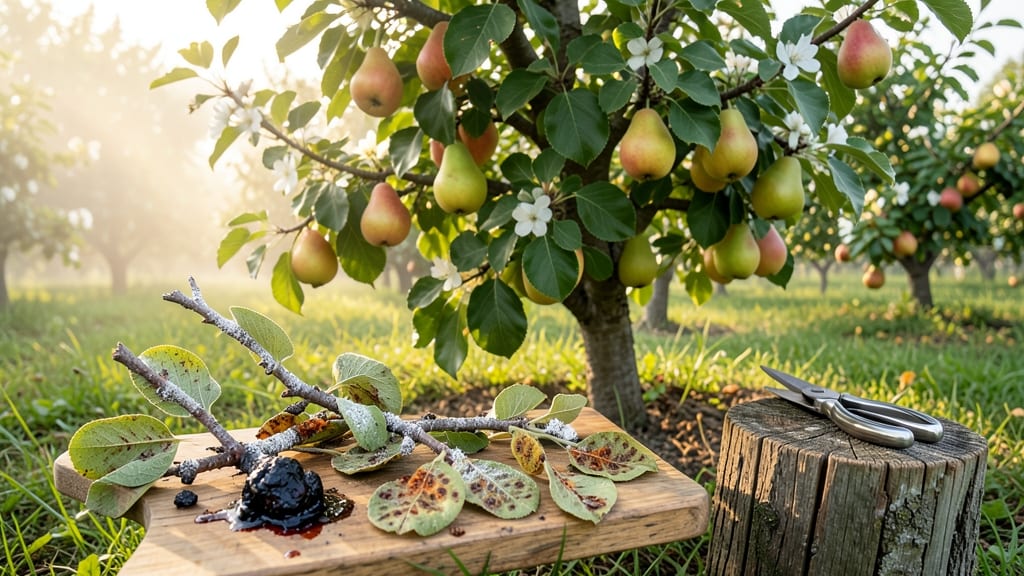
Seeing the pictures of pear tree diseases—like blackened branches or spotted leaves—can send a chill down your spine until you know exactly what you're dealing with. 🌿 This visual guide shows you the telltale signs of fire blight, black spot, and powdery mildew, so you can act fast before the disease spreads.
The pictures alone will help you spot the difference between harmless stress and something serious that needs treatment.
Most of these fungal problems start with wet weather or poor air circulation, and they creep up when trees are already stressed from drought or overcrowding.
I've seen fire blight turn a perfectly healthy tree into a sad, blackened skeleton in just a few weeks—so knowing the symptoms early is your best defense. The good news? Catching it early means you can often save your tree with simple pruning and fungicides.
By the end of this guide, you'll recognize the exact patterns to watch for—from the oily sheen of fire blight to the fuzzy white coating of powdery mildew—and know whether to grab your pruners or call in a professional.
Prevention is easier than cleanup, and I'll show you how to keep your pear tree thriving year after year. The first step is spotting the problem before it gets worse.
Whether you're dealing with a young tree or a mature one, these visual clues will help you act confidently. No more guessing if those spots are just sunburn or something more serious. Let's get your tree back to healthy growth in no time.
Root Causes Of Pear Tree Ailments
Pear trees, like all fruit-bearing plants, are vulnerable to diseases that can devastate their health—often leaving homeowners scratching their heads over why their once-vibrant trees now look sadly wilted or spotted. 🌱😬 Understanding the why behind these issues is the first step toward prevention and treatment.
Below, we break down the most common culprits, from environmental stressors to microscopic invaders, and explain how they create the perfect storm for disease.
Fungi are the primary culprits behind many pear tree diseases, thriving in moist, warm conditions. These organisms release spores that infect leaves, fruit, and bark, leading to symptoms like:
- Powdery mildew: A white, powdery coating on leaves caused by Podosphaera leucotricha. Fungi like this spread rapidly in humid conditions (70-80% humidity) and prefer poor air circulation.
- Fire blight: Triggered by Erwinia amylovora (a bacterium, but often confused with fungal diseases), this bacterial infection spreads via rain-splashed droplets or contaminated pruning tools, targeting blossoms and new growth.
- Black spot and scab diseases: Fungi like Venturia spp. infect leaves and fruit, creating dark, corky lesions. These thrive in wet springs when temperatures hover around 60–75°F (15–24°C).
Why it happens: Fungal spores lie dormant in soil, old plant debris, or infected trees. When conditions align—prolonged moisture, warm temps, and weak tree defenses—they germinate and attack. Overhead watering and dense foliage worsen the problem by trapping moisture.
Pear trees aren’t just fighting fungi—they’re also battling environmental factors that weaken their natural resistance. Key stressors include:
| Factor | How It Weakens Trees | Diseases It Invites |
|---|---|---|
| 💦 Excess Moisture | Waterlogged soil drowns roots, starving them of oxygen and making them susceptible to root rot (e.g., Phytophthora). | Root rot, fungal leaf spots, powdery mildew |
| ☀️🔥 Extreme Heat/Drought | Drought stresses the tree, reducing its ability to produce protective compounds like tannins and waxes. | Sun scorch, bacterial canker, increased fungal infections |
| 🍃 Poor Airflow | Tightly packed branches or overgrown canopies trap humidity, creating ideal fungal breeding grounds. | Fire blight, powdery mildew, scab |
| 🌍 Improper Soil pH | Pear trees prefer slightly acidic soil (pH 6.0–7.0). Alkaline soil (pH >7.5) locks out nutrients like iron and manganese, weakening immunity. | Necrotic spots, chlorosis, increased disease susceptibility |
Why it happens: When trees are nutrient-deficient or physically stressed, their cuticle (protective leaf layer) weakens, making them easier targets for pathogens. For example, a tree struggling with iron deficiency (common in alkaline soils) can’t produce enough chlorophyll, leaving it yellow and vulnerable to fungal attacks.
Some diseases don’t act alone—they hitchhike on pests or exploit wounds left by other threats. Common examples:
- Pear psylla: These sap-sucking insects damage leaves, creating entry points for sooty mold (a black fungal growth that thrives on honeydew secretions).
- Borers and canker wounds: Insects like pear slugs or flatheaded borers burrow into bark, leaving open wounds where bacterial canker or Nectria canker can take hold.
- Bird and animal damage: Fruit-eating critters (e.g., deer browsing or birds pecking) can physically injure branches, inviting fungal infections.
Why it happens: Pests compromise the tree’s integrity, while diseases seize the opportunity. For instance, fire blight often enters through pruning cuts or blossom wounds—making sanitary pruning practices critical. Sooty mold, meanwhile, only appears after sap-feeding insects (like scale or aphids) leave behind sticky residue.
Sometimes, the biggest problem isn’t nature—it’s us. Common gardening oversights that invite diseases include:
- Overhead irrigation: Watering from above splashes spores onto leaves, spreading diseases like fire blight or anthracnose.
- Ignoring pruning hygiene: Using contaminated tools (without sterilizing with 70% rubbing alcohol) can transfer pathogens between trees.
- Planting too closely: Crowded trees compete for sunlight and air, creating shady, damp microclimates perfect for fungi.
- Skipping mulch management: Thick, wet mulch can smother roots and promote fungal growth if not kept 2–4 inches from the trunk.
Why it happens: These preventable mistakes disrupt the tree’s natural defenses and create ideal conditions for pathogens. For example, fire blight spreads 10x faster in trees with wet, unhealed pruning wounds.
Fixing Your Pear Tree’s Health
Once you’ve identified the disease plaguing your pear tree—whether it’s fire blight, brown rot, black spot, or powdery mildew—acting quickly can save your tree. Below are practical, step-by-step solutions tailored to each common issue, plus prevention tips to keep your tree thriving long-term.
Let’s get your pear tree back to its lush, productive best!
Fire blight is one of the most destructive diseases, but early pruning can stop its spread. Here’s how:
- 🔪 Cut Out Infected Branches
- Use sterilized pruners (rubbing alcohol or a bleach solution) to avoid cross-contamination.
- Remove all infected wood, including branches with blackened, oily cankers or shepherd’s crook (curved growths).
- Cut 6–12 inches below the last visible sign of infection to ensure the bacteria (Erwinia amylovora) is fully removed.
- 🌡️ Apply Copper-Based Fungicide
- Spray copper fungicide (like Bordeaux mixture or copper sulfate) on pruning wounds and surrounding foliage.
- Reapply every 10–14 days during bloom and early fruit set (when fire blight spreads fastest).
- 🚫 Avoid Overhead Watering
- Water at the base of the tree to prevent bacterial splashing onto branches.
✨ Prevention Tip:
- Resistant rootstocks (like ‘Old Home’ or ‘Moonglow’) can help reduce susceptibility.
- Remove fallen fruit promptly—it’s a breeding ground for bacteria.
Brown rot (Monilinia fructicola) turns fruit into mummies and defoliates leaves. Prevention is key, but here’s how to treat it:
- 🧹 Clean Up Debris
- Remove mummified fruit (dried, shriveled pears) from the ground and tree.
- Rake up fallen leaves and dispose of them in a sealed bag (do not compost).
- 🍄 Spray Fungicide Before Blooms
- Use sulfur-based or copper fungicide (e.g., Captan or Myclobutanil) before buds swell and again at petal fall.
- For organic growers, neem oil or baking soda spray (1 tbsp baking soda + 1 quart water + a drop of oil soap) can help.
- 🌿 Thin Fruit Early
- Overcrowded fruit spreads spores faster. Thin fruit when small (6–8 weeks after bloom) to improve airflow.
💡 Pro Tip:
- Dormant oil spray in late winter can smother overwintering spores.
Black spot (Marssonina coronaria) causes dark spots on leaves, leading to defoliation. Improve tree health to fight it:
- 🌬️ Prune for Better Air Circulation
- Thin out dense branches to reduce humidity (fungus thrives in wet, shaded areas).
- Remove low-hanging branches touching the ground.
- 🍄 Apply Fungicide at Key Times
- Spray fungicide (like chlorothalonil or potassium bicarbonate) every 7–10 days during wet seasons.
- Start before symptoms appear (early spring and after rain).
- 💧 Water in the Morning
- Wet leaves at night = fungal feast. Water early so foliage dries by evening.
🎯 Long-Term Fix:
- Plant resistant varieties like ‘Seckel’ or ‘Moonglow’ if black spot is recurrent.
This white, powdery fungus weakens leaves but is easily managed with simple sprays:
- 🧼 Use Horticultural Oil or Soap Spray
- Mix 1 tbsp neem oil + 1 tsp dish soap + 1 quart water and spray both sides of leaves.
- Reapply every 7–10 days during humid weather.
- 🌿 Apply Sulfur or Baking Soda
- Wetable sulfur (1–2 tbsp per gallon) or baking soda spray (1 tbsp + 1 tsp oil soap per gallon) work well.
- Spray in the morning on dry leaves for best results.
- 🌿 Improve Tree Health
- Fertilize lightly with low-nitrogen, high-phosphorus fertilizer to strengthen leaves.
- Avoid overhead watering—use drip irrigation instead.
💡 Prevention Hack:
- Reflective mulch (like aluminum foil) around the base can reduce mildew spores by reflecting sunlight.
No matter the issue, strong trees fight diseases better. Follow these year-round tips:
| Season | Action | Why It Helps |
|---|---|---|
| Winter | Prune dormant branches | Removes hiding spots for bacteria/fungi |
| Early Spring | Apply dormant oil spray | Kills overwintering pests & spores |
| Bloom Time | Thin fruit & prune | Reduces humidity & disease spread |
| Summer | Mulch & water deeply | Keeps roots healthy & stress-free |
| Fall | Clean up debris | Removes fungal overwintering sites |
Final Reminder: 🌱 Healthy trees are disease-resistant trees! Combine proper pruning, targeted sprays, and good hygiene for a pear tree that stays strong, productive, and disease-free.
Need more help? Check out our visual guide to spot diseases early before they spread! 📸🔍
Frequently asked questions
How can I tell if my pear tree’s spots are just sunburn or a disease?
Sunburn spots are usually dry, brown patches on exposed leaves that appear after intense heat or wind. Disease spots, however, often have distinct patterns—like the target-like rings of black spot or the oily sheen of fire blight. Check for other symptoms: yellowing leaves, white powder (mildew), or blackened branches to confirm.
Can I use the same fungicide for all pear tree diseases?
No, different diseases need different treatments. Copper-based fungicides work for fire blight and brown rot, while potassium bicarbonate is better for black spot. For powdery mildew, neem oil or sulfur is most effective. Always follow label instructions—some fungicides can harm the tree if overused.
What’s the best time of year to prune diseased branches?
Prune dormant branches in late winter (before buds swell) to remove hiding spots for bacteria. For active infections like fire blight, prune immediately after identifying symptoms—but always sterilize tools with 70% rubbing alcohol first. Avoid pruning during wet weather to prevent spreading spores.
Will my pear tree recover if I remove all the infected leaves?
Removing infected leaves helps, but it’s not enough alone. The disease often lives in bark, branches, or soil. Combine leaf removal with fungicide sprays and improved airflow (thin dense branches). For severe cases like fire blight, you may need to prune entire infected limbs to stop the spread.
How do I know if my pear tree is beyond saving?
If 50%+ of the canopy is dead, fire blight has spread to the trunk, or the tree shows severe root rot (mushrooms at the base), it’s likely beyond saving. Look for new growth—if none appears after treatment, consider replacing it. Sometimes, rootstocks can regrow from healthy roots, but this takes time.