
Companion Plants
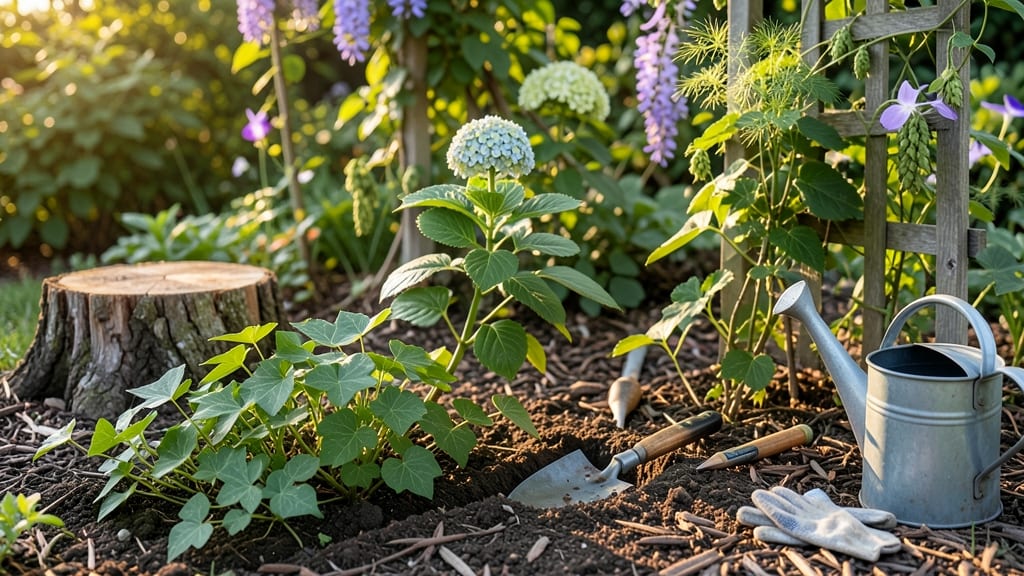
Covering tree stumps fast with the right plants to cover tree stumps turns an eyesore into a lush privacy screen. 🌿 I’ve transformed bare stumps into verdant focal points using aggressive growers that spread quickly—no more staring at that ugly wood in your yard.
The right plants climb, spill, or root aggressively to hide the stump within 3 years, giving you that polished garden look without the cost of removal.
Sunlight and soil type dictate your best options. Shady spots? Try hostas or foamflower—both spread wide and thrive in low light. Full sun? Ivy or ornamental grasses like fountain grass create dramatic vertical coverage. Most of these need minimal maintenance once established, just occasional trimming to keep them tidy.
By year three, your stump will be completely hidden under a thick carpet of foliage. Imagine the first time you walk past and can’t even tell where the stump used to be—just a seamless part of your garden.
The best part? These plants also attract pollinators and add texture to your landscape.
For best results, prep the soil with compost before planting. Mulch heavily to suppress weeds and retain moisture. If you’re in a dry climate, choose drought-tolerant varieties like sedum or creeping thyme—they’ll still deliver that fast coverage without extra watering.
📚 In This Guide
- What you need
- Instructions
- Tips and common mistakes
- Wrapping up and next steps
What you need
- ● Fast-growing plants: Choose from bamboo, willow, or ornamental grasses (3–5 plants per stump, depending on size).
- ● Topsoil or compost: 2–3 cubic feet (enough to fill the stump’s cavity and surrounding area).
- ○ Mulch (optional but recommended): Wood chips or shredded bark (1–2 bags, 2–3 cubic feet).
- ● Watering can or hose: With a gentle spray nozzle for hydration.
- ● Fertilizer (slow-release): Granular or organic (e.g., compost or 10-10-10 blend).
- ● Shovel or trowel: For digging and planting.
- ● Pruners or shears: To trim plants and mulch.
- ● Measuring tape or ruler: To ensure proper spacing (12–18 inches apart for plants).
- ○ Gloves (optional but handy): For protection while handling soil or mulch.
- ● Erosion control fabric: If your stump is in a slope-prone area.
- ● Plant stakes or cages: For taller plants like bamboo.
- ● Mulch ring or landscape edging: To keep mulch in place.
- ● Slow-release watering system: Drip irrigation for hands-off hydration.
How to select and plant fast-growing stump cover plants
Turn that eyesore into a lush, living privacy screen in record time—here's how to pick and plant the right species for rapid, dense coverage.
🌱 Step 1: Choose Plants for Speed and Density
For a 3-year privacy screen, prioritize plants that grow 3-5 feet per year and form dense foliage quickly. I recommend bamboo (running types), willow trees, eucalyptus, or privet hedges—all thrive in full sun to partial shade and tolerate poor soil once established. Bamboo spreads aggressively, creating instant coverage, while willow and eucalyptus grow tall fast with thick canopies.
Check your climate zone—eucalyptus thrives in zones 8-10, while willow and bamboo adapt to cooler regions. I always verify hardiness before planting to avoid disappointment. For shadier spots, consider Japanese Pieris or inkberry holly, though they grow slightly slower (2 feet annually).
🪴 Step 2: Prepare the Stump Site for Planting
Remove any remaining roots within 12-18 inches of the stump to prevent competition. Use a sharp spade to cut through stubborn roots—this ensures your new plants get all the nutrients and water. I like to add 4-6 inches of compost mixed into the top 6 inches of soil to boost fertility, especially if the original tree depleted the soil.
For multiple stumps, space plants 3-5 feet apart depending on mature size—closer for shrubs like privet, wider for trees like willow. Mark planting spots with stakes to avoid guesswork later. This step is critical: poor prep leads to stunted growth and gaps in your screen.
☀️ Step 3: Plant for Maximum Early Growth
Dig holes twice as wide as the root ball but no deeper—planting too deep suffocates roots. Place each plant so the top of the root ball sits 1 inch above soil level (this prevents rot). For bamboo, I plant 2-3 rhizomes per stump to create instant density. Backfill with native soil mixed with compost, tamping gently to eliminate air pockets.
Water deeply immediately after planting—1 gallon per plant—to settle roots. Mulch with 2-3 inches of wood chips (keep mulch 6 inches away from stems to prevent rot). This mulch layer retains moisture and suppresses weeds, which compete for nutrients your fast growers need. Check soil moisture weekly; young plants wilt quickly if dry.
✂️ Step 4: Prune Strategically for Thickness
After 6-8 weeks, when plants show new growth of 6-12 inches, prune back one-third of the tallest stems to encourage bushier growth. For bamboo, cut back any runners that spread beyond your desired area—this keeps it contained while still dense. Pruning now forces energy into lateral branches, creating that thicket effect you want.
Fertilize lightly with a balanced 10-10-10 formula in early spring and again after summer pruning. Avoid high-nitrogen fertilizers—they promote leafy growth at the expense of root development, which is critical for fast establishment. I always water fertilizers in immediately to prevent root burn.
💧 Step 5: Maintain for Rapid, Dense Coverage
Water deeply 2-3 times per week during the first growing season, aiming for 1-2 inches of water per week. Let the top 2 inches of soil dry between waterings to prevent root rot. For bamboo, I install a root barrier if it's spreading aggressively—this keeps it contained while still allowing fast growth.
Monitor for pests like aphids or spider mites, which thrive on new growth. A strong spray of water usually removes them, but for severe infestations, use neem oil. By year two, your screen should be 50% filled in, and by year three, it'll be nearly impenetrable. The key is consistency—skipping water or fertilizer slows growth dramatically.
Tips & tricks for fast-growing stump cover plants
Here's how to supercharge your privacy screen project and avoid the common pitfalls that slow down growth.
Species Selection Matters: When choosing between bamboo, willow, or eucalyptus, consider your climate zone first. Eucalyptus in cooler zones will struggle—it needs zones 8-10 to thrive at its 3-5 feet annual growth rate. I've seen eucalyptus planted in zone 7 grow only 1 foot the first year. For instant density, running bamboo is unbeatable, but install root barriers immediately to prevent it from taking over your yard.
Soil Prep is Non-Negotiable: The 4-6 inches of compost you mix into the top 6 inches of soil isn't just nice—it's essential. I've seen stumps planted without this step produce plants that grow at half the expected rate. For particularly depleted soil, consider adding a handful of bone meal to boost phosphorus for root development. And always remove those stubborn roots within 12-18 inches—they'll steal nutrients from your new plants.
Planting Depth Determines Success: That 1-inch above soil level placement for the root ball isn't arbitrary—it prevents rot while allowing roots to access oxygen. I've watched plants with root balls planted too deep suffocate within weeks. For bamboo, planting 2-3 rhizomes per stump creates instant density, but space them 6 inches apart to avoid overcrowding. The first year's growth will be thicker than if you planted single rhizomes.
Watering Strategy Makes All the Difference: Those 2-3 inches of wood chips aren't just decoration—they're moisture regulators. After planting, water deeply (1 gallon per plant) and maintain 1-2 inches of water weekly. I've seen screens fail because homeowners watered lightly every day instead. Let the top 2 inches dry between waterings to prevent root rot, but don't let young plants dry out completely. A soaker hose makes this maintenance effortless.
Pro Tips for Plants To Cover Tree Stumps
- Here's how to supercharge your privacy screen project and avoid the common pitfalls that slow down growth.
- Species Selection Matters: When choosing between bamboo, willow, or eucalyptus, consider your climate zone first.
- Soil Prep is Non-Negotiable: The 4-6 inches of compost you mix into the top 6 inches of soil isn't just nice—it's essential.
Frequently asked questions
Got questions about transforming that eyesore tree stump into a lush, private garden feature? Here are answers to the most common concerns—so you can get growing with confidence!
What’s the fastest way to cover a tree stump?
For rapid coverage, opt for bamboo, ornamental grasses (like fountain grass), or ivy. These grow aggressively and can smother a stump in 1–2 seasons. Pair them with fast-growing shrubs like elderberry or privet for a fuller look. Mulch heavily to retain moisture and speed up growth!
How long does it take for plants to fully cover a stump?
Most stumps are 80–90% covered in 2–3 years with the right plants. Ivy or English holly can take 1–2 years, while bamboo or willow trees might need 3+ years for dense coverage. Patience pays off—thicker growth hides the stump faster!
Are there non-invasive plants for covering stumps?
Skip aggressive spreaders like bamboo by choosing climbing roses, clematis, or wisteria (train them on trellises). For ground cover, try hostas, ferns, or creeping thyme. Native plants are also great—they’re low-maintenance and support local ecosystems!
What if my stump is rotting or unstable?
If the stump is soft or crumbling, fill the center with compost or soil to stabilize it before planting. For large, hollow stumps, consider lining the inside with landscape fabric to prevent root intrusion. If rot is severe, remove it first—safety first!
Is it cheaper to plant or use a stump cover kit?
DIY planting saves money long-term—most kits cost $50–$150, while plants (even fast growers) average $10–$30 each. Kits are faster but less customizable. If you’re on a budget, start with seeds or cuttings (like ivy or mint) for minimal cost!
Wrapping up and next steps
Transforming a bare tree stump into a lush, private haven is easier than you think! With the right fast-growing plants—like bamboo, sumac, or ornamental grasses—you can create a stunning privacy screen in just three years.
Whether you prioritize speed, low maintenance, or native beauty, there’s a perfect option for your space.
Ready to take the next step? Sketch your design, pick your top 2-3 plants, and start planting this weekend! 🌱 For extra inspiration, check out local nurseries or gardening forums to see real results from other green thumbs. Happy growing!