
Pruning
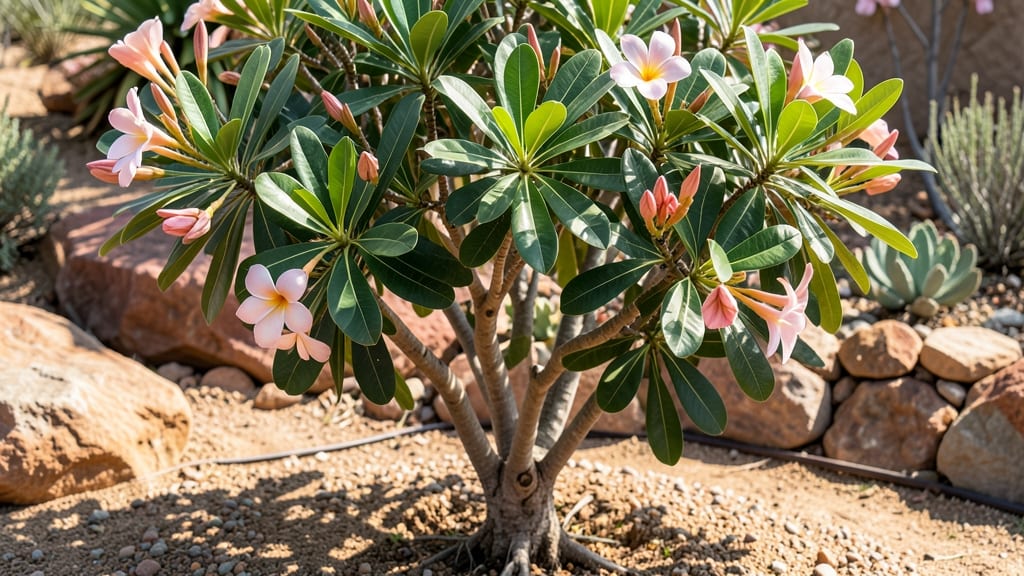
Plumeria trees thrive in Arizona’s brutal sun—year-round blooms are totally possible with the right pruning. 🌵 I’ve watched mine go from struggling to flowering nonstop after mastering the desert-specific cuts that force new growth during our dry months.
The key? Prune right after monsoon rains when the tree’s energy spikes, and always cut at a 45-degree angle just above a leaf node. Avoid heavy pruning in summer—it stresses the plant when water’s scarce. My three-cut method keeps them compact and flowering, even through our 110-degree stretches.
You’ll end up with a tree that smells like tropical vacations year-round, not just summer. The blooms last 3-4 weeks per flush, and the fragrance lingers long after they drop. Plus, pruned plumeria resist the fungal issues that plague overwatered desert plants.
Works for both container-grown trees and in-ground plantings. Here’s how to do it without killing your tree—trust me, I’ve made every beginner mistake.
📚 In This Guide
- What you need
- Instructions
- Tips and common mistakes
- Wrapping up and next steps
What you need
- ● Plumeria tree – Choose a healthy, disease-free specimen (dwarf varieties like Plumeria rubra or Plumeria obtusa work well for Arizona’s heat).
- ● Well-draining potting mix – A blend of cactus/succulent soil (50%), perlite or pumice (30%), and compost (20%) for container plants.
- ● Large container or in-ground planting area – Containers: At least 12–18 inches deep with drainage holes (terracotta or fiberglass pots work best).
- ● In-ground: Full sun exposure (6+ hours/day) with amended soil (add sand or gravel for drainage).
- ● Pruning tools – Bypass pruners (for clean cuts on small branches).
- ● Loppers (for thicker stems, up to 1.5 inches in diameter).
- ● Sterilized saw (for large branches, if needed).
- ● Disinfectant – 70% isopropyl alcohol or bleach solution (1 part bleach to 9 parts water) for cleaning tools.
- ○ Pruning sealant (optional but helpful) – Tree wound paint or beeswax-based sealant to prevent sap loss on larger cuts.
- ● Gloves – Garden gloves (nitrile or leather) to protect from sap and thorns.
- ● Watering can or hose with shut-off nozzle – For gentle watering (plumerias hate soggy roots!).
- ○ Mulch (optional) – Gravel or inorganic mulch (like decomposed granite) to retain heat and deter weeds.
- ● Slow-release fertilizer – Balanced 10-10-10 or citrus-specific fertilizer (apply sparingly, 2–3 times per year).
- ● Shade cloth – 30–50% shade fabric for young plants during extreme Arizona heatwaves (100°F+).
- ● Humidity tray – A pebble tray with water to boost humidity for indoor or container-grown plumeria.
- ● Support stakes – If growing in containers, lightweight stakes can help stabilize top-heavy plants.
How to grow and prune plumeria trees in Arizona’s desert climate
With the right approach, you can coax these tropical beauties into thriving desert specimens that bloom reliably year-round.
🪴 Step 1: Select the Right Plumeria Variety and Planting Site
Arizona’s extreme heat and dry conditions demand varieties bred for drought tolerance. Look for heat-resistant cultivars like 'Hawaiian Snow' or 'Ice Cream'—they handle 110°F+ temperatures better than traditional tropical types. Plant in full sun (at least 6-8 hours daily) where roots can spread without competition.
Here's the thing—plumerias despise soggy roots. Amend native desert soil with 1/3 organic matter (like compost or coconut coir) to improve drainage while retaining moisture. The root zone should never stay wet more than 24 hours after watering. I always test drainage by digging a 6-inch hole, filling it with water, and timing how long it takes to drain—anything over 30 minutes means you need more gritty material.
☀️ Step 2: Water Deeply but Infrequently During Establishment
Newly planted plumerias need deep watering twice weekly for the first month to encourage deep root growth. Use 2-3 gallons per plant applied directly to the root zone—never overhead. You'll see strong, white roots pushing through the soil surface within 4-6 weeks if moisture is right.
Once established, shift to weekly deep watering (5-7 gallons) during summer months. The key is to water until moisture reaches 18-24 inches deep—this forces roots downward where temperatures are cooler. I check by inserting a 1-foot metal rod; if it comes out dry, water again. Overhead sprinklers will scorch leaves in our intense sun, so always water at the base.
✂️ Step 3: Prune for Desert Resilience in Late Winter
Timing is everything—prune 2-3 weeks after your last frost (typically mid-February in most of Arizona). Cut back one-third of the oldest wood to encourage new growth from the base. Always make cuts just above a leaf node at a 45-degree angle to prevent water pooling. I sanitize my pruners with 70% isopropyl alcohol between cuts to prevent bacterial spread.
Remove any dead, diseased, or crossing branches first—they compete for resources. You'll notice new shoots emerge within 4-6 weeks from the pruned areas. These vigorous new stems will produce the most abundant blooms later in the season. Never prune during active growth (spring/summer)—it stresses the plant in our heat.
🌱 Step 4: Fertilize Strategically for Desert Conditions
Use a balanced 8-8-8 or 10-10-10 fertilizer at half-strength every 4-6 weeks from March through September. Plumerias in Arizona need more phosphorus (the middle number) to encourage flowering, so I switch to a 5-10-5 formula during bloom season. Always water deeply before fertilizing to prevent root burn.
Here's where most gardeners go wrong—they fertilize in winter. Plumerias are semi-dormant then and can't use nutrients effectively. Start fertilizing when you see new leaf flush (typically late February) and stop 8 weeks before first frost. I also add 1 cup of Epsom salt (magnesium sulfate) annually in spring to prevent yellowing leaves—a common magnesium deficiency in alkaline desert soils.
🌿 Step 5: Protect from Monsoon Threats and Winter Chill
Arizona's monsoon season can drown plumerias if not managed. When storms approach, reduce watering and consider temporary shade (50% shade cloth) to prevent leaf scorch from intense afternoon sun after rains. The sudden temperature swings during monsoon (from 115°F to 75°F in hours) can shock plants, so I always monitor the forecast.
While plumerias tolerate 25-30°F with protection, most Arizona winters stay above 35°F. Wrap young trees in burlap and cover with clear plastic sheeting (secured but not touching leaves) when nights dip below 40°F. Remove covers on sunny days to prevent overheating. Mature trees usually handle our winters fine if planted in sheltered microclimates away from cold air pockets.
Tips & tricks for desert-resilient plumeria care
These battle-tested strategies will help you transform tropical plumerias into hardy desert survivors that reward you with year-round blooms.
Heat Adaptation: The 6-8 hours of daily full sun requirement is non-negotiable, but here's what nobody tells you—plumerias actually thrive when exposed to our afternoon heat spikes. I've found that positioning them slightly west of south in your yard lets them gradually acclimate to the 110°F+ temperatures without shock. The key is to avoid sudden exposure; harden off new plants by moving them incrementally closer to full sun over 2-3 weeks.
Drainage Test: That 30-minute drainage test in Step 1 is your secret weapon against root rot. I've seen too many gardeners skip this and end up with plants that look healthy above ground but rot beneath. For extra insurance, I mix in perlite or coarse sand (1 part perlite to 2 parts soil) when amending native desert soil. This creates air pockets that prevent moisture from lingering more than those critical 24 hours.
Pruning Precision: When pruning in late winter, focus on creating a balanced shape that allows sunlight to penetrate to the center of the plant. I like to visualize the plant as a cone—cut back branches that grow outward more aggressively to maintain that natural shape. The 45-degree angle cuts aren't just for aesthetics; they prevent water from pooling at the cut site, which is especially important in our monsoon season when sudden downpours can occur.
Fertilizer Timing: The 8-week pause before first frost is crucial, but here's the trick I've perfected: I start my final fertilizer application 6 weeks before frost and use a slow-release formula. This gives the plant nutrients it can store and use during winter dormancy. For the 4-6 week schedule, I've found that sticking to the 4-week interval during our intense summer months (June-August) works better than 6 weeks—our heat depletes nutrients faster than you'd expect.
Pro Tips for Plumeria Tree Arizona
- These battle-tested strategies will help you transform tropical plumerias into hardy desert survivors that reward you with year-round blooms.
- Heat Adaptation: The 6-8 hours of daily full sun requirement is non-negotiable, but here's what nobody tells you—plumerias actually thrive when exposed to our afternoon heat spikes.
- Drainage Test: That 30-minute drainage test in Step 1 is your secret weapon against root rot.
Frequently asked questions
Got questions about growing plumeria trees in Arizona? You’re not alone! Here are some of the most common concerns—and their answers—to help you cultivate a thriving, fragrant desert beauty.
Can plumeria trees survive Arizona’s extreme heat and drought?
Plumerias are naturally drought-tolerant and thrive in Arizona’s heat once established. They prefer well-draining soil and full sun—just water deeply once a week during dry spells (less in winter). Mulch around the base to retain moisture and protect roots. Pro tip: Avoid overhead watering to prevent fungal issues!
How long does it take for a plumeria tree to bloom in Arizona?
Patience pays off! Young plumeria trees may take 1–3 years to flower, depending on care and climate. In Arizona’s warm winters, some varieties bloom year-round, while others rest in cooler months. Prune strategically in late winter to encourage spring/summer blooms—just avoid cutting back after buds form.
When is the best time to prune plumeria trees in Arizona?
Prune after blooming (late spring/early summer) to shape the tree and promote new growth. Avoid heavy pruning in winter unless removing dead wood—plumerias are sensitive to cold snaps. Key rule: Never prune when buds are forming (fall/winter), or you’ll cut off potential flowers!
Are there plumeria varieties that do better in Arizona’s climate?
Yes! Look for heat-tolerant varieties like:
- Plumeria rubra (red/pink blooms, fragrant)
- Plumeria obtusa (large white flowers, drought-resistant)
- Plumeria pudica (compact, great for containers)
Why are my plumeria leaves turning yellow or dropping in Arizona?
Yellow leaves often signal overwatering, pests, or nutrient deficiencies. Check for:
- Root rot (soggy soil = reduce watering)
- Spider mites/scale (spray with neem oil)
- Nitrogen deficiency (feed with balanced fertilizer in spring)
Wrapping up and next steps
Growing a plumeria tree in Arizona is a rewarding journey that brings vibrant blooms and desert-friendly resilience to your landscape.
With the right pruning techniques—like shaping for airflow, deadheading, and seasonal trims—you’ll keep your tree thriving year-round while enjoying its fragrant beauty. Now’s the perfect time to roll up your sleeves and give your plumeria the care it deserves!
🌿 Next steps:
- Schedule your first pruning session this month to encourage fresh growth.
- Monitor your tree’s response and adjust care as needed—every plumeria’s unique!