
Pruning
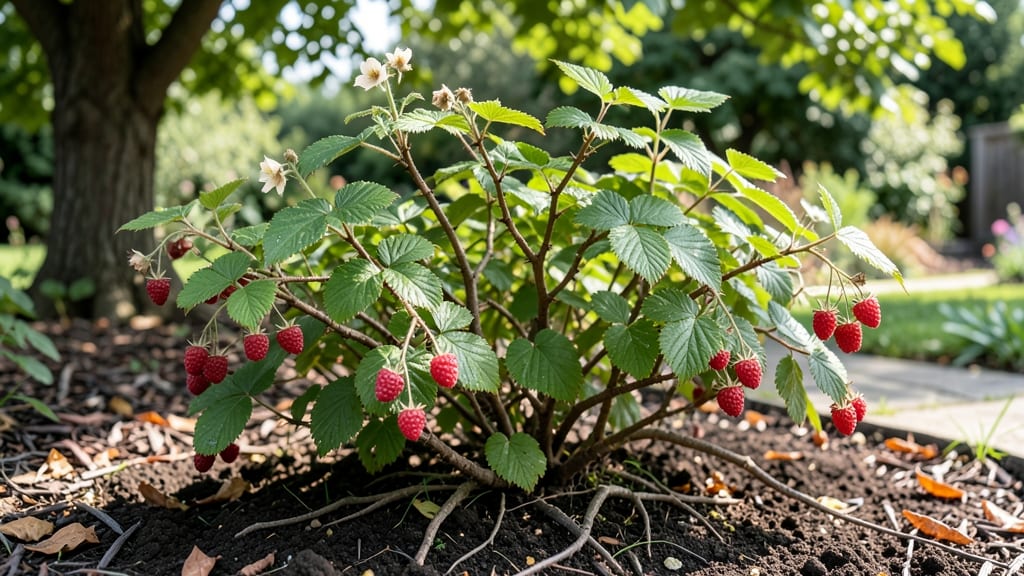
Your raspberry tree care routine starts with knowing exactly when to prune—because timing varies by variety and zone. ✂️ I learned this the hard way when my fall-bearing raspberries produced almost no fruit after a winter prune.
The right cuts at the right time mean bigger harvests and healthier canes every season. Most gardeners focus only on winter pruning, but summer maintenance is just as critical.
Summer-bearing varieties need thinning in early summer to improve fruit size, while fall-bearing types require different timing to encourage next year’s crop. Your climate zone dictates when to start—warmer zones begin earlier, while colder regions wait until after the last frost.
By following this precise schedule, you’ll see canes thicken, berries plump up, and your bushes stay thorn-free. The payoff? A harvest that rivals commercial orchards—without the chemicals or backbreaking work. Let’s get those pruners sharpened.
You’ll need basic tools: sharp pruners, gloves (thorns are no joke), and a spray bottle for cleaning cuts. For large bushes, a saw helps with thick canes. Most importantly, grab a notebook to track your pruning dates—consistency is key.
I mark my calendar with reminders for each variety’s critical windows. The process itself takes 30-60 minutes per bush, depending on size. Start by removing dead or diseased canes completely.
Then focus on thinning—aim for 5-7 of the strongest canes for summer-bearing types, or leave last year’s canes for fall-bearing varieties. Every cut should be clean and angled just above a bud.
Here’s where most gardeners trip up: pruning too late in the season or cutting into old wood. Summer-bearing types need their prune done by early July, while fall-bearing varieties wait until after harvest. In cold zones, avoid heavy pruning until late winter when new growth signals dormancy is broken.
The real magic happens when you combine pruning with proper watering and mulching. Keep soil moist but not soggy, and mulch heavily to protect roots. Within a year, you’ll notice fewer thorns, straighter canes, and berries that actually reach full size.
That’s the difference between a scraggly hedge and a productive orchard.
📚 In This Guide
- What you need
- Instructions
- Tips and common mistakes
- Wrapping up and next steps
What you need
- ● Pruning shears or loppers: Sharp, clean, and disinfected (70% isopropyl alcohol works great). Opt for bypass pruners (for clean cuts) or loppers (for thicker stems, up to 1.5 inches in diameter).
- ● Gloves: Heavy-duty, cut-resistant gloves to protect your hands from thorns and rough branches.
- ● Disinfectant: A bottle of rubbing alcohol (70% or higher) or a commercial pruning spray to sterilize tools between cuts and prevent disease spread.
- ● Rake or hoe: For clearing debris around the base of the tree and keeping the area tidy.
- ● Mulch: 3-4 inches of organic mulch (e.g., straw, wood chips, or shredded leaves) to retain moisture and suppress weeds.
- ● Watering can or hose: With a gentle spray nozzle for post-pruning hydration.
- ● Stakes or trellis system: If your raspberry variety needs support (e.g., floricane types like 'Boyne' or 'Heritage'), use 5-6 ft tall stakes or a wire trellis with 12-18 gauge wire.
- ● Pruning saw: For thick, woody stems that loppers can’t handle.
- ● Hand pruners: For fine-tuning smaller branches or suckers.
- ● Garden twine: To temporarily tie floppy canes to the trellis.
- ● Fertilizer: A balanced, slow-release fertilizer (e.g., 10-10-10) or compost to replenish nutrients after pruning.
- ● Plant tags or labels: To keep track of varieties and pruning schedules, especially if you’re growing multiple types.
Step-by-step guide to pruning raspberry trees
Here’s the method I’ve used for years—simple, effective, and tailored to your specific variety and growing zone.
✂️ Step 1: Identify Your Raspberry Type and Pruning Needs
Raspberries fall into two main categories: summer-bearing (produce once per year) and fall-bearing (produce twice). Summer-bearing types like ‘Heritage’ or ‘Boyne’ need aggressive pruning to remove old canes, while fall-bearing types like ‘Fall Red’ or ‘Autumn Britten’ produce on second-year canes and require a gentler approach. Check your variety’s label or consult a local nursery if unsure.
Next, note your USDA hardiness zone. In zones 5-7, prune in late winter or early spring before buds swell. In zones 8-10, prune in early spring to avoid summer heat stress. This timing ensures you’re not pruning too early (risking frost damage) or too late (delaying new growth).
🌿 Step 2: Remove Dead, Diseased, or Weak Canes
Start by inspecting your raspberry patch. Look for canes that are blackened, shriveled, or hollow—these are dead and should be cut at the base with clean, sharp pruners. Diseased canes (often with mold or spots) should also be removed immediately and disposed of in the trash, not composted, to prevent spreading. Weak or spindly canes that haven’t produced fruit in the past year can go too.
I like to bundle the pruned canes and burn them (if allowed) or soak them in a 10% bleach solution for 10 minutes to kill pathogens before disposal. This step keeps your patch healthy and prevents future issues. After removing the bad canes, you’ll notice the remaining ones stand taller and stronger—this is your cue that you’re on the right track.
⏰ Step 3: Prune Summer-Bearing Varieties for Next Year’s Crop
For summer-bearing raspberries, cut all old canes (those that produced fruit last year) down to the ground. These canes won’t fruit again and are now expending energy on leaves instead of berries. Leave the new, green canes (last year’s primocanes) untouched—they’ll produce this summer. You’ll see a mix of thick, woody canes (old) and thinner, flexible ones (new).
If your patch is crowded, thin out some of the new canes to 5-7 per square foot, spacing them evenly. This improves airflow and fruit quality. Avoid over-pruning—never remove more than one-third of the canes in a single season, or you’ll stress the plant. After pruning, rake up debris around the base to reduce pest hiding spots.
✂️ Step 4: Prune Fall-Bearing Varieties for Dual Harvests
Fall-bearing raspberries produce fruit on second-year canes (floricanes) in the fall and on first-year canes (primocanes) the following summer. After harvest, cut back all canes that produced fruit in the fall to 6-8 inches above the ground. This encourages new growth from the base for next summer’s crop. Leave the primocanes (last year’s new growth) untouched—they’ll fruit in the fall.
In late winter or early spring, remove any weak or damaged primocanes that didn’t survive the winter. You’ll want to keep 6-8 of the strongest, healthiest primocanes per square foot. These will become next year’s floricanes and produce your fall harvest. The key here is patience—fall-bearing raspberries take two years to fruit, so pruning correctly now sets you up for a bountiful harvest later.
☀️ Step 5: Post-Pruning Care for Strong Regrowth
After pruning, water deeply to 1 inch of soil to help the plant recover. Apply a 2-3 inch layer of mulch (like straw or wood chips) around the base to retain moisture and suppress weeds. Avoid piling mulch against the stems, as this can cause rot. In zones 5-7, a light application of 10-10-10 fertilizer in early spring encourages new growth.
Monitor your raspberries for new shoots emerging from the base within 2-4 weeks. These are your primocanes (for summer-bearing) or next year’s floricanes (for fall-bearing). If you see yellowing leaves or stunted growth, you may have pruned too aggressively—adjust next year by leaving more canes. With consistent care, your raspberry patch will thrive and produce abundantly for years.
Tips & tricks for pruning raspberry trees like a pro
These simple strategies will help you avoid common pruning mistakes and maximize your raspberry harvest.
Timing is Everything: In zones 5-7, prune when temperatures hover around 40-50°F—this is your sweet spot for late winter/early spring. If you're in zones 8-10, aim for early spring before buds begin to swell. I've learned this the hard way: pruning too early risks frost damage to fresh cuts, while waiting too long stresses the plant before new growth begins. Watch for buds to swell slightly but not open—this is your visual cue.
Tool Prep Matters: Sharpen your pruners before starting to make clean cuts that heal faster. I use a 10% bleach solution for 10 minutes to sanitize tools between cuts—this prevents spreading diseases from cane to cane. For larger branches, use loppers with a 4-6 inch blade to avoid tearing. Dull tools crush canes, creating larger wounds that invite infection.
Visual Cues for Healthy Canes: Healthy canes have smooth, green bark with small, evenly spaced buds. Look for canes that are thicker than a pencil—these are your strongest producers. Thin, weak canes (less than 1/4 inch diameter) won't contribute much to your harvest and should be removed. Remember: you're aiming for 5-7 canes per square foot for summer-bearing varieties—this spacing ensures proper airflow and sunlight penetration.
Post-Pruning Recovery: After finishing, water deeply to 1 inch of soil to help roots recover. I apply 2-3 inches of straw mulch around the base (keeping it 2 inches away from stems) to retain moisture and suppress weeds. This mulch layer also regulates soil temperature, protecting new shoots from extreme fluctuations. In zones 5-7, a light application of 10-10-10 fertilizer in early spring gives plants a growth boost without overloading them.
Pro Tips for Raspberry Tree Care
- These simple strategies will help you avoid common pruning mistakes and maximize your raspberry harvest.
- Timing is Everything: In zones 5-7, prune when temperatures hover around 40-50°F—this is your sweet spot for late win...
- Tool Prep Matters: Sharpen your pruners before starting to make clean cuts that heal faster. I use a 10% bleach solut...
Frequently asked questions
Got questions about keeping your raspberry tree thriving? Here are some of the most common concerns—and their answers—to help you grow like a pro!
When is the best time to prune raspberry trees?
Timing depends on your variety! For summer-bearing raspberries, prune right after harvest (late summer). For fall-bearing types, prune in late winter or early spring before new growth starts. Always avoid pruning during frost or extreme heat.
How do I tell if my raspberry tree is summer- or fall-bearing?
Check the canes: Summer-bearing varieties produce berries on second-year canes (last year’s growth), while fall-bearing types bear fruit on first-year canes (current season). Look for labels or ask your nursery—mixing them up can ruin your harvest!
What should I do if my raspberry tree isn’t producing fruit?
Lack of fruit often means poor pruning or nutrient deficiency. Start by removing dead/diseased canes, then fertilize with balanced 10-10-10 in early spring. Ensure full sun (6+ hours/day) and water deeply 1–2 times per week. Patience helps—young trees take 2–3 years to bear!
Can I grow raspberries in containers, or do I need a tree?
Floricane (fall-bearing) varieties like ‘Heritage’ thrive in large pots (15+ gallons) with drainage holes. Use well-draining soil and prune aggressively to control size. Primocane types (like ‘Autumn Bliss’) are even better for containers—they fruit on new growth and stay compact!
How do I prevent raspberry canes from flopping over?
Use stakes, trellises, or wire supports to train canes upward. Install supports at planting and tie canes loosely with soft ties (avoid wire that can damage bark). Mulch heavily (3–4 inches) to reduce wind stress. Prune suckers at the base to redirect energy to fruit production.
Wrapping up and next steps
Caring for a raspberry tree is all about timing, patience, and precision—whether you’re in a cool, wet climate or a warm, dry one. By following the right pruning schedule for your variety and zone, you’ll enjoy bountiful harvests and healthier plants year after year. 🌱✨
Now that you’re armed with the knowledge, roll up your sleeves and give your raspberry tree the love it deserves!
Start by marking your calendar for next year’s pruning dates—your future berry-picking self will thank you. Ready to dive deeper? Explore organic pest control tips or soil prep strategies to keep your raspberries thriving!