
Pruning
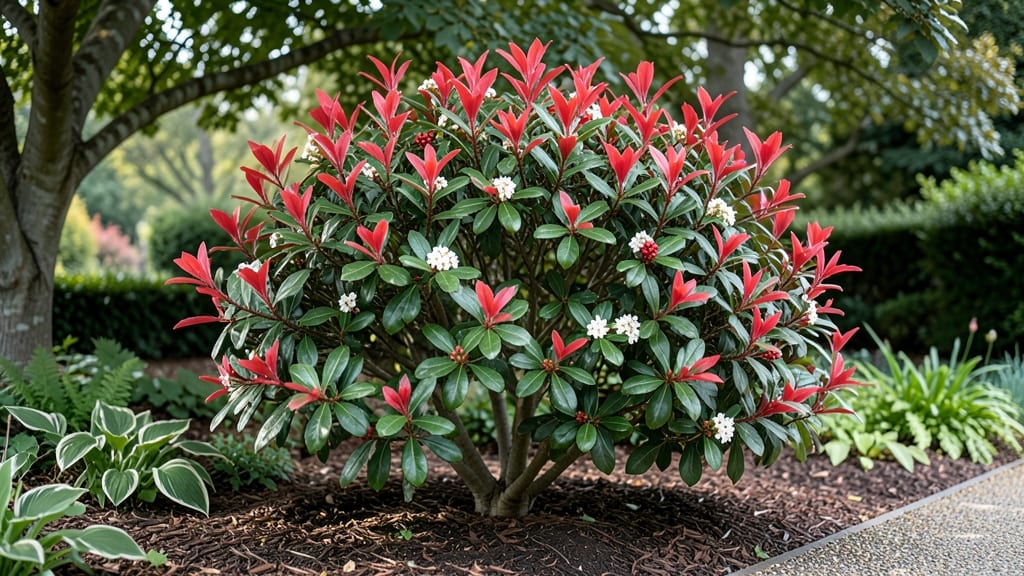
A Red Tip Photinia tree grows to a mature height of 6 to 15 feet—but that doesn’t mean you’re stuck with a towering shrub if you don’t want one.
If your Red Tip Photinia tree is growing taller than your fence—or faster than you’d like—proper pruning is the key to maintaining its ideal height while keeping it lush and healthy.
This fast-growing shrub can shoot up 2 to 3 feet per year in the right conditions, but with the right timing and techniques, you can shape it into a compact hedge, a medium-height screen, or even a dwarf variety.
Below, I’ll break down how to control its height through pruning, when to do it for the best results, and how to keep your tree thriving without sacrificing its vibrant foliage.

Understanding Red Tip Photinia tree height growth patterns and mature size
The Red Tip Photinia is a popular landscaping shrub known for its striking red new growth and glossy green leaves. But how tall will it grow? Understanding its natural growth patterns helps you plan spacing, pruning, and landscaping layouts effectively.
This shrub typically reaches a mature height of 6–12 feet, though it can grow taller under ideal conditions.
Factors like sunlight exposure, soil quality, and climate conditions play a significant role in determining how tall your Red Tip Photinia will become. For example, full sun environments often accelerate growth, while partial shade can slow it down slightly.
Let’s break down the key factors influencing its height and what you can expect over time.
🌱 Did You Know? A Red Tip Photinia can grow 1–2 feet per year under optimal conditions, but this rate slows as it matures. Proper care and pruning can help maintain its ideal size for your landscape design.
Your Red Tip Photinia’s growth rate is fastest during its first 3 years. In USDA Zone 6a, where it thrives, expect rapid vertical expansion if planted in well-draining soil with full sun exposure.
However, if you’re in a hotter climate, partial shade can help control its height while maintaining its vibrant foliage.
Soil quality is another critical factor. Rich, slightly acidic soil (pH 5.0–6.5) promotes healthier root development, which in turn supports taller growth. Amending your soil with compost or organic matter can make a noticeable difference in how quickly your shrub reaches its mature height.
Climate also plays a role. In cooler regions, growth may slow slightly during winter, while warmer climates can encourage year-round expansion. For example, a Red Tip Photinia in Southern California might grow taller faster than one in upstate New York due to longer growing seasons.
If you’re planting multiple Red Tip Photinias, spacing them 6–10 feet apart gives them room to grow without competing for nutrients. Crowding can stunt height growth and lead to weaker branches. Always consider the mature size when planning your landscape layout.
For those aiming to keep their Red Tip Photinia shorter, regular pruning is essential. Pruning in late winter or early spring helps shape the shrub and controls its height.
Just avoid heavy pruning in summer or fall, as this can stress the plant and reduce its ability to produce new growth.
Monitor your tree’s growth closely in the first few years. If it’s growing too fast or too slow, adjust your care routine. For instance, adding a balanced fertilizer (like 10-10-10) in early spring can boost growth, while reducing water in late summer can slow it down slightly.
With the right care, your Red Tip Photinia will reach its ideal mature height while staying healthy and vibrant. Whether you want it to tower over your garden or stay compact, understanding these growth patterns puts you in control.
Best pruning techniques to control Red Tip Photinia tree height
Pruning your Red Tip Photinia isn't just about keeping it from towering over your patio—it's about shaping its growth for a healthier, denser shrub. Without proper technique, you risk stunting growth or inviting pests.
The key lies in timing, cutting angles, and tool selection, all tailored to this shrub's natural growth patterns.
I’ve learned the hard way that late winter pruning (just before buds swell) encourages vibrant red tips, while spring pruning focuses on shaping. Each season demands a different approach to maintain that 6-12 foot height without sacrificing foliage density. Let’s break it down step by step.
- 1 Choose the right season: Prune late winter (February-March) to encourage new red growth. For shaping, prune in early spring (April) after last frost.
- 2 Use sharp, clean tools: Disinfect pruners or loppers with rubbing alcohol to prevent bacterial spread. Dull blades tear stems, inviting disease.
- 3 Make 45-degree cuts: Always cut just above a bud or branch collar at a 45-degree angle. Avoid leaving stubs—this prevents rot and pest entry.
- 4 Remove no more than 1/3: Never prune over 30% of foliage in one season. This stresses the shrub and reduces red tip vibrancy.
- 5 Avoid "lion’s tailing": Never trim only the top of the shrub. This creates an unattractive, bare stem. Instead, prune evenly from the bottom up.
- 6 Clean up afterward: Remove all clippings and debris from the base. This reduces fungal spores and keeps your landscape tidy.
One mistake I see often is pruning during summer, which stresses the shrub and reduces winter hardiness. Another is using shears instead of pruners, which crushes stems and invites disease. Always prioritize clean cuts and proper timing for the best results.
After pruning, give your Red Tip Photinia a light fertilizer (like 10-10-10) to promote recovery. Water deeply but avoid overhead watering, which can spread fungal spores from pruning wounds. With these techniques, you’ll maintain that perfect 6-10 foot height while keeping it lush and vibrant.
Remember, patience is key. Over-pruning in one season won’t give you instant results—it takes consistent, gentle shaping over years to achieve the ideal height. Your shrub will thank you with bold red tips and dense foliage for seasons to come! ✂️🌿