
Pruning
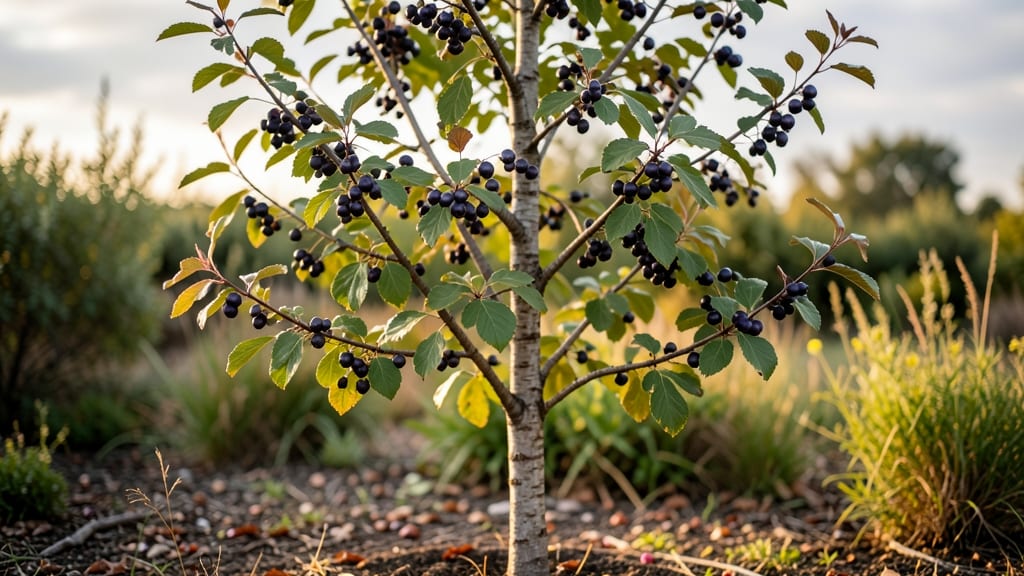
Serviceberry tree berries taste like a cross between blueberries and almonds—sweet, tart, and impossible to resist once you try them. 🌿 I learned the hard way that pruning and timing matter more than most gardeners realize, especially if you want a tree bursting with fruit every year.
The berries ripen in late summer, but the real magic happens when you prune correctly in winter and feed the tree right in spring.
You'll need basic pruning tools, a soil test kit, and patience—these trees take 3-5 years to produce serious fruit, but once they do, they reward you with pounds of berries each season.
The key is thinning out crowded branches in late winter and fertilizing with compost or a balanced organic fertilizer in early spring. Mulch heavily around the base to keep moisture in and weeds out.
By harvest time, your tree will be heavy with deep purple-black berries that birds won't be able to resist—but if you pick them first, you'll get a bounty to freeze, bake into pies, or eat fresh.
The berries are packed with antioxidants and vitamin C, making them a superfood gardeners love. Just be prepared for a few hungry visitors in your yard.
Works in USDA zones 3-9, thrives in full sun to partial shade, and handles drought once established. The same pruning techniques work for ornamental varieties too—just time the harvest a little later if you want the berries to stay on the tree for winter interest.
Here's how to get started without the common mistakes.
📚 In This Guide
- What you need
- Instructions
- Tips and common mistakes
- Wrapping up and next steps
What you need
- ● Pruning shears: Bypass pruners (sharp, 6-8" blades) – 1 pair (for small branches).
- ● Loppers: Heavy-duty, 18-24" – 1 pair (for thicker branches up to 2" diameter).
- ● Pruning saw: Curved-tooth saw (for branches 2"+ thick) – 1.
- ● Gloves: Heavy-duty gardening gloves (cut-resistant) – 1 pair (to protect hands from thorns and debris).
- ● Disinfectant: 70% isopropyl alcohol or bleach solution (1 part bleach to 9 parts water) – small spray bottle (to sterilize tools between cuts).
- ● Bucket or container: Large, sturdy (10+ gallon) – 1-2 (for collecting pruned branches or harvested berries).
- ● Ladder: Extendable (12-16 ft) – 1 (if tree is taller than 8 ft).
- ● Harvesting tool: Long-handled grape tongs or basket – 1 (for picking ripe berries without damaging branches).
- ○ Labeling tags: Waterproof plant markers – 5-10 (optional but helpful for tracking pruned sections).
- ● Safety gear: Safety glasses and ear protection (if using a chainsaw for large branches).
- ● Tree wound dressing: Pruning sealant (controversial but some gardeners swear by it for larger cuts).
- ● Wheelbarrow: For hauling heavy pruned branches or mulch.
- ● Camera: To document your tree’s progress before/after pruning!
- ● Bird netting: If wildlife is a concern (to protect berries from early harvesting).
Instructions for pruning and harvesting serviceberry tree berries
Here’s how to keep your serviceberry tree thriving and loaded with sweet, edible berries year after year.
✂️ Step 1: Prune in Late Winter for Optimal Growth
Wait until late winter or early spring—just before buds swell—when the tree is still dormant. This timing avoids stressing the tree and prevents disease spread. Grab your pruning shears and start by removing any dead, diseased, or crossing branches first. These are easy to spot—they’re brown, brittle, or growing inward toward the center of the tree.
Next, thin out overcrowded branches to improve airflow and sunlight penetration. Aim to keep the tree’s shape open and airy, with sunlight reaching all the way to the center. Never remove more than 25% of the tree’s canopy in one year—this keeps the tree healthy and encourages strong fruit production. I like to step back every few cuts to visualize the tree’s structure.
☀️ Step 2: Encourage Sunlight and Fruit Production
Serviceberry trees thrive in full sun to partial shade, but for maximum berry production, prioritize at least 6 hours of direct sunlight daily. If your tree is in a shadier spot, thin nearby branches or remove competing plants to open up the canopy. You’ll notice berries clustering more heavily on branches that receive the most sunlight.
In early spring, apply a balanced fertilizer (like 10-10-10) around the tree’s drip line—not directly on the trunk—to give it a nutrient boost. Water deeply after fertilizing to help the roots absorb nutrients. Avoid over-fertilizing, though; too much nitrogen can lead to leafy growth at the expense of fruit. A light layer of mulch (2-3 inches) around the base helps retain moisture and regulate soil temperature.
🍓 Step 3: Harvest Berries at Peak Ripeness
Serviceberry berries ripen in late spring to early summer, usually between May and June, depending on your climate. They start as green and turn a vibrant deep purple-blue when fully ripe. The best way to test ripeness is to gently squeeze a few berries—they should yield slightly under pressure, like a ripe peach. If they’re still firm, wait a few days.
Harvest on a dry morning after the dew has dried to avoid spreading disease. Use a small ladder if the tree is tall, and pick berries by hand or with pruning shears, cutting stems just above a leaf node. Avoid dropping berries onto the ground—they bruise easily and spoil quickly. Collect them in a shallow container lined with a cloth or paper towel to prevent crushing.
🪴 Step 4: Post-Harvest Care for Next Year’s Bounty
After harvesting, remove any fallen leaves, fruit, or debris from the base of the tree to reduce pests and diseases. This is also a great time to prune any suckers (shoots growing from the base or roots) and thin out overly dense branches. A light pruning in late summer (after harvest) can encourage new growth for next year’s fruit.
Water the tree deeply once a week if rainfall is scarce, focusing on the root zone. Serviceberry trees are drought-tolerant once established, but consistent moisture helps establish strong roots and fruit production. If you notice yellowing leaves or small, sparse berries, it might be a sign of underwatering or nutrient deficiency—adjust your care routine accordingly.
Tips & tricks for perfect serviceberry tree berry harvesting
Mastering the art of serviceberry care means paying attention to the little details that make all the difference between a modest harvest and a bountiful one.
Timing Secret: The late winter pruning window—just before buds swell—is your golden opportunity. I’ve seen trees stressed by early pruning, so mark your calendar for that precise moment when the tree is dormant but buds haven’t yet opened. This timing prevents disease spread and gives your tree the best chance to recover quickly. If you miss this window, wait until early spring when new growth begins.
Sunlight Strategy: Those 6 hours of direct sunlight aren’t just a suggestion—they’re critical for fruit production. I’ve noticed berries cluster most heavily on branches that get the most sun, so if your tree is struggling, consider thinning nearby branches or removing competing plants. For partial shade trees, focus on opening up the canopy’s center where sunlight struggles to reach. A simple trick: stand back and visualize how sunlight moves across the tree throughout the day.
Harvesting Technique: The dry morning harvest rule isn’t just about avoiding disease—it’s about preserving berry quality. Wet berries bruise easily and can develop mold. I always use a shallow container lined with cloth to catch fallen berries, and I cut stems just above a leaf node to encourage new growth. This small detail makes a huge difference in how quickly your tree recovers after harvesting.
Post-Harvest Care: After your harvest, don’t forget the late summer pruning—it’s your chance to shape next year’s fruit production. Remove those suckers and thin dense branches now, and you’ll be rewarded with better air circulation and more sunlight reaching the center. I’ve seen trees with dense canopies produce 30% fewer berries because of poor airflow—don’t let that happen to yours.
Pro Tips for Serviceberry Tree Berries
- Mastering the art of serviceberry care means paying attention to the little details that make all the difference between a modest harvest and a bountiful one.
- Timing Secret: The late winter pruning window—just before buds swell—is your golden opportunity.
- Sunlight Strategy: Those 6 hours of direct sunlight aren’t just a suggestion—they’re critical for fruit production.
Frequently asked questions
When is the best time to harvest serviceberry berries?
Serviceberries ripen in late summer to early fall (typically August–September), depending on your climate. The berries are ready when they’re deep purple-black, soft to the touch, and easily detach from the tree. Pro tip: Harvest them before birds do—morning picks yield the sweetest fruit!
How do I prune a serviceberry tree to boost berry production?
Prune in late winter or early spring before buds swell. Remove dead, diseased, or crossing branches first, then thin out crowded growth to improve airflow. Focus on opening the canopy for sunlight—this encourages more fruit-bearing branches. Key rule: Never prune more than 25% of the tree in one year.
How can I protect my berries from birds and wildlife?
Birds love serviceberries, but you can deter them with netting (lightweight, breathable mesh) or reflective tape. Harvest in stages to stay ahead of hungry critters. For ground-dwelling animals, use temporary fencing or mulch rings to create barriers. Bonus: A few berries left for wildlife can actually improve pollination!
Can I grow serviceberries in containers, or do they need a yard?
While serviceberries thrive in open ground, dwarf varieties (like Amelanchier lamarckii) can grow in large containers (15+ gallons) with well-draining soil. Ensure the pot gets full sun and deep watering. Just know: container-grown trees may produce fewer berries than in-ground plants.
Are serviceberry berries safe to eat raw, or do they need cooking?
Fresh serviceberries are edible raw but can be tart—best enjoyed cooked! Use them in pies, jams, or sauces for a flavor similar to blueberries. Caution: Always confirm your tree’s variety is non-toxic (some ornamental serviceberries have bitter, inedible fruit). When in doubt, taste a small amount first!
Why aren’t my serviceberries ripening, even though the tree looks healthy?
Common culprits include insufficient sunlight (they need 6+ hours daily), poor soil drainage, or over-pruning. Check for pests (like aphids) or fungal issues (like powdery mildew) on leaves. If the tree is young, it may need 3–5 years to bear fruit. Fix it: Amend soil with compost and fertilize lightly in early spring.
Wrapping up and next steps
Growing serviceberry trees isn’t just rewarding—it’s a delicious and sustainable way to enjoy nature’s bounty! 🌿 With the right pruning techniques and a little patience, you’ll soon be harvesting juicy, antioxidant-rich berries that taste like a mix of blueberries and blackberries.
Whether you’re a seasoned gardener or just starting out, every step you take brings you closer to a thriving orchard.
Ready to take the next step? Mark your calendar for your first pruning session—spring or early summer is ideal—and watch your serviceberry tree flourish. Happy harvesting! 🍇✨