
Trees
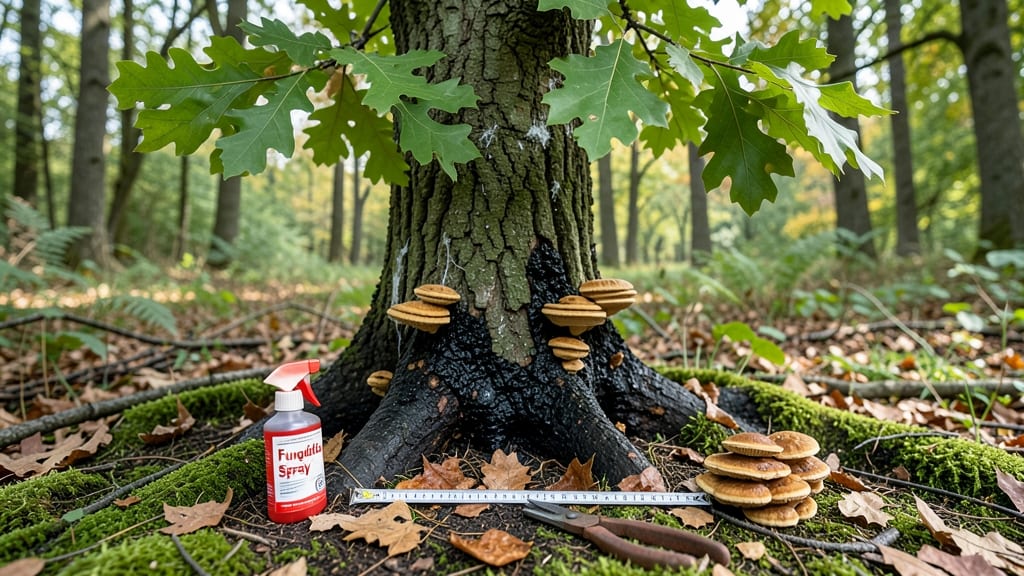
Your tree’s bark tells a story of tree infection fungus—if you know what to look for. 🌳 When black streaks or powdery white patches appear, it’s not just cosmetic; fungal infections like anthracnose or powdery mildew can weaken roots and kill branches if ignored.
The good news? Copper spray isn’t just a cure—it’s a shield against future outbreaks too.
Most infections start with tiny spores hiding in wet bark or mulch. Anthracnose thrives in damp spring weather, while powdery mildew loves shaded leaves. You’ll spot dark sunken patches, wilting branches, or leaves that curl like burnt paper.
The earlier you act, the easier the fix—think of copper spray as a fungicide that sticks to surfaces and keeps spores from taking hold.
Within 2-3 weeks of treatment, you’ll see fresh green growth where blight once ruled. Copper spray works on fruit trees, shade trees, and even ornamental varieties—just mix it right and apply it at the first sign of trouble.
The key is consistency: spray before rain, repeat every 7-10 days, and pair it with proper pruning to keep air flowing through the canopy.
Prevention is half the battle: clean tools after pruning, remove infected branches 6 inches below the damage, and avoid overwatering. For severe cases, a second application might be needed, but most trees bounce back with just one season of care.
Your goal? A trunk that stays strong and branches that stay full of life.
Root Causes Of Fungal Spread
Fungal infections in trees don’t happen by chance—they thrive because of specific conditions that create the perfect storm for spores to take hold. Understanding these triggers helps you spot vulnerabilities before they become full-blown crises. Here’s why fungus so often invades your trees, broken down by the most common culprits.
Just like humans, trees have immune systems. When their natural defenses weaken, fungal pathogens like Phytophthora or Armillaria exploit the opportunity. Here’s how it happens:
- Stress from drought or overwatering: Trees under hydric stress (too dry or too soggy) can’t produce enough resins or antifungal compounds. Fusarium and Verticillium fungi, for example, thrive in waterlogged roots, while drought-stressed bark becomes brittle and cracks—inviting fungal entry.
- Nutrient deficiencies: Lack of nitrogen, phosphorus, or micronutrients (like magnesium) stunts growth, making trees more susceptible. Pro tip: A soil test can reveal deficiencies before they lead to fungal outbreaks.
- Physical damage: Wounds from storms, improper pruning, or even animal bites expose fresh tissue. Hypoxylon (a shelf fungus) often colonizes these injuries, turning them into permanent infection sites.
💡 Actionable fix: Mulch properly (2–4 inches deep) to retain moisture and nutrients, and seal pruning cuts with copper-based fungicide to block spores.
Fungi are opportunists—they wait for the right weather to spread. These conditions turn your yard into a fungal buffet:
| Factor | How It Helps Fungi | Risky Trees |
|---|---|---|
| High humidity (70%+) | Spores germinate faster in damp air. Anthracnose and powdery mildew flourish in these conditions. | Maples, elms, dogwoods |
| Poor air circulation | Stagnant, moist air traps spores near foliage. Canker diseases spread unchecked in dense canopies. | Pines, spruces, thick hedges |
| Warm, wet springs | Ideal for Phytophthora root rot. Soil temps above 60°F accelerate spore growth. | Oaks, willows, fruit trees |
🌡️ Pro tip: Prune to improve airflow, and avoid overhead watering. If your area is prone to fungal outbreaks, apply copper fungicide in early spring as a preventative barrier.
Fungal spores are sneaky—they hitch rides on tools, mulch, or even neighboring plants. Here’s how contamination spreads:
- Unsterilized pruning tools: A single cut with a contaminated saw can transfer Armillaria root rot (the "shoestring root fungus") to healthy trees. ⚠️ Warning: Even a small branch infection can spread to the entire root system.
- Infested mulch or compost: Old wood chips or yard waste piles can harbor Heterobasidion (a deadly conifer fungus). Never use untreated wood mulch near high-value trees.
- Shared soil pathogens: If a neighboring tree is infected, wind or splashing water can carry spores to your plants. Cedar apple rust, for example, jumps between junipers and apples via spores.
✨ Prevention: Clean tools with 70% isopropyl alcohol or a bleach solution (1 part bleach to 9 parts water) between cuts. Replace mulch annually and test soil for pathogens if outbreaks are recurrent.
Some insects don’t just damage trees—they deliberately spread fungus. These pests create entry points or even "farm" fungi for their own survival:
- Bark beetles: Their tunnels introduce Ophiostoma fungi, which clogs a tree’s vascular system. Dutch elm disease spreads this way.
- Sap-sucking insects (e.g., scale, aphids): Their honeydew attracts sooty mold fungi, which smother leaves and block sunlight.
- Termites & carpenter ants: Their excavations weaken wood, making it prime real estate for Polyporus (shelf fungi) and Ganoderma (reishi mushrooms).
🔥 Quick fix: Treat pest infestations early with neem oil or insecticidal soap, and monitor for fungal signs like discolored frass (insect droppings) or sawdust-like borings.
Quick Fixes for Fungal Tree Woes
Fungal infections can turn your trees into sad, struggling shadows of their former selves—but don’t panic! With the right approach, you can revive your trees and keep future outbreaks at bay. Below, we break down practical solutions tailored to common causes of tree fungus, from early detection to long-term prevention.
Cause: Fungal spores spreading on weak or damaged bark If you spot discolored patches, oozing sap, or powdery growths, act fast before the infection spreads.
How to Fix It:
- 🔪 Trim infected branches (use sterilized pruners—clean with rubbing alcohol between cuts).
- 🧼 Scrub bark with a copper-based fungicide (like Bordeaux mixture) or a 10% bleach-water solution (1 part bleach to 9 parts water).
- 🌡️ Monitor moisture—fungi thrive in damp conditions, so avoid overhead watering and improve drainage.
💡 Pro Tip: Remove fallen leaves/debris under the tree—this is where fungal spores hibernate and re-infect!
Cause: Deep-rooted blight (e.g., anthracnose, canker, or armillaria root rot) When fungi penetrate bark or roots, you’ll need a stronger defense.
How to Fix It:
- 🍂 Apply copper fungicide (like copper sulfate or copper hydroxide) twice a year (spring & fall).
- 🌱 Boost tree health with balanced fertilizer (high in phosphorus & potassium) to strengthen natural defenses.
- 🚫 Avoid wounding the tree—every cut is a fungal entry point.
✨ Prevention Hack: Mulch properly—keep mulch 3-4 inches away from the trunk to prevent moisture buildup.
Cause: Waterlogged soil + fungal root rot (e.g., honey fungus or phytophthora) If your tree’s leaves yellow, wilt, or the trunk softens, root rot may be the culprit.
How to Fix It:
- 💧 Fix drainage—add organic matter (compost) or install French drains if soil stays soggy.
- 🌱 Replace infected soil (if possible) with sterilized mix (baking soil in the oven for 30 mins kills fungi).
- 🌿 Consider mycorrhizal fungi—beneficial fungi that outcompete pathogens (available as powder or granules).
🎯 Long-Term Fix: If the tree is beyond saving, remove it completely (including roots) to stop spread.
Prevention is easier than cure—follow this simple checklist to keep fungi away:
| Season | Task | Why It Works |
|---|---|---|
| Spring | Apply copper fungicide | Stops spores from germinating early |
| Summer | Water at the base (not leaves) | Reduces fungal splash from rain |
| Fall | Rake up leaves | Removes fungal overwintering sites |
| Winter | Inspect for cracks/wounds | Seals entry points before spring spores arrive |
If your tree shows: ✅ Large cankers (sunken, oozing wounds) ✅ Mushrooms at the base (sign of root rot) ✅ No improvement after 2 treatments
…it’s time for an arborist. Some fungi (like armillaria) are incurable—early detection saves money!
Remember: A healthy tree is your best defense. With copper sprays, smart pruning, and moisture control, you can outsmart fungus and keep your trees thriving for years! 🌳💪
Frequently asked questions
What are the first signs of bark fungus in my tree?
Look for dark, sunken patches on the bark or oozing sap that smells sweet or bitter. Leaves may turn yellow or brown at the edges, and you might spot powdery white or black streaks. These are classic signs of canker diseases or powdery mildew—act fast by pruning infected areas and applying copper fungicide.
Can copper spray harm my tree if I use too much?
Copper is safe when used correctly, but overapplication can cause leaf burn. Stick to the label instructions (usually 1-2 tablespoons per gallon of water) and apply during cool, dry weather. Avoid spraying when rain is forecast within 24 hours to prevent runoff.
How do I know if my tree has root rot instead of bark fungus?
Root rot shows up as yellowing leaves, soft or spongy bark, and mushrooms growing at the base. Unlike bark fungus, root rot causes the entire tree to wilt even when the soil is wet. If you suspect root rot, improve drainage immediately and consider removing severely infected trees.
Will pruning alone stop a fungal infection?
Pruning helps, but it’s not enough on its own. Always sterilize your tools with rubbing alcohol, and remove infected branches 6 inches below the damage. After pruning, apply copper fungicide to prevent reinfection—fungi can spread through open wounds if left untreated.
Can I use household vinegar as a fungicide for trees?
No, vinegar is too harsh for trees. It can burn leaves and bark, making the problem worse. Stick to copper-based fungicides or organic options like neem oil. Always test a small area first to check for sensitivity.