
Plants
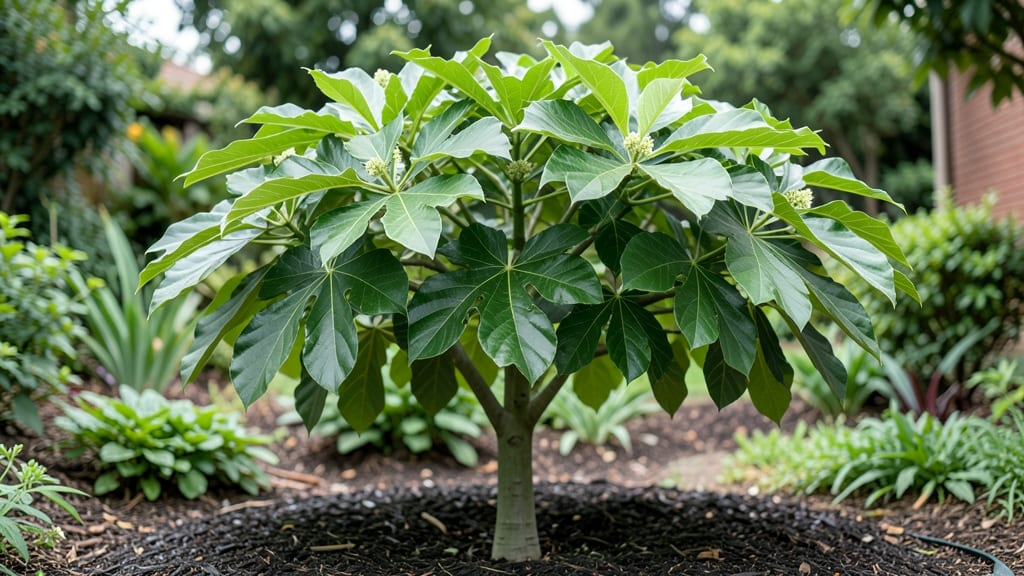
A tree that looks like an umbrella features the Japanese umbrella pine (Sciadopitys verticillata), with its flat, fan-like needles radiating from branches, and the horsetail palm (Beaucarnea recurvata), known for its bulbous trunk and arching fronds. Both create striking, shade-providing canopies perfect for ornamental gardens.
A tree that resembles an umbrella isn't just about the shape—it's about the botanical drama of how they grow.
The Japanese umbrella pine, for example, has whorled branches that spread outward like an open parasol, while the horsetail palm's thick, swollen base gives it that iconic "umbrella stand" look. 🌳 These trees aren't just pretty; they're architectural statements in your landscape, offering both shade and visual interest year-round.
The pine thrives in cooler climates, while the palm handles heat and drought, making them versatile choices for different garden zones.
What's fascinating is how their growth patterns evolve over time. Young umbrella pines develop their signature flat needles early, while horsetail palms start with a slender trunk that gradually bulges as they mature. This transformation makes them rewarding long-term investments for any outdoor space.
💡 In This Article
- Identifying Umbrella-Shaped Trees by Foliage and Growth Habits
- Best Umbrella-Like Trees for Landscaping and Climate Suitability
Identifying umbrella-shaped trees by foliage and growth habits
The Japanese umbrella pine (Sciadopitys verticillata) earns its name from its whorled branches that spread horizontally like an open umbrella, each bearing clusters of flat, fan-shaped needles that grow in dense, overlapping rows.
These needles measure about 1-2 inches long and 0.2 inches wide, creating a soft, textured canopy that filters sunlight beautifully. The tree's growth habit is unique because it maintains this umbrella shape year-round, even in winter when many conifers drop their needles.
In contrast, the horsetail palm (Beaucarnea recurvata) mimics an umbrella through its bulbous trunk and arching fronds. The trunk starts slender but swells dramatically over time, storing water like a succulent—this adaptation allows it to thrive in arid climates.
Its fronds, which can reach 3-5 feet long, arch outward in a graceful curve, resembling the spokes of a parasol. Unlike true palms, this species is hardy down to 15°F, making it far more resilient than tropical palms.
Seasonal changes reveal even more about these trees' umbrella-like qualities. The Japanese umbrella pine maintains its dense foliage year-round, though its needles may take on a bronze hue in winter due to cold exposure.
The horsetail palm, however, sheds its older fronds in late winter, revealing fresh green growth that unfurls like unfolding umbrellas. This cyclical renewal adds dynamic interest to gardens.
Botanically, the key difference lies in their leaf structures: the pine's needles are modified leaves (technically called cladodes) that reduce water loss, while the palm's fronds are complex, compound leaves with multiple leaflets.
Both adaptations contribute to their distinctive shapes—needles radiating outward in the pine, and fronds arching gracefully in the palm.
Native habitats also influence their umbrella-like forms. The Japanese umbrella pine thrives in cool, moist forests of Japan's mountainous regions, where its dense canopy helps it compete for sunlight.
The horsetail palm, meanwhile, evolved in Mexico's dry, rocky landscapes, where its water-storing trunk and arching fronds help it survive drought. These adaptations make each species uniquely suited to its environment while maintaining their iconic umbrella shapes.
For gardeners, identifying these trees involves examining both foliage texture and trunk structure. Run your hand over the pine's needles—you'll feel their leathery, slightly waxy surface, while the palm's fronds have a softer, more flexible quality.
The pine's trunk is straight and conical, while the palm's trunk swells dramatically at the base, creating that unmistakable "umbrella stand" appearance.
What's truly remarkable is how these trees' growth patterns create their umbrella shapes through apical dominance—the tendency of the main growing point to suppress side growth. In the pine, this creates the whorled branches, while in the palm, it allows the trunk to expand uniformly.
Understanding this mechanism helps explain why their shapes remain so consistent throughout their lives.