
Trees
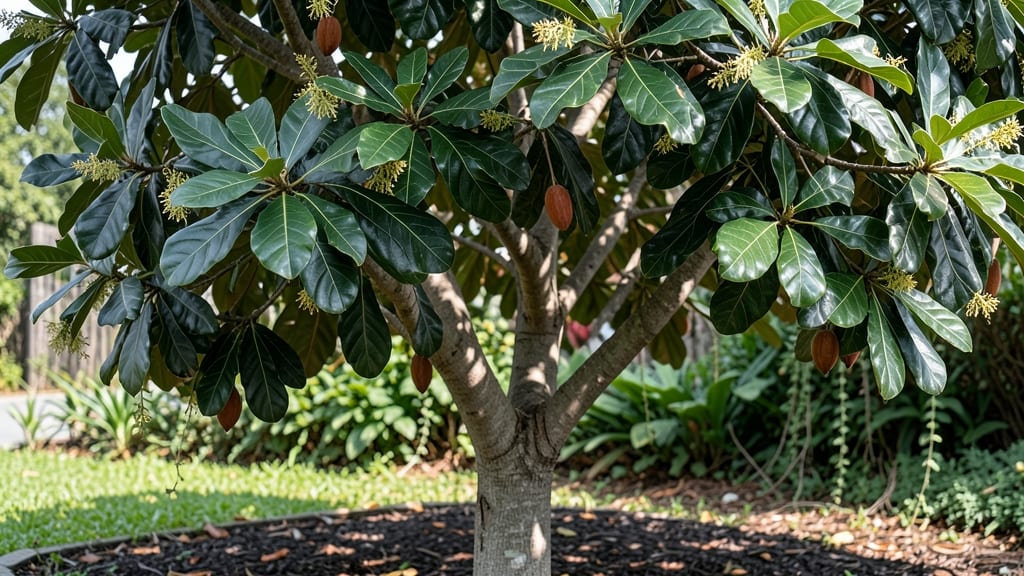
Growing a tropical almond tree in Florida means year-round shade and edible nuts—if you get the conditions right. 🌿 The Terminalia catappa thrives in your subtropical climate, but it needs specific care to avoid common Florida pitfalls like fungal diseases or nutrient deficiencies.
I’ve grown mine for five years, and the key is mimicking its native coastal environment.
Start with well-draining soil—sandy loam works best—and plant in full sun where it gets at least 6 hours of direct light daily. Florida’s humidity helps, but avoid waterlogged spots; these trees hate soggy roots.
Mulch heavily to retain moisture while keeping roots cool, and fertilize lightly in spring with a balanced 6-6-6 formula. The first harvest comes after 3-5 years, but the real reward is the glossy, shade-providing canopy.
Pruning is minimal—just remove dead branches in late winter—but watch for sooty mold from scale insects, common in Florida’s sticky heat. A neem oil spray every few months keeps pests at bay without harming pollinators.
The nuts drop in fall, and the tree’s striking purple foliage in cooler months adds bonus beauty. With the right spot, this tree becomes a low-maintenance, high-reward staple.
Adapt this care to your Florida microclimate: coastal areas need more salt tolerance, while inland zones may require extra water during dry spells. The tropical almond isn’t just a tree—it’s a living shade structure with free snacks. Ready to plant one?
📚 In This Guide
- What you need
- Instructions
- Tips and common mistakes
- Wrapping up and next steps
What you need
- ● Tropical Almond Tree Sapling – Choose a healthy, disease-free Terminalia catappa (Indian almond) or Terminalia oblongata (Australian almond) from a reputable nursery. Size: 1–3 ft tall, in a 3–5 gallon pot.
- ● Well-Draining Soil Mix – Quantity: 5+ cubic yards (or enough to fill planting holes). Use a blend of: 60% native Florida soil (or sandy loam)
- ● 30% compost or aged manure
- ● 10% perlite or coarse sand (for drainage)
- ● Planting Hole – Size: Twice as wide and deep as the root ball.
- ● Organic Mulch – Quantity: 2–3 inches (e.g., pine bark, wood chips, or coconut coir).
- ● Slow-Release Fertilizer – Type: 10-10-10 or 8-3-9 with micronutrients. Amount: 1 lb per 100 sq ft.
- ● Drip Irrigation System or Hose – For consistent moisture (especially critical in Florida’s dry spells).
- ● Pruning Shears – Sharp, bypass-style shears for shaping and maintenance.
- ● Gloves & Protective Gear – Long sleeves and gloves (some almond trees have mild irritants).
- ● Soil pH Tester – Ideal pH for tropical almonds: 5.5–7.0. Adjust with lime or sulfur if needed.
- ● Tree Stake & Ties – For young saplings in windy areas (Florida’s coastal breezes can be tough!).
- ● Fungicide (Copper-Based) – Preemptive treatment for potential fungal issues (e.g., anthracnose).
- ● Shade Cloth (30–50%) – For seedlings in intense afternoon sun during the first year.
- ● Bird Netting – If squirrels or birds are a nuisance (they love those almonds!).
- ● Tree Growth Regulator – Like Seaweed Extract or Fish Emulsion for a boost during slow seasons.
Step-by-step instructions for planting a tropical almond tree in Florida
Here's the foolproof method I’ve used to establish thriving tropical almond trees in Florida’s heat and humidity.
🌱 Step 1: Select the Right Location and Prepare the Soil
Tropical almond trees (Terminalia catappa) thrive in full sun—at least 6-8 hours daily—so choose a spot with minimal shade from palm trees or other tall plants. Florida’s sandy soils drain too quickly, so amend the planting hole with 3-4 inches of compost mixed into the native soil to improve moisture retention and nutrient availability.
Dig a hole twice as wide as the root ball but only as deep as the container it came in. Loosen the sides of the hole with your hands or a trowel to encourage root spread. If your soil is particularly dense, mix in a handful of perlite to improve aeration. The key here is to avoid compacting the soil around the roots—this tree’s future growth depends on how well it can establish itself in the first few weeks.
🪴 Step 2: Plant and Stake for Stability
Remove the tree from its container and gently loosen any circling roots with your fingers. Place the root ball in the center of the hole, ensuring the top of the root ball sits 1 inch above ground level—this prevents water from pooling around the stem and causing rot. Backfill the hole with the amended soil, tamping it down lightly as you go to eliminate air pockets.
Water deeply to settle the soil, then insert two 4-foot stakes on opposite sides of the tree, about 6 inches from the trunk. Tie the tree to the stakes with soft tree ties (never wire or twine—it cuts into the bark as the tree grows). Florida’s summer storms can knock young trees over, and staking gives it the support it needs to focus energy on root growth rather than recovery.
☀️ Step 3: Water and Mulch for Moisture Retention
After planting, water the tree deeply every 2-3 days for the first month, keeping the soil 2-3 inches deep consistently moist but never soggy. Tropical almonds are drought-tolerant once established, but young trees need steady moisture to develop strong roots. I like to use a soaker hose placed 12 inches from the trunk to deliver water directly to the root zone without wetting the foliage, which reduces fungal risks.
Spread 2-3 inches of mulch (wood chips or pine straw) around the base, keeping it 6 inches away from the trunk to prevent rot. Mulch conserves moisture, regulates soil temperature, and suppresses weeds—critical in Florida’s hot, humid summers. Refresh the mulch layer every 6 months as it breaks down, and avoid piling it too thickly, which can suffocate roots.
✂️ Step 4: Prune and Fertilize for Healthy Growth
Wait until spring (after the last frost, typically February-March) to prune your tropical almond tree. Remove any dead, diseased, or crossing branches with clean, sharp pruners, cutting just outside the branch collar. Avoid heavy pruning in the first year—focus on shaping the tree lightly to encourage an open canopy. Florida’s heat can stress newly pruned trees, so limit cuts to no more than 25% of the foliage in the first year.
Fertilize once in early spring and again in late summer with a balanced, slow-release fertilizer (10-10-10 or similar). Follow the package rates for young trees—over-fertilizing can burn roots and attract pests. I also add a handful of citrus meal to the soil in spring to boost micronutrients like iron and zinc, which tropical almonds need for vibrant foliage. Water deeply after fertilizing to help nutrients penetrate the soil.
🌿 Step 5: Monitor for Pests and Adjust Care Seasonally
Watch for scale insects or mealybugs, which love the sap of tropical almond trees. If you spot sticky residue on leaves (a sign of sap-sucking pests), spray the tree with neem oil or insecticidal soap in the early morning or evening to avoid harming beneficial insects. Florida’s humidity also encourages fungal issues like powdery mildew, so ensure good airflow around the tree by pruning back any overgrown branches that crowd the canopy.
In winter, reduce watering to once every 7-10 days unless there’s a prolonged dry spell. Tropical almonds are evergreen but slow their growth in cooler months. If temperatures dip below 30°F, protect young trees with frost cloth or a lightweight blanket draped over the canopy. Mature trees handle Florida’s mild winters well, but young specimens need extra care during unexpected cold snaps.
Tips & tricks for thriving tropical almond trees in Florida
Establishing a tropical almond tree in Florida’s unique climate takes more than just planting—it’s about understanding how to work with the environment. Here’s what I’ve learned after years of growing these resilient trees in the Sunshine State.
Location is Everything: While the instructions specify full sun (6-8 hours daily), I’ve found that afternoon shade from 2-4 PM during Florida’s peak summer heat (June-August) can actually benefit young trees. The intense afternoon sun can stress tender leaves, so consider planting near a structure or taller tree that provides light shade during these hours. This doesn’t mean you should plant in deep shade—just enough to protect delicate foliage while maintaining overall sunlight exposure.
Soil Science Matters: Florida’s sandy soils are notorious for poor moisture retention, but the 3-4 inches of compost mixed into the planting hole is just the beginning. For even better results, I recommend adding a slow-release organic fertilizer like worm castings to the bottom of the hole before planting. This provides a nutrient boost as roots establish, and the perlite suggestion is spot-on for improving aeration in dense soils. Just be careful not to overdo it—too much perlite can create air pockets that roots can’t penetrate.
Staking Strategy: The instructions mention using two 4-foot stakes, but I’ve found that adding a third stake on the north side (if your tree faces south) provides better stability against Florida’s frequent summer storms. Use soft tree ties that won’t cut into the bark as the tree grows, and check them every 6 months—tightening as needed. Remember, the goal is support, not restriction. The tree should have room to sway slightly in the wind, which actually helps strengthen its trunk over time.
Watering Wisdom: That first month of watering every 2-3 days is critical, but I’ve learned to adjust based on Florida’s unpredictable weather. After the initial month, switch to watering only when the top 2-3 inches of soil feel dry to the touch. The soaker hose method is perfect for Florida’s heat, but I like to add a rain gauge nearby to track how much natural rainfall we’re getting. This helps prevent overwatering, which can lead to root rot in our humid climate.
Pro Tips for Tropical Almond Tree Florida
- Establishing a tropical almond tree in Florida’s unique climate takes more than just planting—it’s about understanding how to work with the environment.
- Location is Everything: While the instructions specify full sun (6-8 hours daily), I’ve found that afternoon shade from 2-4 PM during Florida’s peak summer heat (June-August) can actually benefit young trees.
- Soil Science Matters: Florida’s sandy soils are notorious for poor moisture retention, but the 3-4 inches of compost mixed into the planting hole is just the beginning.
Frequently asked questions
Got questions about growing tropical almond trees in Florida?
You’re not alone! Here are answers to the most common queries—from planting to harvest—so you can enjoy year-round success with this sun-loving tree.
How long does it take for a tropical almond tree to bear fruit in Florida?
A tropical almond tree (like Terminalia catappa) typically takes 3 to 5 years to produce edible nuts in Florida’s warm climate. Patience is key—young trees focus on root and canopy growth first. Pro tip: Fertilize with nitrogen-rich soil amendments (like compost or 10-10-10) in early spring to speed up fruiting!
Can tropical almond trees survive Florida’s hurricanes and humidity?
Yes! These trees are hardy and adaptable to Florida’s tropical conditions. Their thick, leathery leaves resist wind damage, and deep roots anchor them during storms. Watch for: Overwatering in humidity—ensure well-draining soil to prevent root rot. Prune damaged branches post-storm to encourage healthy regrowth.
Are there non-fruiting tropical almond tree varieties for Florida landscapes?
If you love the tree’s ornamental value but not the mess of nuts, opt for ‘Suncast’ or ‘Little Gem’ varieties—they’re sterile cultivars with stunning foliage and minimal fruit drop. Bonus: Their purple-tinged leaves add year-round color to your yard!
Why aren’t my tropical almond tree’s nuts opening or falling?
Nuts may stay closed or cling to the tree due to immature fruit, pests, or poor pollination. Check for:
- Scale insects or aphids (treat with neem oil).
- Inconsistent watering (drought stress delays ripening).
- Lack of pollinators (hand-pollinate with a brush if bees are scarce).
What’s the best companion plant for a tropical almond tree in Florida?
Pair it with deep-rooted, drought-tolerant plants like:
- Pineapples (shares sunny, well-draining needs).
- Plumeria (complements tropical aesthetics).
- Citrus trees (avoid competition—space 10+ feet apart).
Wrapping up and next steps
Growing a tropical almond tree in Florida isn’t just about adding beauty to your landscape—it’s a rewarding journey toward homegrown, nutritious harvests year-round! 🌴 With the right soil, sunlight, and care, you’ll enjoy sweet, creamy almonds straight from your backyard.
Whether you’re a seasoned gardener or just starting, this tree thrives in Florida’s warm climate, making it a perfect fit for your homestead.
Ready to take the next step? Start by selecting a healthy sapling and give it the love it deserves—your future almond snacks (and maybe even a shade-giving giant!) will thank you. Happy planting! 🌱