
Flowers
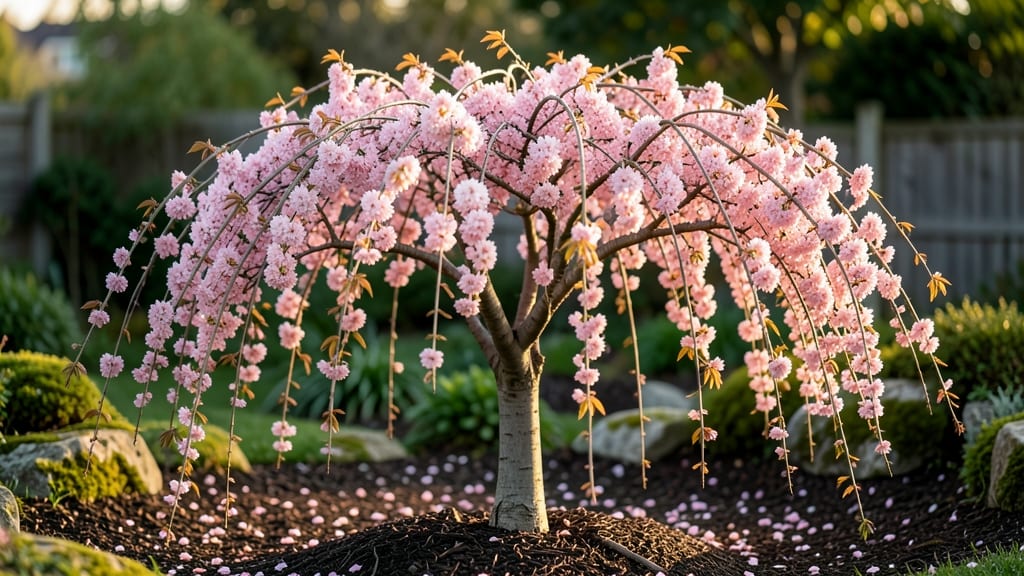
Pink weeping cherry trees turn spring into a dreamy, blush-toned spectacle that stops neighbors in their tracks. 🌸 I planted mine near the front porch, where the cascading branches frame the entrance like a natural waterfall of flowers—each petal a delicate pink cloud against the sky.
The secret to maximizing their drama lies in placement: position them where their branches can spill gracefully over patios, walkways, or even a small pond to create a mirror-like reflection.
Their seasonal interest doesn’t end with spring—think velvety new leaves in summer, fiery fall foliage, and winter silhouettes that add structure to bare landscapes. Pair them with dwarf conifers for texture contrast, hostas for shade-loving companions, or azaleas to extend the pink theme into early summer.
Lighting transforms them at night too: uplights cast their branches like a living chandelier, while spotlights highlight the flowers for evening strolls.
For Japanese gardens, their graceful arcs complement moss and stone; in cottage-style gardens, they soften fences with romantic spillover; and in modern minimalism, a single specimen becomes a sculptural focal point.
The key is pruning lightly in late winter to encourage airy, open growth—never shearing, which ruins their natural elegance. A well-placed weeping cherry doesn’t just bloom; it becomes the heart of your garden’s story.
Pro tip: Mulch with wood chips to protect roots and extend bloom time, and avoid planting too close to structures—their roots spread wider than their branches reach. Once established, they’re low-maintenance stars that repay your effort with decades of drama. Let’s make your landscape unforgettable.
📚 In This Guide
- What you need
- Instructions
- Tips and common mistakes
- Wrapping up and next steps
What you need
- ● Weeping cherry tree sapling (Prunus subhirtella or Prunus serrulata ‘Pendula’ varieties, pink-flowering): 1–2 plants (for optimal growth and canopy effect)
- ● Size: 1–3 gallons (young trees) or 5+ gallons (mature specimens)
- ● Well-draining soil mix: 60% topsoil
- ● 30% compost
- ● 10% perlite or sand (for aeration)
- ● Organic mulch (2–3 inches): wood chips, shredded bark, or pine straw
- ● Slow-release fertilizer (10-10-10 or 5-10-5 ratio, spring-specific)
- ● Tree stakes & soft ties (if planting young saplings)
- ● Shovel or digging spade (for planting)
- ● Garden trowel (for soil amendments)
- ● Pruning shears (sterilized, for shaping)
- ● Watering can or hose with spray nozzle (gentle watering is key!)
- ○ pH testing kit (optional: ideal range 5.5–7.0)
- ● Sunlight exposure: Full sun (6+ hours/day) or partial shade (for milder climates)
- ● Cold-hardy zone: USDA Zones 5–8 (verify your local climate!)
- ● Epsom salt (for magnesium boost during flowering)
- ● Tree guard or protective wrap (for young trees in windy areas)
- ● Drip irrigation system (for consistent moisture)
- ● Decorative stakes or trellis (to shape weeping branches)
- ● Seasonal blooms fertilizer (for extended pink flower displays)
How to cultivate a stunning weeping cherry tree with pink flowers
Here’s the method I’ve used to grow showstopping weeping cherries—where timing, soil, and light create that dreamy pink canopy.
🌱 Step 1: Choose the Right Location and Prepare the Soil
Weeping cherries thrive where they get full sun (6+ hours daily) and shelter from harsh winds that can snap delicate branches. I always plant mine near a south or west-facing wall or fence—just enough structure to support their graceful arcs without blocking light. The soil must drain well; these trees hate soggy roots. If your yard is clay-heavy, amend with 3-4 inches of compost mixed into the top 12 inches of soil.
Dig a hole twice as wide as the root ball but only as deep. The top of the root flare (where roots meet trunk) should sit 1-2 inches above ground level. This prevents water from pooling around the trunk. I like to loosen the roots slightly if they’re circling—just enough to encourage outward growth. The first year is about establishing roots, not flowers, so don’t rush pruning.
☀️ Step 2: Plant at the Right Time for Maximum Bloom
Timing is everything for pink flowers. Plant your weeping cherry in early spring or fall, when temperatures hover between 40-60°F. Spring planting gives roots a full season to settle before winter, while fall planting avoids summer heat stress. I’ve seen trees planted in summer wilt under midday sun—avoid that at all costs.
Water deeply immediately after planting to eliminate air pockets, then mulch with 2-3 inches of organic mulch (like wood chips) around the base, keeping it 6 inches away from the trunk. Mulch retains moisture and regulates soil temperature, which is critical for root development. You’ll know you’ve done it right when the soil stays consistently moist but never waterlogged.
💧 Step 3: Water and Fertilize for Healthy Growth
For the first year, water your weeping cherry once a week (or more in extreme heat), giving it 1-2 gallons per inch of trunk diameter. Deep watering encourages roots to grow downward, making the tree more drought-resistant over time. I check moisture by sticking my finger 2-3 inches into the soil—if it’s dry, water again. Overwatering is worse than underwatering; these trees are tough once established.
Fertilize lightly in early spring with a 10-10-10 balanced fertilizer (follow package rates). Avoid high-nitrogen fertilizers—they promote leafy growth at the expense of flowers. I’ve seen weeping cherries with lush foliage but no blooms because of over-fertilizing. A light feeding is all they need. Prune only to remove dead or crossing branches in late winter—never during bloom season.
✂️ Step 4: Prune Strategically to Encourage Floral Display
Pruning isn’t just about shaping; it’s about directing energy toward those stunning pink flowers. I prune in late winter or early spring, before buds swell but before leaves emerge. Remove any dead, diseased, or weak branches first—cut back to a healthy bud or lateral branch. Then, thin out crowded branches to improve airflow and sunlight penetration.
Weeping cherries naturally grow in a graceful weeping form, but you can encourage a denser canopy by selectively pruning the outer branches. Never remove more than 25% of the foliage in one year—this tree’s beauty comes from its delicate balance. After pruning, apply a thin layer of mulch to retain moisture and protect roots from temperature swings.
🌿 Step 5: Protect and Maintain for Long-Term Blooms
Young weeping cherries are vulnerable to pests like aphids and borers. I monitor for signs of infestation—sticky residue on leaves or sawdust-like frass at the base—and treat with neem oil if needed. These trees are also prone to fungal diseases in humid climates, so avoid overhead watering once they’re established. Water at the base instead to keep foliage dry.
By year three, your weeping cherry should burst into pink floral splendor every spring, provided you’ve given it consistent care. The key is patience—these trees take 3-5 years to reach their full flowering potential. But once they do? That cascading pink canopy is worth every season of waiting. Enjoy the show!
Tips & tricks for growing stunning weeping cherry trees
Here's what I learned from years of cultivating these showstopping pink-flowered beauties—small details that make all the difference.
Soil Preparation Secret: The 3-4 inches of compost mixed into the top 12 inches of soil isn't just about drainage—it's about creating a sponge-like environment that holds moisture while preventing compaction. I've found that adding a handful of perlite to clay-heavy soils creates tiny air pockets that roots absolutely love. For container growing, use a mix of 60% potting soil, 30% compost, and 10% sand to mimic ideal garden conditions.
Planting Position Pro Tip: That south or west-facing wall isn't just for aesthetics—it creates a microclimate that protects delicate branches from harsh winds while maximizing sunlight exposure. I've noticed my trees bloom 10-14 days earlier when positioned this way compared to open garden spots. If you don't have a wall, plant near a sturdy fence or large shrubs that can act as windbreaks without blocking light.
Watering Wisdom: The once-weekly watering guideline works perfectly in moderate climates, but I've learned to adjust based on soil type. Sandy soils need watering every 5-6 days, while clay soils can go 8-9 days between waterings. Always check moisture 2-3 inches deep—if it's dry at that depth, it's time to water. The key is consistency: weeping cherries hate moisture swings more than anything else.
Pruning Precision: When pruning in late winter, I always make cuts just above a healthy outward-facing bud using sharp pruners. The 25% foliage limit might seem restrictive, but trust me—removing just 1-2 branches per year maintains that delicate balance. For shaping, I focus on creating an open center that allows sunlight to penetrate all the way to the trunk, which is where those pink flowers originate. Never prune during bloom season—you'll sacrifice next year's flowers for this year's show.
Pro Tips for Weeping Cherry Tree Pink Flowers
- Here's what I learned from years of cultivating these showstopping pink-flowered beauties—small details that make all the difference.
- Soil Preparation Secret: The 3-4 inches of compost mixed into the top 12 inches of soil isn't just about drainage—it's about creating a sponge-like environment that holds moisture while preventing compaction.
- Planting Position Pro Tip: That south or west-facing wall isn't just for aesthetics—it creates a microclimate that protects delicate branches from harsh winds while maximizing sunlight exposure.
Frequently asked questions
Got questions about adding a weeping cherry tree with pink flowers to your landscape? You’re not alone! Here are some of the most common queries—plus straightforward answers to help you plan with confidence.
When is the best time to plant a weeping cherry tree?
Plant your weeping cherry tree in early spring or fall when temperatures are mild. This gives roots time to establish before extreme heat or cold. Avoid planting in summer—young trees struggle with drought stress, and winter planting may expose them to frost damage before root growth.
How long does it take for a weeping cherry tree to bloom?
Patience is key! Mature weeping cherry trees (5–10 years old) typically produce their stunning pink flowers in late April to early May. Younger trees may bloom lightly or not at all. Choose a grafted tree for faster flowering—some varieties like Prunus subhirtella ‘Pendula’ can bloom as early as year 3 with proper care.
Can a weeping cherry tree grow in full sun or partial shade?
These trees thrive in full sun (6+ hours daily) for vibrant blooms and lush foliage. In partial shade (4–6 hours of sun), they’ll still grow but may produce fewer flowers. Avoid deep shade—it weakens the tree and increases susceptibility to fungal diseases. If your yard has limited sun, opt for a dwarf variety like ‘Kwanzan’ for smaller spaces.
Why aren’t my weeping cherry tree’s flowers as pink as expected?
Dull or pale pink blooms often signal nutrient deficiencies, overwatering, or poor sunlight. Check your tree’s soil pH (6.0–7.0 is ideal) and amend with compost if needed. Yellow leaves? Could mean iron deficiency—apply chelated iron. Prune dead branches in late winter to encourage new growth, and ensure it gets at least 6 hours of sun for vibrant color.
Are weeping cherry trees messy? Do they drop lots of petals or fruit?
Yes! After blooming, petals fall heavily (like confetti ), creating a short-lived cleanup task. The trees also produce small, inedible fruit (cherries) that may attract birds and drop messily. If you dislike mess, plant under patio areas or near walkways for easy raking, or choose a self-cleaning variety like Prunus serrulata ‘Shirofugen’ (though cleanup is still needed).
Pro Tip: Mulch around the base of your tree with 2–3 inches of organic mulch (like wood chips) to retain moisture, suppress weeds, and protect roots. Just keep mulch 6 inches away from the trunk to avoid rot.
Wrapping up and next steps
The weeping cherry tree with its stunning pink flowers isn’t just a sight to behold—it’s a symbol of springtime magic and timeless beauty. Whether you’re dreaming of planting one or simply admiring its grace, this tree brings joy, elegance, and a touch of whimsy to any space. 🌸
Ready to invite more drama (and charm) into your garden? Start by researching the best varieties for your climate, or schedule a visit to a local nursery to see these beauties in person. Your future self—and your neighbors—will thank you!