
Watering
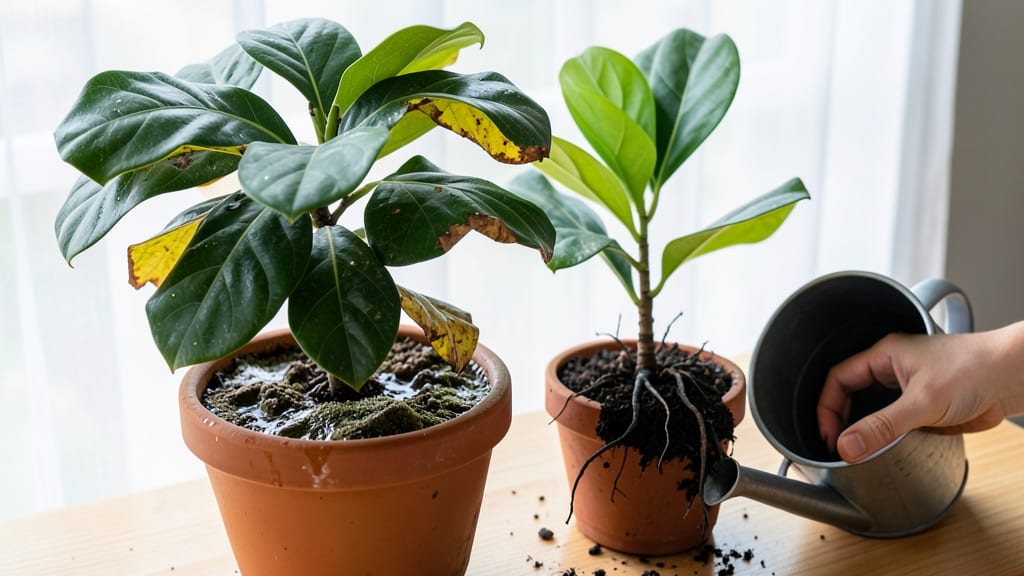
What does an overwatered ficus tree look like? You’ll spot it immediately—drooping leaves that feel sad and mushy, not crisp, and a soil smell that’s more swamp than earth. 🌱 I've seen this too many times: what starts as a lush, glossy-leaved plant turns into a sad, yellowing mess within weeks. The leaves lose their vibrant green, edges turn brown, and the whole plant just... wilts, even when the soil looks damp. The real damage happens below ground: roots turn black and squishy, like overcooked pasta, instead of firm and white. Stick your finger in the soil—if it's soggy past 2 inches down, you're overwatering. Ficus trees hate wet feet, and once root rot sets in, recovery gets tricky. The good news? Catching it early means you can still save your plant with better drainage and a smarter watering schedule. Here's what you'll achieve: a ficus that stays perky, with deep green leaves that shine like polished jade. The soil stays lightly moist but never soggy, and you'll know exactly when to water—no more guessing. Prune the worst-affected branches to redirect energy to healthy growth, and watch your plant bounce back within weeks. This works for both potted ficus trees and those in-ground beauties. The key is consistency: check soil moisture before watering, upgrade your pots if drainage is poor, and give your ficus the airflow it craves. Trust me, your plant will thank you with lush, happy foliage all season long.
Root Causes Of Overwatering
Overwatering your ficus tree isn’t just about pouring too much water—it’s a cascade of environmental and care-related factors that disrupt the plant’s delicate balance. Understanding these root causes helps you adjust your routine before the damage becomes irreversible.
Let’s break down the science behind why your ficus might be drowning in its own pot.
Ficus trees thrive when their roots can breathe, but clogged or inadequate drainage forces them to sit in soggy soil. Here’s why this happens:
- Low-Quality Soil Mix: Heavy, compacted, or peat-based soils retain moisture like a sponge, suffocating roots.
Ficus trees prefer well-aerated, chunky mixes (like 60% potting soil + 30% perlite + 10% orchid bark) to allow excess water to escape. - Small or Clogged Pots: Plastic pots without drainage holes or pots filled with decomposed organic matter (like old mulch) trap water.
Even terracotta pots can fail if the drainage holes are too tiny or blocked by mineral buys. - Root-Bound Conditions: When roots circle the pot or grow into a dense mat, they struggle to absorb oxygen, making the soil waterlogged faster. Solution: Repot every 2–3 years or trim congested roots during transplanting.
💡 Pro Tip: Test your pot’s drainage by filling it with water—if it drains in under 10 minutes, it’s likely adequate. If not, add a layer of hydroponic clay pebbles at the bottom.
Ficus trees don’t follow calendars—they respond to soil moisture levels. Overwatering often stems from predictable routines that ignore the plant’s needs:
- Fixed Watering Days: Giving your ficus the same amount of water every Monday, regardless of humidity or season, is a recipe for disaster. Ficus trees in low-light conditions need water every 10–14 days, while those in bright, dry spots may dry out in 5–7 days. - Ignoring Soil Dryness: Sticking your finger 1–2 inches deep into the soil is the gold standard.
If it’s damp, wait. If it’s bone-dry, water thoroughly—but not if the top inch is still moist. - Overcompensating After Drought: Some gardeners water heavily after forgetting to water for a week, but ficus roots can’t absorb sudden floods. Result: Shock and root rot.
🌡️ Science Alert: Ficus trees absorb water through osmosis—roots need oxygen to function. Waterlogged soil displaces oxygen, triggering anaerobic bacteria that rot roots in 3–5 days.
Your ficus’s environment plays a huge role in how it processes water. Common culprits include:
| Factor | Problem | Fix |
|---|---|---|
| High Humidity | Slow evaporation = soggy soil longer. | Use a hygrometer (aim for 40–60% humidity) or add a fan for airflow. |
| Low Light Conditions | Slows transpiration (water loss through leaves), so the plant holds onto moisture. | Move to bright, indirect light (east or north-facing windows). |
| Cold Temperatures | Chills reduce root activity, making water absorption inefficient. | Keep temps above 60°F (15°C); avoid drafts. |
| Overpotting | Large pots retain moisture longer. | Choose pots only 1–2 inches larger than the root ball. |
🔥 Red Flag: If your ficus is in a bathroom or basement, humidity and poor airflow are likely the villains. A dehumidifier or grow light can save it.
Sometimes, the problem isn’t you—it’s unseen invaders or natural processes:
- Fungal Infections: Overwatering creates the perfect breeding ground for Phytophthora or Pythium, fungi that attack roots. Symptoms: Black, mushy roots with a foul odor. - Bacterial Soft Rot: Caused by Erwinia bacteria, this turns roots into a sludge-like mess.
Often spreads from contaminated soil or tools. - Pests Weakening Roots: Root mealybugs or scale insects damage root hairs, reducing the plant’s ability to regulate moisture. Check roots during repotting for sticky residue or tiny white bugs.
✨ Prevention Hack: Sterilize pots with bleach solution (1:10 ratio) before repotting, and avoid over-fertilizing (too much nitrogen = softer, more vulnerable roots).
Even well-meaning gardeners make mistakes. Here’s how to spot them:
- Using Ice Cubes or Mist Systems: While trendy, these methods don’t penetrate deep roots and can create surface moisture without hydrating the soil properly. Stick to bottom-watering (pouring water into the saucer) for even distribution.
- Skipping the "Soak and Dry" Cycle: Ficus trees need thorough watering until water runs out the drainage hole, followed by a drying period. Top-watering lightly keeps the top layer wet while roots below suffocate.
- Overzealous Bottom Watering: Leaving the pot sitting in water for hours (or overnight) drowns roots. Empty saucers within 30 minutes post-watering.
👨🍳 Gardeners’ Confession: Many overwater because they assume more water = happier plant. But ficus trees are drought-tolerant—they’d rather be underwatered than drowned.
Revive Your Ficus Tree Fast
Overwatering can turn your lush ficus into a sad, soggy mess—but don’t panic! With the right steps, you can nurse it back to health. Below, we’ll break down cause-specific fixes to rescue your tree, plus tips to keep it thriving long-term.
If your ficus leaves are turning yellow (especially the older ones), it’s likely suffering from root rot or nutrient leaching due to excess moisture.
🔥 Step 1: Stop Watering Immediately
- Let the top 1–2 inches of soil dry out completely before watering again.
- If the soil feels damp, wait another 2–3 days before checking.
🍳 Step 2: Check the Roots
- Gently remove the tree from its pot and inspect the roots.
- Healthy roots are firm and white.
- Rotten roots are mushy, black, or smell foul.
- 🔪 Trim away the bad roots with sterilized scissors, leaving only firm, white roots intact.
👨🍳 Step 3: Repot in Fresh Soil
- Choose a well-draining potting mix (add perlite or orchid bark for extra aeration).
- Use a clean pot with drainage holes—terracotta is ideal.
- After repotting, water lightly and place the tree in bright, indirect light (no direct sun yet).
⏰ Step 4: Monitor & Adjust Care
- Wait 1–2 weeks before watering again—your ficus needs time to recover.
- Prevention tip: 💡 Stick your finger 2 inches deep into the soil before watering. If it’s dry, water; if damp, wait.
If your ficus has soft, mushy stems or wilted leaves, root rot may have spread. This is an emergency!
🌡️ Step 1: Assess the Damage
- If more than 50% of roots are rotten, your tree may not survive—but try these steps anyway.
- If only some roots are affected, it’s still salvageable.
💪 Step 2: Prune & Propagate Healthy Cuttings
- Take 3–4 inch cuttings from the healthiest stems (just below a leaf node).
- Let them dry and callus for 1–2 hours (prevents further rot).
- Plant in sphagnum moss or perlite (not regular soil) and keep humid (use a plastic bag or propagator).
- 🎯 Pro tip: Place cuttings in bright, indirect light—no direct sun!
🌿 Step 3: Save the Remaining Tree (If Possible)
- If the main stem is still firm, trim all rotted roots and repot as above.
- Fertilize lightly with a balanced, water-soluble fertilizer (half-strength) 4–6 weeks after repotting to rebuild strength.
Once your ficus is recovering, avoid these mistakes to prevent future overwatering:
✅ Watering Schedule:
- Spring/Summer: Water every 7–10 days (let soil dry between waterings).
- Fall/Winter: Water every 10–14 days (growth slows—less water needed).
✅ Pot & Drainage:
- Always use pots with drainage holes—no exceptions!
- Upgrade to a slightly larger pot (1–2 inches bigger) every 2–3 years for better drainage.
✅ Soil Mix:
- Avoid heavy, compacted soil. Mix in 30% perlite or orchid bark for airflow.
- 🌡️ Soil test tip: If unsure, squeeze a handful—if it stays clumped, it’s too wet!
✅ Humidity & Light:
- Ficus trees love moderate humidity (mist leaves occasionally or use a pebble tray).
- Bright, indirect light is key—no deep shade or harsh sun.
💡 Final Thought: Recovery takes patience, but with the right care, your ficus can bounce back stronger than ever! Keep an eye on its progress, and soon, you’ll have a lush, leafy friend thriving in your space.
Frequently asked questions
How can I tell if my ficus is overwatered vs. underwatered?
Overwatered ficus trees show yellowing leaves that feel soft and mushy, while underwatered ones have brown, crispy edges. Check the soil: overwatered pots stay damp deep down (stick your finger 2 inches in—if soggy, you're overdoing it), while underwatered soil feels dry at all levels. Also, overwatered plants often develop droopy stems that don't perk up even after watering.
Will my ficus recover if I've been overwatering it for months?
Recovery depends on how severe the damage is. If only the roots are slightly affected, you can often save it by trimming rotten roots and repotting in fresh, well-draining soil. However, if the roots are completely mushy and smelly, or if the leaves are mostly brown and crispy, the plant may not recover. Start by stopping all watering immediately and let the top 1-2 inches of soil dry out before assessing further.
Can I use hydrogen peroxide to fix overwatered ficus roots?
Yes! Mix 1 part 3% hydrogen peroxide with 4 parts water and use it to water your ficus for 2-3 weeks. This helps kill harmful bacteria and fungi while providing oxygen to the roots. After treatment, switch back to regular water and monitor soil moisture closely. Just don't overdo it—use this solution only every 3-4 days during recovery.
Why do some ficus leaves turn yellow even when I'm not overwatering?
Yellowing leaves can also signal nutrient deficiencies (like lack of nitrogen), pests (such as spider mites), or disease. Check the undersides of leaves for tiny webs or bugs, and examine the soil for proper drainage. If the yellowing starts with older leaves and spreads upward, it's more likely overwatering. But if new leaves are also yellow, consider using a balanced fertilizer (like 10-10-10) every 2 months.
How often should I repot my ficus if it's recovering from overwatering?
Wait until your ficus shows new growth (usually 2-3 months after recovery) before repotting. Use a pot that's only 1-2 inches larger in diameter than the current one, with drainage holes. After repotting, water lightly and place it in bright, indirect light for 2 weeks to minimize stress. Choose a well-draining mix with 30% perlite or orchid bark to prevent future waterlogging.