
Companion Plants
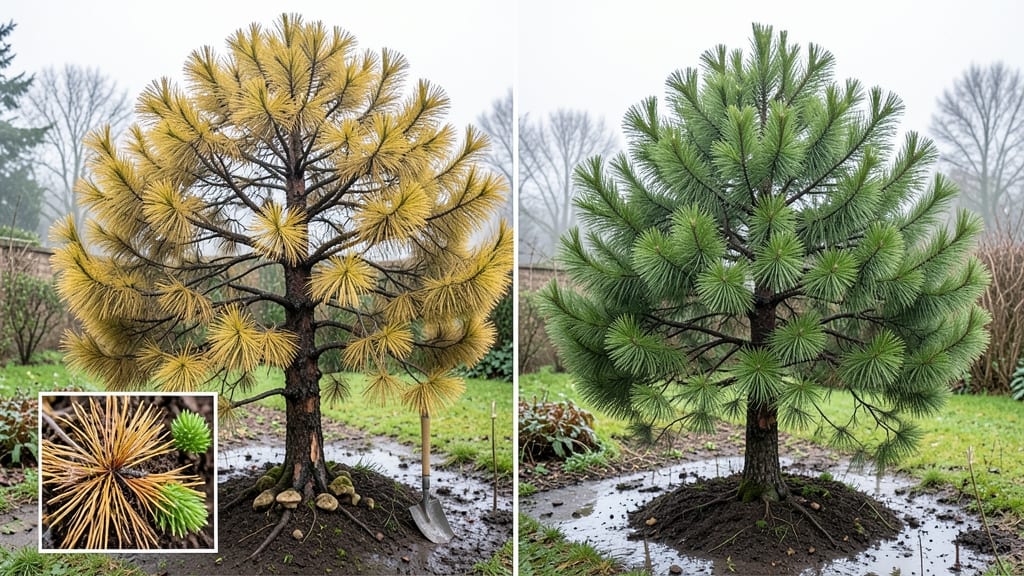
Overwatered pine trees reveal themselves through yellowing needles that turn brown at the tips and fall off in clumps—like my 10-year-old white pine that looked like it had a bad hair day after last summer’s heavy rains.
The real giveaway? Needles that stay yellow for months instead of dropping cleanly, paired with a soft, spongy trunk when you press it. This isn’t just wilting—it’s a cry for help from roots drowning in soggy soil.
Peel back the top inch of soil, and you’ll often find a mushy, foul-smelling layer—a sure sign of root rot. Fungal growth like white, cottony mold at the base of the trunk or between needles is another red flag.
Unlike pests (which leave tiny holes or webs) or drought stress (which causes crispy, dry needles), overwatering creates a slimy, waterlogged mess that even experienced gardeners can miss until it’s too late.
Fixing it starts with stopping water completely for a week and improving drainage—amend the soil with sand or compost to break up compacted areas. Prune any dead branches (they won’t regrow) and avoid fertilizing until the roots recover.
With patience, new growth will emerge in 6-12 months, proving your pine can bounce back—if you act before the roots rot away entirely.
Here’s the kicker: pines hate soggy feet year-round. After reviving your tree, switch to deep, infrequent watering—only when the top 2 inches of soil feel dry. Mulch with pine straw to keep moisture levels steady, and watch for those telltale signs of overwatering before they become permanent damage.
Your tree’s survival depends on it.
Root Causes Of Overwatering
Overwatering your pine tree isn’t just a gardening mistake—it’s a silent killer that disrupts the tree’s natural balance. When roots sit in soggy soil for too long, they struggle to breathe, leading to a cascade of problems.
Understanding the why behind overwatering helps you fix it before it’s too late. Here’s what’s really going on beneath the soil.
Pine trees thrive in well-draining soil, but if your garden bed or pot lacks proper drainage, water pools around the roots instead of draining away. This creates an anaerobic (oxygen-deprived) environment, where roots can’t absorb nutrients or expel waste efficiently. - Clay-heavy soil holds water like a sponge, suffocating roots. - Compacted soil (from foot traffic or machinery) blocks water flow, trapping moisture. - Improperly amended soil (e.g., too much peat moss without perlite or sand) retains excess water. Pro tip: 💡 Test your soil’s drainage by filling a container with soil and water, then timing how long it takes to drain. If it takes more than 30 minutes, your soil is too dense. Pine trees are drought-tolerant and don’t need frequent watering—especially mature ones. Overwatering disrupts the root zone’s natural moisture balance, leading to: - Root rot (caused by Phytophthora or Pythium fungi), which breaks down root tissue. - Nutrient leaching, where essential minerals like nitrogen and potassium wash away. - Weakened root structure, making trees susceptible to windthrow (toppling). Pro tip: ✨ Water deeply but infrequently—aim for 1–1.5 inches per week (including rainfall) for young pines, and even less for mature ones. Not all overwatering is your fault—sometimes, Mother Nature conspires against you. | Factor | How It Contributes | Solution | |--------------------------|---------------------------------------------------------------------------------------|------------------------------------------------------------------------------| | Heavy rainfall | Saturates soil faster than roots can dry it out. | Plant in slightly elevated areas or use raised beds. | | Low-lying areas | Water pools in depressions, creating "soggy spots." | Create swales (shallow trenches) to redirect water away from the tree. | | Impermeable ground cover | Thick mulch or plastic sheets trap moisture against roots. | Use 3–4 inches of organic mulch (wood chips, pine straw) with gaps near the trunk. | Potted pine trees are especially vulnerable because containers restrict root expansion and dry out slower than garden soil. Common pitfalls: - Small or shallow pots limit root growth, leading to waterlogging. - Plastic pots retain moisture longer than fabric or terracotta. - No drainage holes = a death sentence for roots. Pro tip: 🔥 Repot every 2–3 years into slightly larger containers with fast-draining mix (50% pine bark, 30% perlite, 20% peat). Even well-meaning gardeners overwater by: - Watering on a schedule instead of checking soil moisture (stick your finger 2–3 inches deep—if it’s damp, wait). - Ignoring seasonal needs (pines need less water in winter when growth slows). - Using sprinklers that soak the foliage (pine needles can develop fungal diseases like needle cast). Pro tip: 🌡️ Use a moisture meter or the "squeeze test"—grab a handful of soil; if it stays clumped, it’s too wet.Now that you know why overwatering happens, the next step is spotting the signs early. Yellowing needles, mushy roots, and stunted growth are all red flags—don’t ignore them!
Revive Your Pine Tree: Step-by-Step Fixes
Overwatering can turn your pine tree from a lush evergreen into a sad, soggy mess—but don’t worry! With the right approach, you can nurse it back to health. Below are practical, actionable solutions tailored to the root causes of overwatering, plus tips to keep your pine thriving long-term.
---
If your pine’s needles are turning yellow, brown, or falling off, it’s likely suffering from root rot or nutrient starvation due to excess moisture. Here’s how to help:
#### 🔥 Step 1: Stop Watering Immediately - Pause all irrigation (including rainwater if possible) for 7–10 days to let the soil dry out. - If the ground is mushy or smells like rot, the roots are already damaged—skip to Step 3 (Repotting or Aeration).
#### 🍳 Step 2: Improve Soil Drainage Pine trees hate soggy feet.
Amend the soil with: - Coarse sand or perlite (mix 20–30% into the top 6–12 inches of soil). - Pine bark fines (a natural, chunky mulch that improves airflow). - Avoid compost-heavy soil—it retains too much moisture.
> 💡 Pro Tip: Test your soil’s drainage by digging a 6-inch hole, filling it with water, and timing how long it takes to drain. Ideal time: 1–2 hours. If it’s slower, your soil needs more grit.
#### 👨🍳 Step 3: Prune Damaged Needles & Branches - Trim dead or brown needles with clean, sharp pruners (sterilize with rubbing alcohol). - Remove entire branches if they’re soft, mushy, or blackened—these won’t recover. - Focus on the outer third of the tree first, as inner branches often stay healthier.
---
If your pine’s roots look dark, slimy, or crumble apart, root rot has set in. Act fast:
#### 🔪 Step 1: Dig Up & Inspect the Roots (If Possible) - Gently lift the tree (small pines) or dig around the base to expose roots. - Healthy roots are firm, white, or tan. Rotten roots are black, mushy, or smell foul. - Trim away all diseased roots with sterilized pruners.
#### ⏰ Step 2: Repot or Replant with Fresh Soil - For container pines: Remove the tree, rinse roots with water to clear excess soil, then repot in fast-draining mix (50% pine bark, 30% perlite, 20% peat). - For in-ground pines: Dig a new planting hole twice as wide as the root ball, fill with amended soil (see Step 2 above), and replant. - Add mycorrhizal fungi (available at nurseries) to boost root health and water retention without rot.
#### 🌡️ Step 3: Adjust Watering & Monitor Recovery - Water deeply but infrequently—only when the top 2–3 inches of soil are bone-dry. - Use a moisture meter to avoid guesswork (aim for 30–50% moisture at 2-inch depth). - Avoid overhead watering (use drip irrigation or soaker hoses to keep foliage dry).
> ✨ Prevention Tip: If your pine is in a clay-heavy or low-lying area, consider raising the root zone with a mound of gravel or amended soil to prevent water pooling.
---
Once your pine is on the mend, prevent future overwatering with these habits:
| Problem | Solution | Prevention Tip | |---------------------------|---------------------------------------|---------------------------------------------| | Compacted soil | Aerate annually with a garden fork. | Add 1–2 inches of pine bark mulch yearly. | | Poor drainage | Plant on a slope or raised bed. | Test soil drainage before planting. | | Overzealous watering | Switch to drip irrigation or a moisture meter. | Water only when needed—pines tolerate drought better than wet feet! | | Container pines | Use terracotta pots (breathable). | Drill drainage holes and use fast-draining mix. |
--- ✅ Stop watering until soil dries out. ✅ Improve drainage with sand/perlite or repot. ✅ Prune dead growth to redirect energy. ✅ Water deeply but less often (check soil moisture). ✅ Monitor for 3–6 months—healthy new growth should appear in spring/summer.
With patience and the right care, your pine tree can bounce back stronger—and you’ll avoid the heartbreak of another soggy root disaster! 🌲💚
Frequently asked questions
How can I tell if my pine tree’s yellow needles are from overwatering vs. drought?
Overwatered pines show bright yellow needles that stay soft and may develop a musty smell near the trunk. Drought-stressed needles turn pale yellow or brown but feel dry and crispy to the touch. Check the soil: overwatered soil stays soggy for days, while drought soil feels bone-dry 2+ inches deep.
Why does my pine tree’s trunk feel soft when I press it?
A spongy trunk indicates advanced root rot from chronic overwatering. Healthy pine trunks should feel firm. If the bark is darkening or peeling, the rot has spread—act fast by improving drainage and pruning affected branches before the tree weakens further.
Can I save a pine tree with root rot, or is it too late?
Early-stage root rot is often reversible! Trim all mushy roots, repot in fast-draining mix, and stop watering for 10 days. If 50%+ of roots are rotten, recovery is unlikely—but even then, try it for 3 months before giving up. Prevention is key: pines prefer dry soil over soggy!
How often should I water a pine tree to avoid overwatering?
Water deeply but infrequently: 1–1.5 inches per week (including rain) for young pines, and every 2–3 weeks for mature trees. Use the finger test—if the top 2 inches of soil are dry, it’s time. Overhead watering wets needles, inviting fungal diseases—stick to drip irrigation or soaker hoses.