
Pests and Diseases
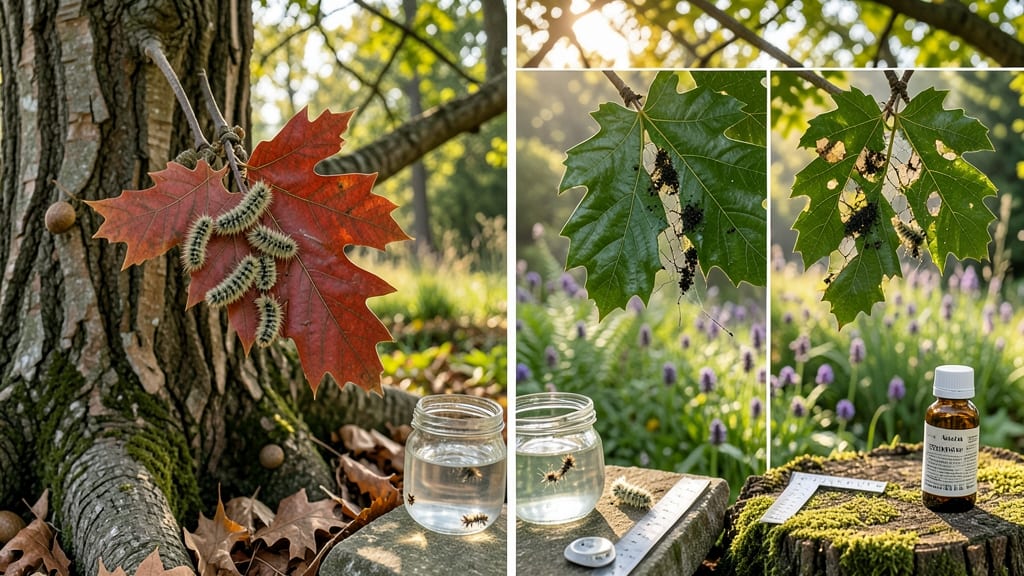
When your tree leaves are being eaten, the culprits are usually insects like caterpillars, beetles, or mites, or larger animals such as deer, rabbits, or squirrels. The key is examining leaf edges, chew marks, and droppings to pinpoint the exact problem and respond effectively.
Leaf damage often reveals itself through distinct patterns—skeletonized leaves suggest caterpillars, while jagged notches point to deer or rabbits. 🌿 Seasonal timing matters too: mites thrive in dry heat, while beetles are most active during warm evenings.
I always recommend starting with a close inspection before jumping to treatments, as misidentifying the pest can lead to ineffective solutions.
For instance, if you notice fine webbing between leaves, spider mites are likely the culprits. These tiny pests suck sap, causing yellowing spots before the leaves turn brown and fall. On the other hand, large, irregular holes in leaves often mean deer or rabbits have been grazing.
Understanding these differences helps you choose the right defense strategy, whether it's organic sprays or physical barriers.
💡 In This Article
- Identifying Common Tree Leaf Predators by Damage Patterns
- Natural and Chemical Solutions for Tree Leaf Damage Prevention
Identifying common tree leaf predators by damage patterns
Leaf damage patterns act like fingerprints for identifying pests. Caterpillars, for example, typically create skeletonized leaves—where they eat the soft tissue between veins, leaving the leaf structure intact but fragile.
This happens because caterpillars prefer tender new growth, and their chewing action creates irregular, jagged edges along the remaining leaf material. 🌿 The key is that caterpillars often leave behind frass (their excrement), which looks like tiny black specks scattered across the leaf surface.
Deer and rabbits, on the other hand, create completely different damage. These animals tend to take large, irregular bites from the edges of leaves, often leaving behind clean, notched edges that resemble scalloped patterns.
You'll also notice that the damage occurs at consistent heights—typically between 3-6 feet off the ground—where deer can comfortably reach while browsing. Unlike insects, these mammals don't leave behind frass; instead, you might find small droppings near the base of your tree.
Spider mites reveal themselves through a different set of clues. These microscopic pests create fine webbing between leaves, especially on the undersides, and their feeding causes yellow or brown stippling on the leaf surface.
The webbing is often so thin it's barely visible to the naked eye but becomes apparent when you gently shake the leaf. Mites thrive in dry, hot conditions, which is why you might notice increased damage during summer months when humidity drops below 40%.
Their presence often coincides with a general decline in leaf health, as they suck sap and weaken the plant.
Beetles, particularly Japanese beetles, create distinct damage patterns too. They chew small, irregular holes in leaves—often starting from the edges and moving inward—and leave behind a shiny, metallic green or copper-colored exoskeleton when you inspect the leaf closely.
These beetles are most active during warm evenings, typically between 5:00 PM and 8:00 PM, which is when you're most likely to spot them swarming your trees. Their feeding can defoliate entire branches quickly if left unchecked.
Seasonal timing plays a crucial role in identification. For instance, gypsy moth caterpillars are most active in late spring and early summer, while fall webworms create their characteristic silken nests in late summer. Understanding these cycles helps you predict when to expect damage and take preventive measures.
The chemistry of your tree's leaves also matters—some species, like oak or maple, produce tannins that deter certain pests, while others, like willow, are more palatable to both insects and animals.
One advanced technique is to examine the leaf undersides with a magnifying glass. Many pests, like aphids or scale insects, hide there, leaving behind sticky honeydew that attracts ants and promotes sooty mold growth.
This mold appears as a black, fuzzy coating on leaves and branches, which is a clear sign of an underlying pest problem. 🔍 By combining visual inspection with seasonal knowledge, you can accurately diagnose the culprit and implement the most effective solution.