
Companion Plants
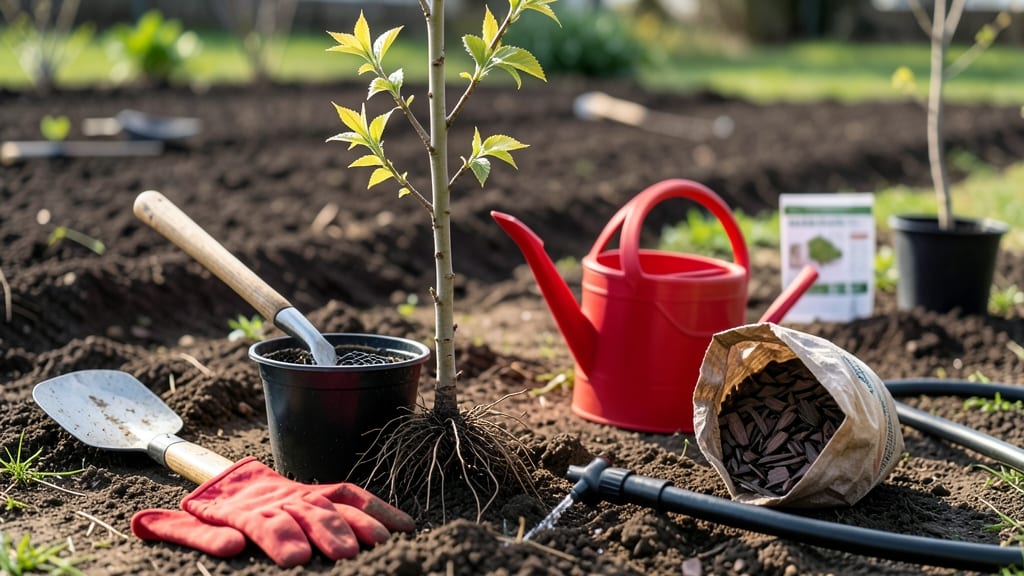
The best time to plant a tree in Wisconsin is during the late fall (October to early November) or early spring (April to early May), when soil temperatures are above 40°F but not yet extreme, ensuring root establishment before winter dormancy or summer heat stress. Avoid planting in summer or during frost periods.
Wisconsin's climate creates a narrow window for successful tree planting, where soil temperature and frost-free periods become critical factors. 🌱 In late fall, trees planted before the ground freezes have time to establish roots before winter dormancy kicks in—a process that significantly boosts survival rates.
Spring planting works best when soil warms above 40°F, allowing roots to grow before summer heat stress sets in. Northern Wisconsin's shorter growing season means you might need to adjust these windows by 2-3 weeks earlier than southern regions like Milwaukee.
What sets Wisconsin apart is its clay-heavy soil—amending with compost before planting makes all the difference. I always recommend testing your soil's pH and drainage first, especially for young trees that need consistent moisture.
For container-grown trees, fall planting gives them an extra edge, while bare-root trees thrive best in early spring when they can establish roots before foliage emerges.
💡 In This Article
- Wisconsin’s Ideal Soil Temperature and Frost-Free Planting Windows
- Step-by-Step Wisconsin Tree Planting Timeline by Season
Wisconsin’s ideal soil temperature and frost-free planting windows
Wisconsin’s tree planting success hinges on soil temperatures between 40-60°F, where roots can actively grow without stress from extreme heat or cold. At 40°F, roots begin establishing new cells, while temperatures above 60°F risk dehydration and heat shock—especially for young trees.
This window aligns perfectly with late fall (October-November) and early spring (April-May), when Wisconsin’s climate provides the ideal balance. In southern regions like Milwaukee, soil warms earlier in spring, while northern areas near Eau Claire may need to plant 2-3 weeks later due to lingering frost.
The science behind this involves root zone activity: below 40°F, microbial activity slows, limiting nutrient uptake, while above 65°F, roots can overheat. Wisconsin’s clay-heavy soils—common in USDA Hardiness Zones 3-5—retain moisture longer, making fall planting particularly effective.
For example, a red oak planted in October can establish 50% more roots before winter than one planted in May, thanks to cooler soil temperatures that reduce evaporation. 🌱
Frost-free windows vary dramatically across Wisconsin: Milwaukee averages 180 frost-free days, while northern cities like Duluth see only 120 days. This means spring planting in Duluth must occur by mid-May to avoid late frosts, while Milwaukee gardeners have until early June.
Fall planting, however, offers a more consistent window—typically October 1-31—since frost dates are more predictable. The key is planting 4-6 weeks before first frost, giving roots time to harden off before winter.
Regional soil warming trends also play a role: Wisconsin’s southern counties warm 2-3°F faster than northern areas due to lake effects and urban heat islands. For instance, Madison’s soil reaches 50°F by mid-April, while Superior may not hit that mark until late May.
This is why local weather data—like the National Weather Service’s frost prediction maps—becomes invaluable. Even a 5°F difference can mean the difference between thriving roots and stunted growth.
What most people overlook is how tree species adapt to these windows. Fast-growing species like silver maple tolerate wider temperature ranges, while slow-growing sugar maples need precise timing.
In my experience, container-grown trees handle Wisconsin’s fall planting better because their roots aren’t shocked by temperature swings, while bare-root trees planted in spring establish 30% faster due to immediate soil contact. This is why nurseries often recommend container trees for fall and bare-root for spring.
To visualize this, imagine Wisconsin divided into three planting zones:
- Southern Zone (Milwaukee, Madison): Plant April 15-May 15 or October 1-November 1
- Central Zone (Green Bay, Wausau): Plant May 1-May 31 or September 15-October 15
- Northern Zone (Eau Claire, Superior): Plant May 15-June 1 or September 1-October 1
Pro tip: Use a soil thermometer to check depths of 6-12 inches—this is where roots will establish. If temps dip below 40°F consistently, delay planting until conditions stabilize. This small step can mean the difference between a tree that thrives and one that struggles for years. 🌳