
Pests and Diseases
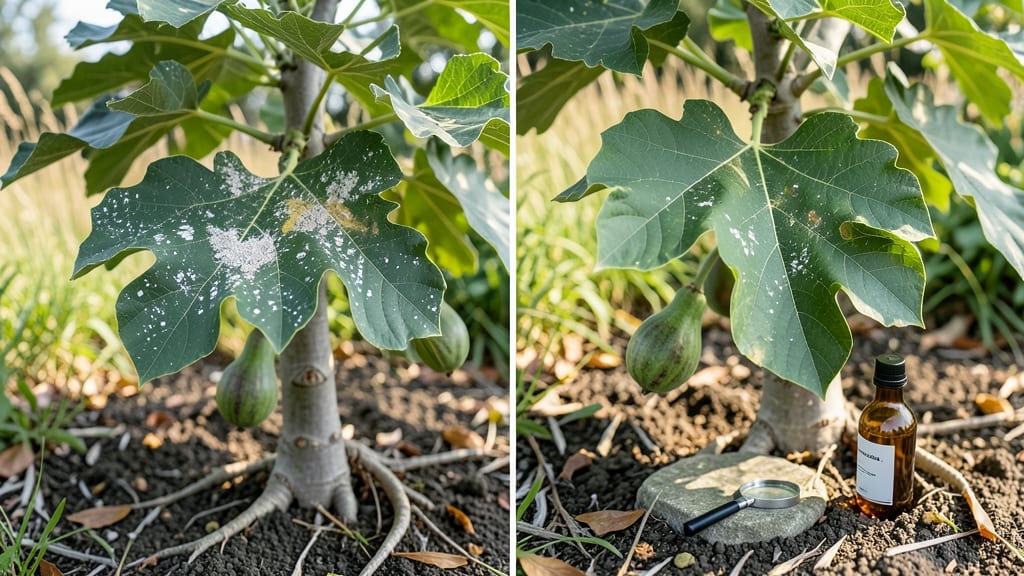
White spots on fig tree leaves aren’t just unsightly—they’re a cry for help from your plant. 🌿 I’ve battled this exact issue, and the baking soda spray I’ll share doesn’t just mask the problem—it reverses it.
The key is acting fast before the white powder spreads like flour on a kitchen counter.
Most of the time, those chalky spots mean powdery mildew, a fungal infection that thrives in humid conditions. But it could also be spider mites (check the undersides of leaves) or even a nutrient deficiency making your tree vulnerable.
The good news? Baking soda disrupts the fungus’s life cycle while being completely safe for your tree—no harsh chemicals needed.
Within 7-10 days of consistent spraying, you’ll see new growth free of white dust, and your fig tree will start looking lush again.
The secret is mixing the right ratio (1 teaspoon baking soda + 1 quart water + a drop of dish soap) and spraying both sides of the leaves—even the ones that look fine.
This works for potted figs, in-ground trees, and even those tricky container plants on your patio. The same spray prevents future outbreaks, so keep it handy once you’ve mastered the recipe. Let’s get that tree back to its vibrant best.
Understanding The Root Causes
White spots on your fig tree’s leaves aren’t just an eyesore—they’re a sign of underlying stress or infection. Here’s why they appear and what’s really happening to your plant:
---
Fungal spores thrive in warm, humid conditions, and fig trees are particularly susceptible to powdery mildew (Erysiphe spp.) and rust (Puccinia spp.). These pathogens feed on leaf surfaces, creating those telltale white or yellowish patches.
- Powdery Mildew: This fungus forms a powdery white coating on leaves, blocking sunlight and weakening the plant.
It spreads rapidly in shady, damp environments (like under dense canopies or poorly ventilated areas). - Rust Fungi: These create pustules (small, raised spots) that may appear white, orange, or brown. They often start on the underside of leaves before spreading to the top.
💡 Pro Tip: Check for yellowing leaves or stunted growth—these are red flags that the fungus is stressing your fig tree.
---
Fig trees are tough, but they hate extremes. White spots can also signal environmental stress, including:
- Overwatering: Soggy soil leads to root rot and leaf discoloration, including white patches.
Figs prefer well-draining soil—if water pools, the roots suffocate, and the tree signals distress. - Poor Air Circulation: Figs in tight spaces or crowded gardens suffer from high humidity trapped against leaves, creating the perfect breeding ground for fungi. - Nutrient Deficiencies: A lack of magnesium (Mg) or calcium (Ca) can cause interveinal chlorosis (white patches between leaf veins).
Conduct a soil test to check pH and nutrient levels—figs thrive in slightly acidic to neutral soil (6.0–7.0 pH).
🌡️ Watch For: If white spots appear after heavy rain or sudden temperature drops, environmental stress is likely the culprit.
---
Did you recently spray your fig tree with fungicides, herbicides, or even homemade remedies? If so, chemical burn could be causing those white, crinkled spots.
- Overuse of Copper-Based Sprays: While effective against fungi, copper can accumulate in soil and leaves, leading to necrotic (dead) white patches. - Household Cleaners or Soaps: Even "gentle" sprays (like dish soap) can strip natural oils from leaves, making them vulnerable to fungal attacks.
✨ Solution: If you suspect chemical burn, flush the soil with water and avoid treatments for 2–3 weeks to let the leaves recover.
--- Some pests indirectly cause white spots by weakening leaves, making them susceptible to fungi or bacteria.
- Spider Mites: These tiny pests feed on leaf sap, causing white webbing and stippling (tiny white dots). Infested leaves turn brittle and discolored. - Scale Insects: These sap-sucking bugs excrete honeydew, a sticky substance that attracts sooty mold—a black or white fungal growth.
🔥 Spot Check: Hold a white sheet under the tree and shake branches—if tiny moving dots or sticky residue falls, pests are likely the problem.
--- While rarer, bacterial leaf spot (Pseudomonas spp.) or viral infections (like fig mosaic virus) can cause white or yellow patches.
- Bacterial Leaf Spot: Appears as water-soaked white spots that turn brown and crusty. It thrives in wet conditions and spreads via rain splash or tools. - Viral Infections: Often symptomless at first, but may show mottled white/yellow patterns and stunted growth.
Viruses spread via infected grafting material or sap-sucking insects.
🚨 Warning: If spots ooze liquid or leaves droop severely, isolate the plant—these could be bacterial or viral, and no cure exists (prevention is key).
--- Not all white spots are bad! Some fig varieties (like Chicago Hardy) develop natural white variegation as they mature. However, if spots: ✅ Appear suddenly → Likely a problem. ✅ Stay small and non-spreading → Could be normal.
📊 Test It: Compare old and new leaves—if only new growth is affected, it’s probably a disease or pest. If all leaves have them, it may be genetic.
Quick Fixes for Fig Tree Leaf Spots
White spots on your fig tree’s leaves can be frustrating, but the good news is that most causes have simple, effective solutions. Below, we’ve mapped out the best fixes based on the root problem—whether it’s fungal, environmental, or pest-related—along with prevention tips to keep your tree thriving.
If the white spots look powdery, greasy, or spread rapidly, a fungal infection is likely the culprit. Here’s how to tackle it: #### 🔥 Step 1: Prune Infected Leaves - 👨🍳 Remove heavily spotted leaves with clean pruning shears. - 🗑️ Dispose of them in the trash (not compost) to prevent reinfection. - ✨ Pro Tip: Focus on lower leaves first—they’re often the first to show signs. #### 🥘 Step 2: Apply a Fungicide Spray For powdery mildew or rust: - 💡 Homemade Baking Soda Spray (gentle & effective): - Mix 1 tsp baking soda + 1 tbsp horticultural oil + 1 tsp mild soap in 1 quart of water. - Spray early in the morning on both leaf sides (avoid direct sunlight). - Reapply every 7–10 days until new growth appears. - 🌡️ Commercial Fungicides (for severe cases): - Use neem oil or copper fungicide (follow label instructions). #### 🌿 Step 3: Improve Airflow & Light - 🌬️ Thin out dense foliage to allow sunlight and air to circulate. - 🌞 Move the tree to a sunnier spot (fungi thrive in shade and humidity). - 💧 Water at the base (not overhead) to keep leaves dry. #### ✨ Prevention Tips - 🎯 Space plants 3–4 feet apart to reduce humidity. - 🌱 Mulch properly (2–3 inches) to retain moisture without suffocating roots. - 🍂 Clean up debris in fall to remove overwintering spores. If the white spots are tiny webs, sticky residue, or crawling pests, insects are likely the issue. #### 🔪 Step 1: Blast Off Pests - 💦 Spray with water (forceful stream) to knock off mites and whiteflies. - 🧼 Use insecticidal soap (mix 2 tbsp soap + 1 quart water) for light infestations. - 🌿 Neem oil spray (1 tsp neem oil + 1 tsp soap + 1 quart water) for stubborn pests. #### 🕷️ Step 2: Introduce Beneficial Insects - 🐞 Ladybugs or lacewings eat spider mites and whiteflies naturally. - 🕸️ Install yellow sticky traps to catch flying pests. #### 🌡️ Step 3: Adjust Care to Deter Pests - 💧 Increase humidity (pests love dry air)—mist leaves occasionally. - 🍃 Avoid over-fertilizing (soft new growth attracts pests). - 🌿 Inspect new plants before adding them to your garden. #### ✨ Prevention Tips - 🎯 Quarantine new plants for 2 weeks before introducing them. - 🌱 Prune regularly to remove pest hotspots. - 🍂 Shake trees outdoors weekly to dislodge pests. If spots appear after heavy rain, fertilizer burn, or sudden heat, the issue is likely environmental. #### 🌞 Step 1: Protect from Sun Scorch - 🌿 Provide afternoon shade with a shade cloth (30–50% coverage). - 💧 Water deeply in the morning to reduce stress. #### 🌱 Step 2: Flush the Soil - 💦 Water heavily to leach out excess salts or minerals (common with tap water or over-fertilizing). - 🌿 Use rainwater or filtered water if your area has hard water. #### 🌡️ Step 3: Adjust Fertilizer Use - 🍂 Test soil pH (ideal for figs: 6.0–7.0). - 💡 Use organic, slow-release fertilizer (avoid high-nitrogen blends). #### ✨ Prevention Tips - 🎯 Mulch with compost to stabilize soil moisture. - 🌱 Avoid wetting leaves during watering to prevent scorch. - 🍂 Monitor weather shifts—cover young trees during heatwaves.With the right approach, your fig tree’s leaves will recover in 2–4 weeks. Consistency is key—stay vigilant with checks and treatments, and your tree will bounce back stronger than ever! 🌳💚
Frequently asked questions
Are white spots on fig leaves always a sign of disease?
Not always! While fungal infections like powdery mildew are common causes, white spots can also appear from nutrient deficiencies (like magnesium or calcium) or pest damage (such as spider mites). Check for other symptoms: yellowing leaves or sticky residue often indicate different problems.
How often should I spray baking soda solution on my fig tree?
Apply the baking soda spray every 7-10 days until new growth appears free of white spots. For prevention, switch to every 2-3 weeks during humid seasons. Always spray early in the morning to avoid leaf burn from sunlight.
Can I use regular dish soap instead of mild soap in the baking soda spray?
No, use only mild, plant-safe soap (like Castile soap). Regular dish soap is too harsh and can damage leaves, making your fig tree more vulnerable to fungal infections. Even a small amount can strip protective oils from the foliage.
Will pruning infected leaves help stop the spread of white spots?
Yes! Removing heavily infected leaves stops the fungus from spreading to healthy parts of the tree. Always use clean pruners and dispose of infected leaves in the trash (not compost) to prevent reinfection. Focus on lower leaves first—they often show symptoms earliest.
How do I know if my fig tree has powdery mildew vs. spider mites?
Powdery mildew creates a fluffy white coating on both leaf surfaces, while spider mites leave tiny white dots (stippling) and often webbing. Hold a white sheet under the tree and shake branches—if you see tiny moving dots, it's likely mites.